L'arte di vedere qualcuno: La fotografa di ritratti Sarah Bodri sulla fiducia, il processo e la “chiusura del divario”.”
Toronto-based photographer Sarah Bodri’s portraits aren’t rushed. They’re built—through questions, time, and trust. In this interview, she shares how her process works, why “closing the gap” matters, and how she curated a portfolio that moves like her images do.
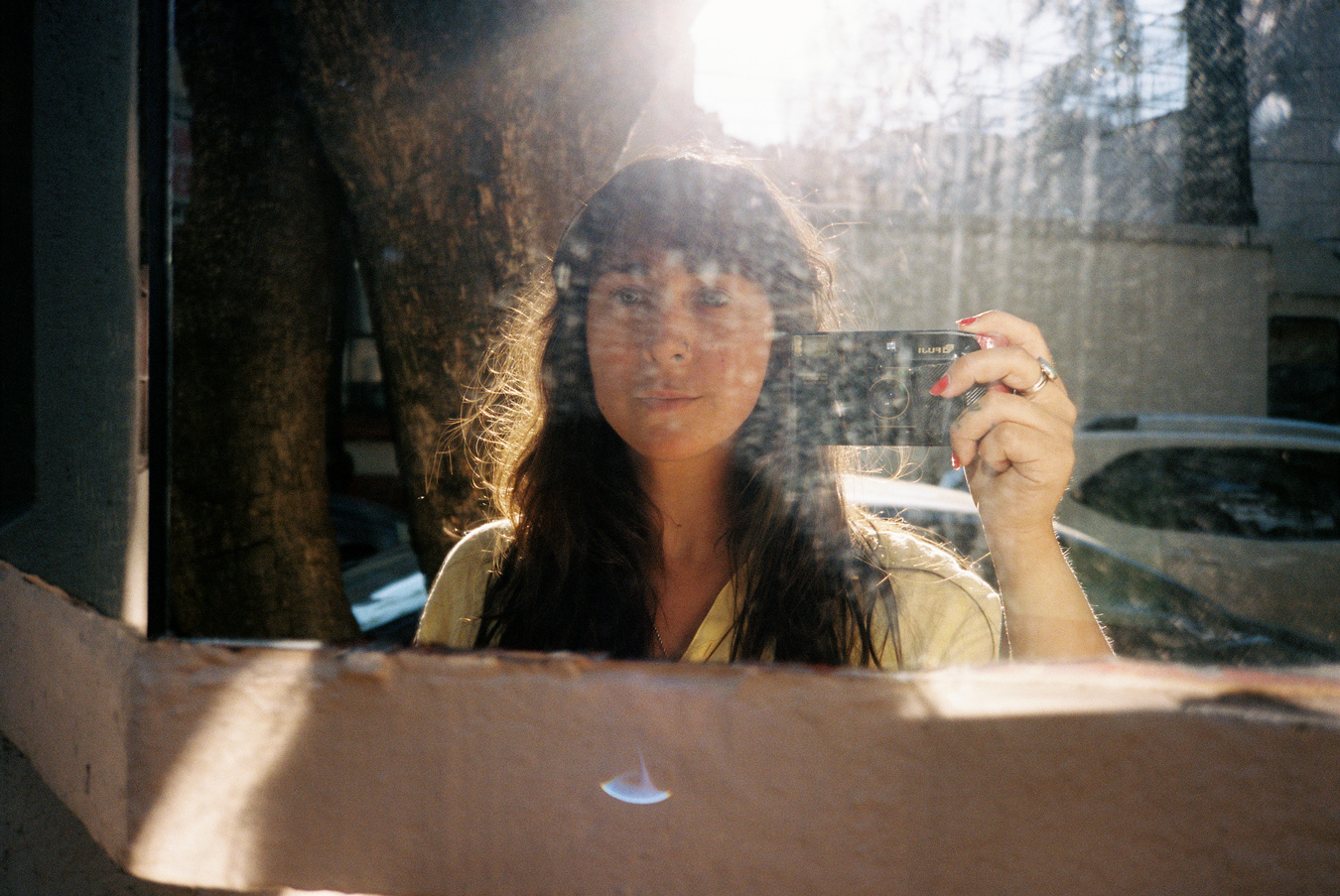
Portrait photographer Sarah Bodri.

There is a particular kind of trust required to sit in front of a camera. Most of us know the feeling—the sudden self-consciousness, the stiffness, the suspicion that the person behind the lens is capturing something we didn’t mean to reveal. Sarah Bodri has spent the better part of a decade working against that instinct, building a portrait photography practice that begins long before anyone picks up a camera.
Bodri came to photography the way many artists do: An only child growing up in Windsor, Ontario, she found in a camera something she could inhabit entirely by herself. She went on to study French literature and gender studies—not art school, she’s quick to note—which may be exactly why her practice is so rooted in language, in questions, in the slow accumulation of understanding that happens when one person genuinely tries to know another.
Her portraits feel earned. Whether she’s photographing painters in their studios, a horse for a local newspaper, or a friend in their kitchen, there’s an intimacy that doesn’t come from technical mastery alone (though that’s clearly there too). It comes from the fact that Sarah Bodri is, at her core, someone who pays close attention. She has been building and hosting her portfolio on Format since 2013, and recently rebuilt her site using Format’s FlexBlock tool to create something that moves the way her work does—associatively, intuitively, one image rhyming with the next. We sat down to talk about care, curiosity, and why she thinks of portrait photography as a kind of gap-closing.

Una guida per migliorare le vostre abilità fotografiche
Migliorate la vostra fotografia con la nostra guida gratuita. Ottenete l'accesso esclusivo a suggerimenti, trucchi e strumenti privilegiati per perfezionare il vostro mestiere, costruire il vostro portfolio online e far crescere la vostra attività.
Ricevi il meglio della rivista Format nella tua casella di posta elettronica.

How Sarah Found her way to Photography (and What Shaped Her Process)
Tell us about your journey in photography. What pulled you toward it in the first place?
I started photography as a hobby when I was in high school. I guess as an only child, I was excited to have a thing I could do by myself. One of my parents gave me a camera and it all started from there.
Your practice has developed into something quite particular—very process-driven and relationship-based. How did that evolve?
It’s been a lot of trial and error, as well as feedback from people, and figuring out what works for me in terms of workflow over time. And I think I realized that the more time I spend with people, the better the results I get in our sessions together. So I really like doubling down on that and making the portrait process more about the experience—or just as much about the experience of the session as it is about the photos that people end up with.
After a lot of experimenting with my workflow, sticking to certain elements of my process is non-negotiable at this point. Some people think, I don’t need to do all that, or maybe I can just skip that part of the process to expedite things—but it turns out that when I skip those things there’s more margin for error. I like to support people through the process because at this point it’s tried and true, and it’s what I would want for myself.


A Portrait Photography Process Built on Time, Trust, and “Closing the Gap”
So it’s a slow process by design.
Yeah, it’s a lot more intimate and it takes a lot more patience and trust than a 20-minute headshot. People ask me for headshots, but I don’t think what I do is really “headshots” in the traditional sense. I don’t want to sound holier-than-thou or whatever, but I just need to take my time. And the more I get to know people, the more I get to know what they want from their session and also how they see themselves. That is a big part of closing the gap between what I see and what they see.
That phrase—”closing the gap”—comes up a lot in how you talk about your work. Can you say more about that?
I’m interested in how people see themselves, but sometimes it’s hard for people to get that across right away. My goal is to create photos where people feel good about themselves – to see themselves in my photos of them in the same way they see & feel about themselves in a selfie they might share. A lot of the time, and for me especially, there’s a huge disparity between how we see ourselves in our own photos and how we look in photos people take of us. Sometimes it’s hard for people to articulate chi o come they are to a complete stranger, so I ask them how their best friend or their partner or their kid might describe them—usually they get into that zone a bit easier. And then: what do you want to come across? What do you want people to feel when they see your photo? I won’t give away all my questions, but it’s this heady personal stuff about self-perception—and again, it’s about being able to create a portrait where somebody really recognizes themselves. On occasion, some people are even surprised that despite their insecurities they actually love how they look, or they see some aspect of themselves they haven’t seen before. Facilitating a moment of confidence and self-actualization through portraiture is a really wonderful feeling.
Do you find you’re often surprised by the answers people give?
Not really. Most people want a lot of the same things when they’re having a portrait taken, when they want to be represented in the world. People want to be seen as approachable, confident, successful. Actually, recently somebody was extremely candid with their answers and I wasn’t surprised, but I was really glad to hear it, because it validated something I would want for myself. How I would want to be perceived.

Photographing Artists in their Studios
Where did this interest in photographing people in their own spaces come from? You’ve done a lot of work with artists in their studios.
I don’t know, I think I’ve always just been interested in how people have an art practice. I studied French literature and gender studies, so I wasn’t in art school and I didn’t know what it looked like or what it could look like to be an artist or how to have a practice. So I think the curiosity really inspired that—inspired me to seek out other artists.
I was a part of an arts community and went to lots of openings and met lots of artists, and studio visits were a really big part of that. And then in 2014, I wrote a grant. I tried to create an active ongoing archive of artists working in Toronto. That started out as a women-centered project, and then I later realized the category was a bit problematic—I was pretty young—but I really enjoyed getting to know people’s process, and it was really centered around ideas of artistic and gendered labor. I would interview people and photograph them in their studios. That solidified how much I love doing that and gave me a sense of community.
Is that archive still accessible?
Yeah, it’s on my Sito web Format and it’s called WWORK. It was funded by the Toronto Arts Council. It’s online—not all of it. The interviews are not online. I think it was a real challenge as a young person with ADHD to try to complete such a lofty goal, but I’m so happy with those portraits and so are the artists who I photographed at the time. I’m still in touch with lots of them and I’ve even photographed them a second or even third time.


Photographing Animals with the Same Patience as People
You’ve also photographed nonverbal subjects—most recently a horse for the West End Phoenix. How does your process shift when you can’t have a conversation with the subject?
Yeah, I love animals. Make that my life tagline. Photographing an animal is obviously very different from photographing a person, but I think the common denominator is just patience, and spending time with that subject, and observing and anticipating and letting them have space to be themselves. I talk to the pet parents a lot and ask them about their quirks or where they tend to be most active. And then there’s the added layer of figuring out how I can be creative in addition to doing an assignment. That horse portrait was so fun.


Self-portraits, Vulnerability, and Representation
There’s also a self-portraiture practice running through your work. That seems like an interesting inversion—what’s the mindset you bring to photographing yourself?
I hate this question already. I really dislike having my photo taken. I don’t trust a lot of people to do what I do. I often say that “I need a me for me”.
But the mindset with self-portraits is: how do I accurately represent how I’m seeing myself right now? It’s more of a technical pursuit. Well, not just technical. I think there is a lot of thought put into—do I want to take this photo right now? Why do I need to see myself in this particular location? Does the location mean something to me? Do I feel a particular way here? And yeah, self-portraits allow me to be in a space and see myself in a space without really making a mark there, which feels important for some reason.
Without making a mark—can you expand on that?
I get to be a part of a place, but I leave it. Leave the campsite better than you found it. Maybe this is too existential. But it allows me to capture myself as a part of an environment—to recognize myself as a part of that world.

Creating a Portfolio that Matches Your Work
You’ve been with Format since 2013—you actually have two Format sites. What kept you there?
I love Format so much I have two websites with them. I remember wanting a website around 2013—I’m an artist, I need to have a portfolio somewhere—and I did a lot of research and figured out what was the best price point for what I needed and wanted. Over the years, I’ve checked out other hosting platforms, but no, I’m good. I have what I need here. And I think I’ve stuck with Format for so long because of the updates—but most importantly, the support from the Format staff is always really good. If I ever have questions or if something goes wrong when I’m editing a page, somebody responds almost immediately. And that is a huge, huge thing for me.
You recently rebuilt your site using Format’s FlexBlock tool. How did that change things?
A lot. I had something really specific in mind and I went through all of the Format templates ad nauseam. I looked at a lot of different people’s websites and thought, no, this isn’t quite what I want for my work. I worked with a consultant who helped me with image curation and ideas about what kind of layout would best suit my work and the FlexBlock really allowed me to make that happen. Once I figured out how to use it most efficiently, I was able to position things in a way that I could tell a story in a certain section—connect different shots just by way of composition or lighting or feeling. FlexBlock was indispensable for the new layout.

Photography Goals: Publication and the Validation of Earning Trust
What would your dream assignment be?
Honestly, I think for a long time, my goal was to have my work published in media. And I’ve had some great assignments where I get to meet somebody I wouldn’t have otherwise—I got to photograph Sarah Polley for McLean’s, and that was one of my first publication assignments. I was so nervous, but Sarah Polley was wonderful. I guess dream assignments are just when editors or any kind of clients reach out to me. The dream is really just having people find me and reach out to me in general. When people trust me, they get my best—okay, let’s do this. You’re ready. I’m ready. Let’s go.

Layouts as considered as your edits.
Sarah uses Format’s flex block to build collage style layouts that feel as deliberate as her framing.
Create a portfolio site where you can arrange your work like you’d compose a shot—and get support from a team that understands creative work.
Advice for Emerging Portrait Photographers
What advice would you give to an emerging photographer trying to build a practice like yours?
If you want to be a professional portrait photographer, do it because you really love it, not because you need a job. And really spend time figuring out what your vision is and why it’s unique. You don’t have to have a niche, but really spend time thinking about what excites you and what inspires you and let that guide you. Also take some business courses. Being a full-time professional in the arts requires business knowledge if you’re going to sustain it. And that could be formal training or it could just mean asking your peers a lot of questions—which is what I did.
It sounds like, at its core, this is work that’s really about trust.
Yeah, it’s more so care work than it is just a job. And you know, when I look at what I’ve been doing from the very beginning—the questions, the time, the process—it’s all really just about having people feel ready to be vulnerable with me.
Sarah Bodri’s portfolio, including her ongoing archive of Toronto artists, can be found at her Format sito web. Her work has appeared in McLean’s, the West End Phoenix, and numerous editorial and personal projects.


Costruite il vostro portafoglio con Format
Il costruttore di portfolio online #1 è stato valutato da artisti e creatori.