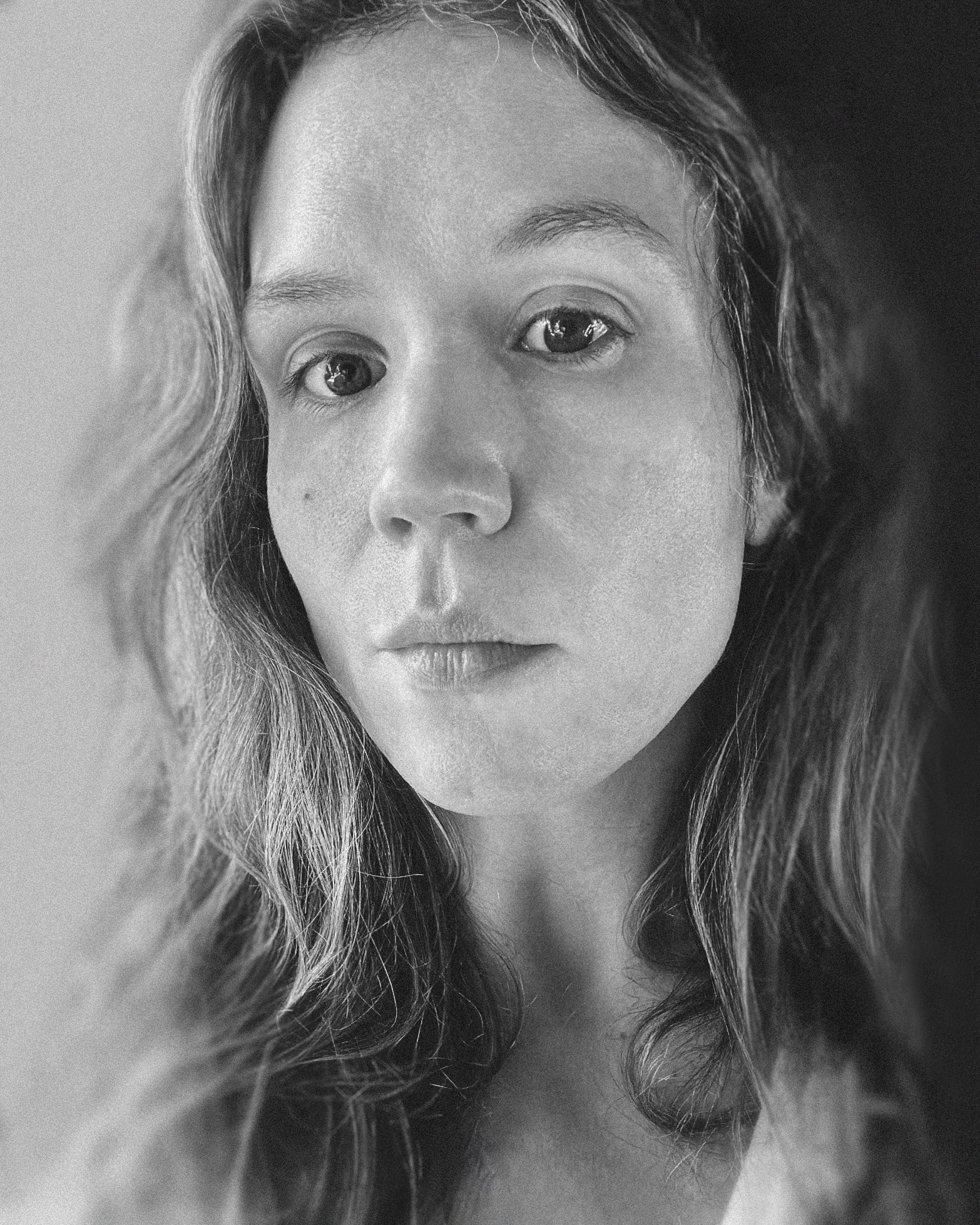
Skander Khlif su viaggi, narrazione e arte del fotogiornalismo
Skander Khlif is Munich-based photographic artist who explores the relationship between people, place, and memory through his poetic visual language. His long-term narratives on cultural identity and resilience in the Mediterranean have earned him international acclaim, including nominations for the Prix Pictet and the Leica Oskar Barnack Award. His work is exhibited globally and has been recognized by the LensCulture Awards and the inaugural Lisbon Street Photography Festival, bridging the gap between technical precision and deeply human, lived experience.
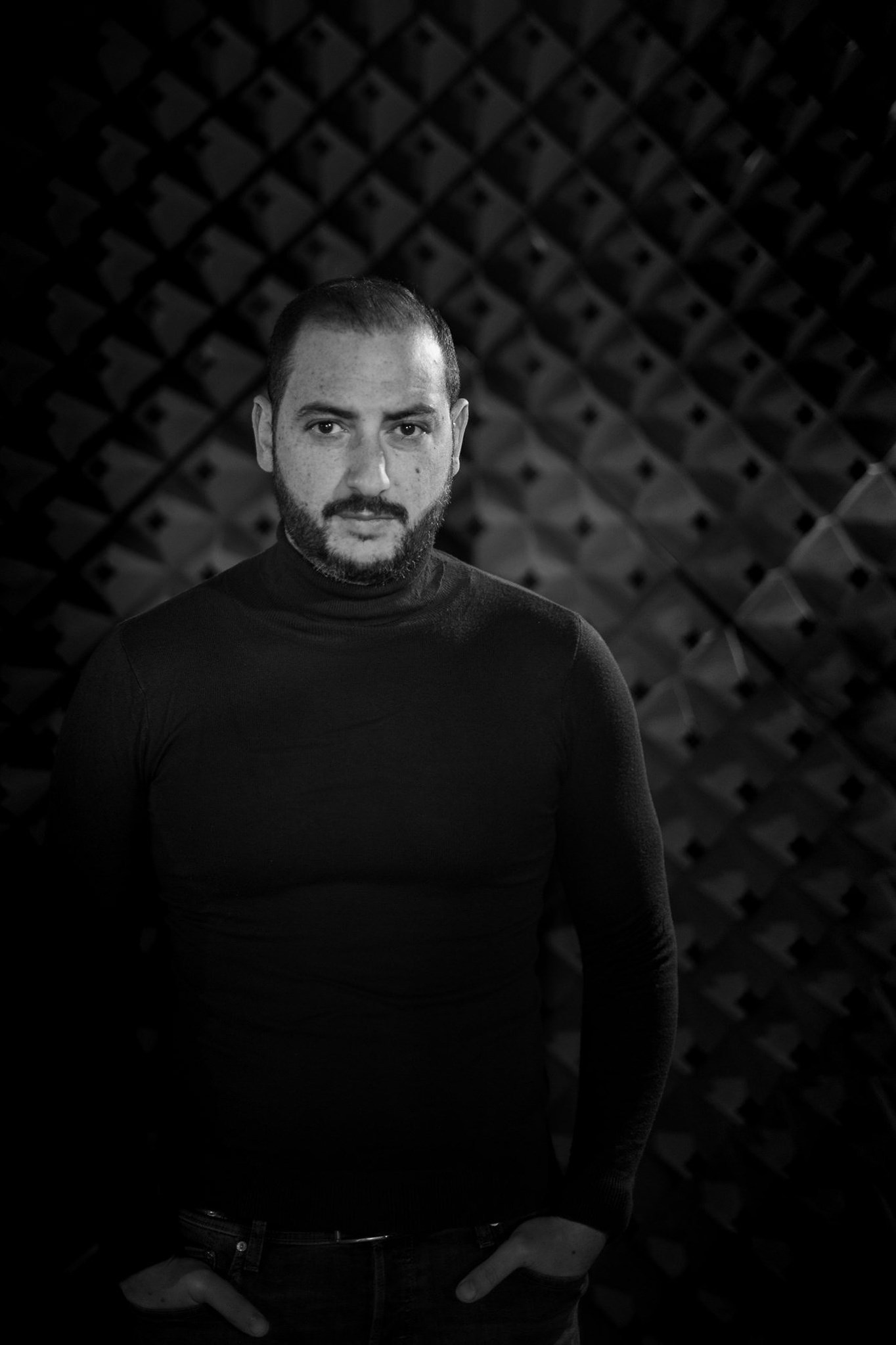
Photojournalist and visual storyteller Skander Khlif.

A Passion for Street Photography that Developed into Visual Storytelling
Please introduce yourself and tell us how you found your way to photography.
My name is Skander Khlif. I’m a visual storyteller and I am Tunisian. I grew up in Tunis and have lived for 20 years in Germany. When I was 12, my older brother handed me his camera and asked me to photograph the family. He just asked me just to frame and click. After, I spent the day photographing all the doors in the Medina and it was a great day. I felt an instant connection. I understood the power of photography in a way, as simple as it was.
Later on when I was a student, I bought a small camera and I started to practice again. Then with my very first pay as an engineer, I bought a full-frame camera body; I put the complete salary on an expensive camera. After spending a full day with machines and PC’s, I needed to go out; I needed the street and I needed people. I would go almost daily on an old harbor in the city of Mannheim. I went through the bars and started photographing the street and people in the bar. And it allowed me to explore the place, to meet people. I think it is that moment where it became a very strong passion. I loved my job but I loved photography more.

Una guida per migliorare le vostre abilità fotografiche
Migliorate la vostra fotografia con la nostra guida gratuita. Ottenete l'accesso esclusivo a suggerimenti, trucchi e strumenti privilegiati per perfezionare il vostro mestiere, costruire il vostro portfolio online e far crescere la vostra attività.
Ricevi il meglio della rivista Format nella tua casella di posta elettronica.

Street Photography Today: Trust, Consent, and Showing Your Work
Street photography has changed significantly over the years, as people have more awareness of being photographed and their images being shared across the internet. Does this impact your work?
I think there are two kinds of people; people who like to be photographed and people who don’t like it. This is not personal, this is really something natural. You lose nothing to ask, right?
What helps a lot is to show your images to people, to show your work, to talk about your work. When you are honest, people see it, and are more likely to allow it. Sometimes, when you take time and people get to know you, it changes their feelings completely.


Intuition and Method: Atmosphere, Research, and Letting Projects Evolve
When photographing people, where do you find that your eye is drawn? What kind of scene or action compels you to photograph them?
I would say it really depends on the scene. For me, everything starts with a story or with something I want; let’s say, to document or to tell or to capture. It can be a personal story, can be a feeling on the street, it can be something happening in events. There’s always an atmosphere, or special story. It all starts spontaneously from that point.
A story can also be built; it can start with a portrait, a very special light, a unique atmosphere, or something which reminds us of the past. And now here we are talking about a scene and the moment.
When it comes to longer stories or stories built over time, of course you have the time to step back and to think about the global story and see what is missing…but the process is always built by spontaneity and thoughts and some research.

Can you walk me through the process of starting to photograph, knowing you have something perhaps or coming to see that an idea is taking shape and then how you continue to work on that. What does that look like for you?
I used to rely more on intuitivity and spontaneity during my whole process. With time, I learned to mix both. Nowadays I do some research before going to a place. I’ll use the internet, maybe give some calls or ask people who have been there, or if I know people there. I’ll spend a few days without shooting, just meeting people and getting to know the place.
After shooting, I come back home and set it aside for a few days. So that’s when I edit; I have a completely fresh eye. In the case of a long-term project, it’s the same process, multiple times, and you have time in between to rethink what you have seen and what you shoot.
This being said, I believe that spontaneity is very, very important. Especially at the moment when shooting, when meeting the people in authentic work. You need to feel the moment, you need to adapt, you need to take in new information and see what is happening, the emotions, what’s happening between people. You cannot, of course, prepare in advance because you will not know everything you need to prepare for.

Where Dust and Water Dream Together: Returning Home Through a Long-Term Project
Right now you’re working on “Where Dust and Water Dream Together”. I would love to know more about the concept behind the project and where it all began.
I was doing a series project, but I never had the chance to make a long-term project. Not only from a time point of view, but also from my point of view. A long-term project is a dedication to a subject, a lot of research, a lot of going there and coming back. I always wanted to do one, but never had the chance to.
So three years ago, I started this project, which I have wanted to do for so long. When you are used to doing shorter projects, it is a bit challenging, but it is really rewarding. It is also a project which I do in my home country. I have lived abroad for 20 years, so it is kind of a spiritual comeback to place, to time.
In the beginning this project was mainly about climate change and the human condition in a place in Tunisia which can be considered as a microcosm because there is a desert, mountains, and the sea. And my first question was what is the connecting point between those places which have climate shifts; is there any technical or human or spiritual connection happening there and how are people living with these changes? Are they resisting, are they resilient, are they suffering, are they being displaced? So it was basically questions and documenting. It was also very focused on technical aspects. What’s happening there? How much is the sea rising?
But over time, what I felt and saw is that it’s more interesting to tell and to feel. To see is really the human aspect. How people are overcoming these challenges, thanks to their connection to the place, to work, each other; thanks to their identity and the things they have inherited from their parents and village area. And automatically I felt this is what I needed to show and say.


What is the experience like shooting in different environments?
It’s about an energy, I think. And I believe also in that sense that the energy in an urban place which is crowded, in which everyone is rushing or moving, impacts also the way you shoot. Or the way you are and feel. While when you go to a place, Sloan island, for instance, spending a week with fishers, your approach, the way you move, the way you talk, the way you shoot, it’s impacted.
Even though the vision is the same, the way you shoot, the timing is different. Also, culture-wise, you don’t shoot the same way while you’re in Germany or Tunisia or Japan. Of course, you are the same person with the same vision and interests. In my case, at least, a camera is a tool to dive into something, into a place, into an atmosphere, into a story, into a family life. And diving into it means that also, you feel it and it influences you, whether you want it or not.

From Photographic Vision and Concept to Editing for Style and Presentation
How has your photographic style or vision evolved from when you first started?
I don’t believe in style. I think style is something others see in your work, but you don’t see it. So that brings us back to the thoughts, how you think about your work.
You can think about your work and conceptualize at a certain point, and it’s a good and important exercise. But when shooting, it is more about the vision, how you feel it, how you see it. And here comes the experience, the living the moment, comes all your background, all your life, your interests, your feelings at the moment. And whatever genre you are shooting, it is the same.
The style itself, once you step back and you edit to show your work, here comes the thoughts about the style: which color grading, which editing, which mood. For me, style is considered more during how to show and present the work than during the shoot itself.
But this being said, I had the chance to collaborate with a professional color grader, who is a specialist in documentary work with ethics. This includes not being allowed to change the color, only in a specific way, and this specialty is used also for photojournalism.
It’s been an amazing experience. I really discovered the power of colors beyond my usual ability and work, especially on a bigger project like a book or longer series. It can be spontaneous, of course, but considering the science of color, it’s really an amazing tool which can help you to build the overall final output.
For me, it’s completely independent from the process of shooting, even though you can think about colors at certain moments, it’s not all the time. Once you have the work, then you can step back and conceptualize a bit more and think in terms of style, colors, and so on.

The Act of Photography as an Integral Part of Daily Life
How does your relationship with the camera change when you shift from a high-stakes commercial shoot to your life outside of work?
In my case, photography, the act of photography, is part of my life…I start to miss it if I don’t do it for three days; it’s really part of me. So in order not to be frustrated not to shoot during, for example, a long-term project, I’ll do it with my family at home. So I photograph my son, my wife, and go on the street. It’s really not the same act, but at the same time—it is, and it even helps you to be creative. Seeing something special with my son at home may help me with my next portrait shooting.
I like to be as light as possible. So most of the time, I shoot with a Fuji X100; you can put it in your pocket. For commercial work, I have a full-frame camera, specifically a Nikon Z6, because I need to ensure an output.
When people ask me about a camera I say “Just go to a store and take it in your hand, and the best camera is the one where you feel it’s an extension of your hand.”
Why a Portfolio Matters: Becoming a Professional Online
Tell me about the role of having a digital portfolio and a presence for your photographic work online? What does that mean to you and how do you go about curating your online presence?
I remember 10 years ago I made my first website and it was a turning point. It was symbolically a turning point because you really consider yourself as a professional. You start to see yourself as a fotografo professionista; and it is written, so it’s there, it’s really there and you have to accept it, and decide what to present, what to show.
I encourage everyone who doesn’t have one to start today. It can be improved with time, but to have one already is very important. Being a perfectionist is good, but sometimes it is not because it leads you to wait until you have things perfect, which does not even exist. Even the most perfect website, the owner probably still thinks it’s not perfect.
We evolve, of course, as a photographer, as an artist, and your website evolves with you; you change things in it. It helps you to assume the responsibility of what you do, what you show, especially in my case, as far as I do different things. My portfolio helps me to navigate between fine art, documentary, and I even do authentic, honest commercials. I can find the right way to express the common point between them, which in my case is authentic storytelling.

Build Your Portfolio Now; Don’t Wait for Perfection
Skander’s advice is simple: put your work online today and let it evolve. Format gives you an easy way to publish a professional portfolio, update projects over time, and present your work with confidence.
– Start with what you have—refine as you grow
– Create a clean, modern portfolio that matches your vision
– Update galleries, sequencing, and presentation as projects evolve
Editing as Storytelling: Cut Ruthlessly, Step Back, Repeat
Like many photographers, you don’t use all the images you take, you curate and edit them down. Describe your editing process.
Editing, like shooting or doing a story, is also a process and it also includes a kind of intuitivity and emotions. Nevertheless, there are of course rules.
What I usually do is I have a story in mind and nowadays I try to write something before I start to edit, even something brief. Then I go through the images, keep the ones which I like, and narrow down the selections.
I cut out images which don’t tell the story, which may not present people in a way they like to be seen. Then I do first edits, go away from the work for a bit, and come back and optimize it. Depending on the story, I like to show it to someone else, even a fellow photographer or sometimes to my wife.
And in that sense, I must say also that long-term projects completely changed my way of editing. I used to be more spontaneous here also. Through the long-term project, I really learned to be more brutal, to cut out images, to be more critical of my work.
I really advise every photographer to start a long term project, in the sense that you really come back to your editing multiple times over weeks, months, or years, and it helps a lot.

Many photographers find it difficult to transition from behind the lens to presenting their work. You mentioned turning your long-term project into a book. What has this experience been like?
So I was always attracted to the process after the image creation, and the book is the finality of that. I’m working with a book editor. It was very important for me also that it is the Tunisian book editor because it’s a cultural story in a way; we’re building it together and evolving. And I think it’s also very important because bookmaking is a completely different art, it’s not a portfolio. It’s really another object.
You bring your story, you bring your work, and someone else does their magic creating a book out of it. It’s important that there is a complete mutual confidence and to believe in the magic of the other person to make the best out of it. It’s also very interesting because it takes a long time to build a book, more than a year or two. And time is always very, very important.
When you’re ready to sequence your work like a story—not just a folder—Format makes it easy to build projects, reorder images, and keep refining your portfolio. Start a free trial and treat your site like the first draft of your photo book.
Skander Khlif’s Advice for Emerging Photographers
- Start with a question: Begin small or large projects by asking questions about something you’re interested in documenting; it could relate to a personal story, a feeling on the street, or an event.
- Change is part of the journey: You may not know the story you’re going to tell when you start; begin with a question and explore the subject without a predetermined result.
- Research and take extra time: Do some research before going to a place, be curious, and spend a few days getting to know the people and place before you begin photographing.
- Step back and be critical: Take short breaks between shooting and editing and be willing to cut images when they don’t tell the story for a stronger body of work.
- Start a long-term project: The process of coming back to your work again and again over time will help you become a stronger editor.
- Keep your setup simple: The best camera is the one that feels like an extension of your hand.
- Put your work online now (don’t wait for perfection): Being a perfectionist can be good, but it can also prevent you from sharing anything. You will never think it’s perfect; create the website and allow it to evolve.
Costruite il vostro portafoglio con Format
Il costruttore di portfolio online #1 è stato valutato da artisti e creatori.
Contribuenti
-

Julia Martin è un'artista interdisciplinare e scrittrice di Montreal. Con un master in arti visive e un master in fotografia, il suo lavoro è stato esposto in Canada, Cina, Francia e Finlandia, anche in diverse residenze d'artista. Ha insegnato all'Università di Ottawa, ha fatto parte di giurie artistiche e ha quindici anni di esperienza come fotografa freelance. La pratica artistica di Julia potrebbe essere meglio descritta come "storie tristi punteggiate da battute"."
Anche se a volte è il contrario.
-