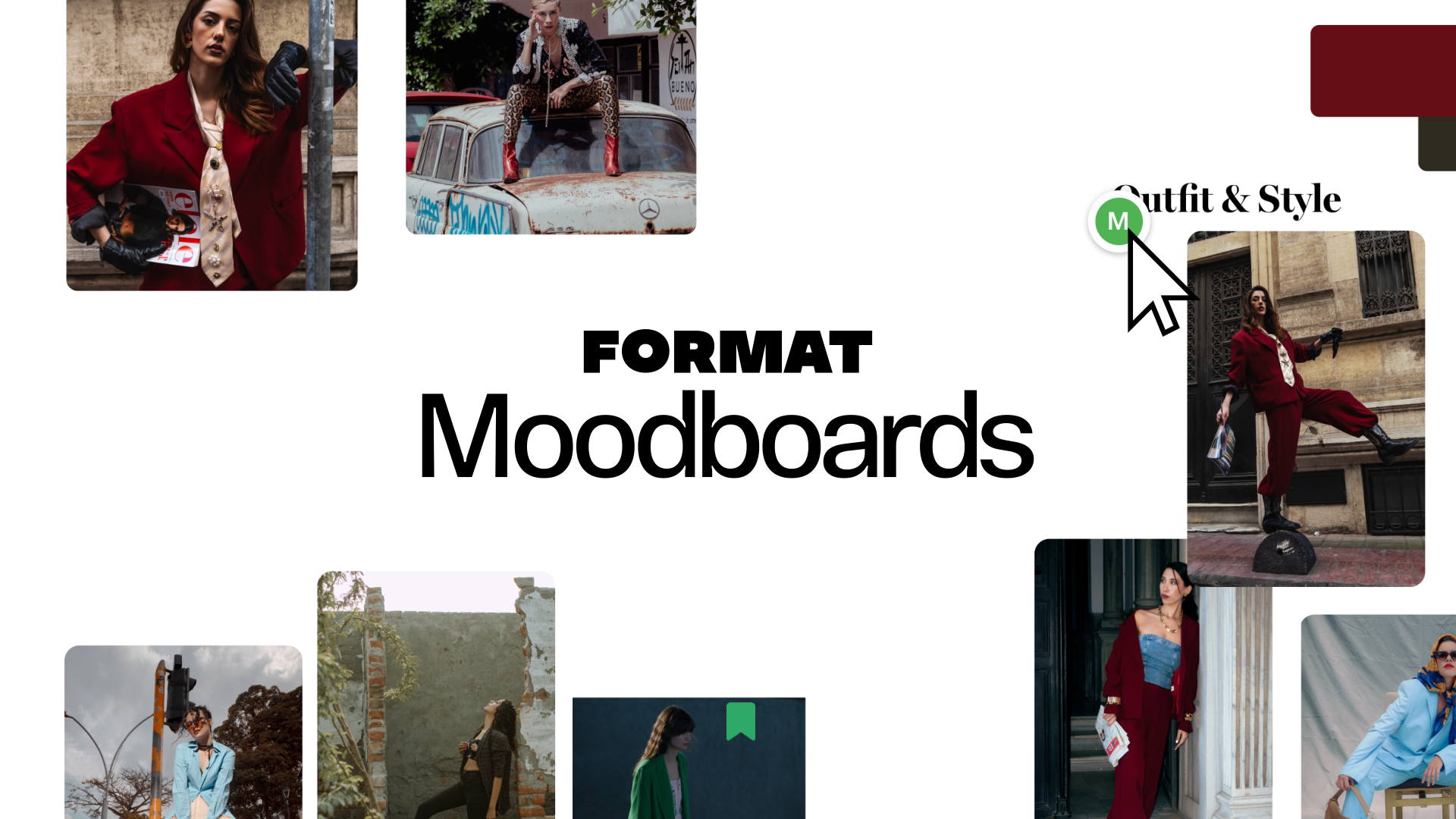



Introducing Moodboards
Every strong project starts long before the first frame. A curated set of references, colors, and textures define how the work should feel. For many creatives, that vision has lived in scattered PDFs, screenshots, and email threads, which makes it hard to share and even harder to keep everyone aligned.
Format’s new Moodboards feature was designed to close that gap. Moodboards gives members one place to curate their creative direction, share it with clients, and gather feedback directly on the board, within the same platform that already holds their portfolio. We sat down with Germán Vargas, Format’s Digital Marketing Designer, to talk about what makes a moodboard work, the most common mistakes he sees, and how Moodboards brings the start of a project into the same home as the finished work.
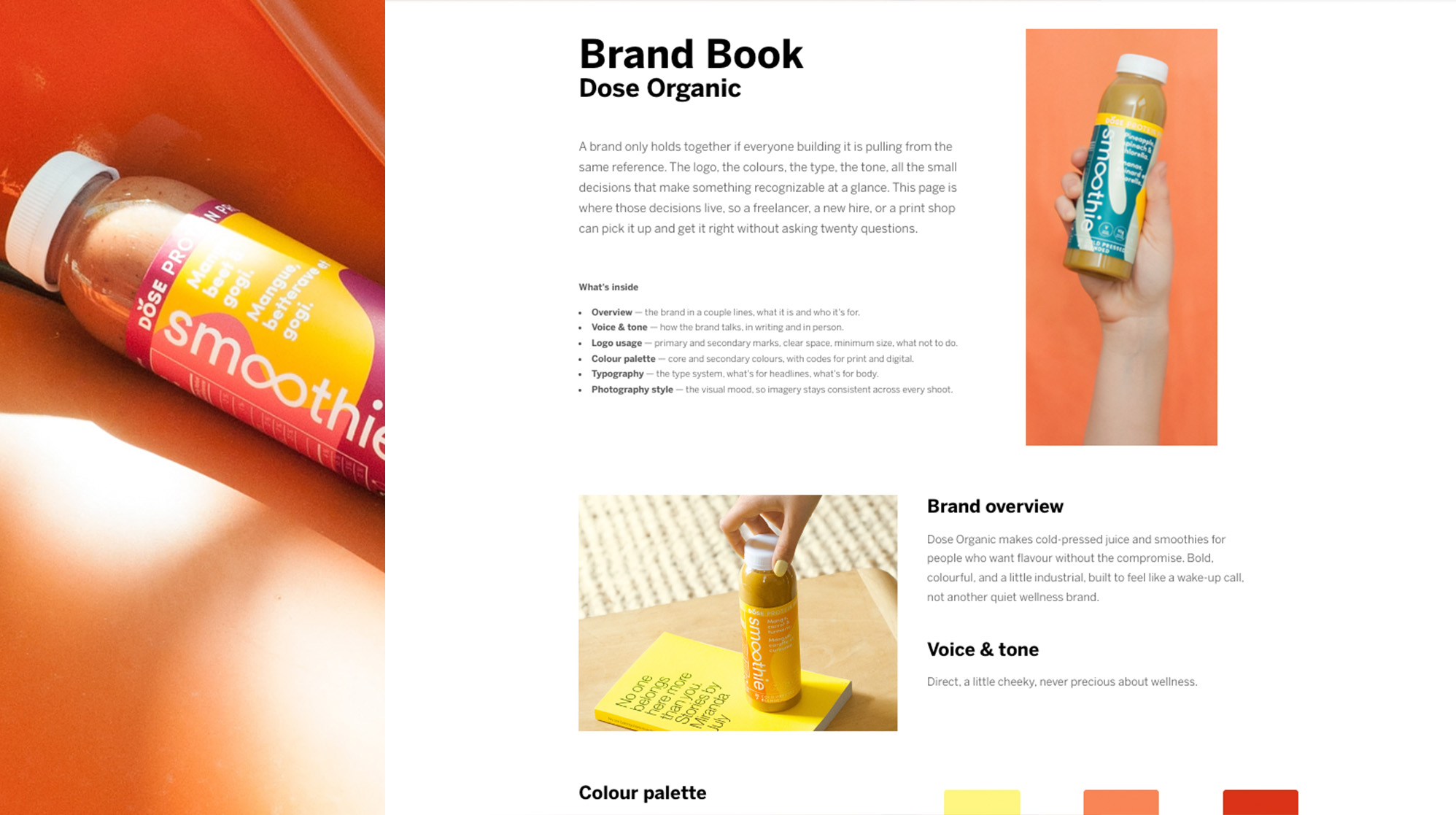
In Conversation with Germán Vargas, Format’s Digital Marketing Designer
Can you tell us a bit about yourself, your background, and what you do at Format?
Yeah, of course. I’m the marketing designer at Format. My background wasn’t a straight line. I started in law school, then jumped to advertising school, and then after graduation I went to design school. I’ve been chasing the creative work that I love doing this full-time. And for the past 10 years I’ve been working on different creative projects from freelance to small companies to large corporations in different design and marketing roles.
At Format, my role is solving our brand and communication problems, taking what we want to say and what we want to communicate with others and making it beautiful and easy to understand.
And in your own words, what are Moodboards and what are they used for?
Moodboards have two sides to them. One is an inspiration tool, and the other one is a communication tool. So it’s really a place where you put in the inspiration for a creative project to follow a specific look or set of colors or set of textures that you wanna follow throughout the project.
And it’s a communication tool because it’s what you use to bring that vision to your client and to make sure that you as a creative and your client are aligned into what the project should look like at the end.
What were some of the primary member or client concerns you aimed to address with the creation of Moodboards?
Mostly, it was a workflow concern. Moodboards are widely used in our industry. Creatives use moodboards in every shape and form, but in Format we’re trying to create a platform where creatives have control over their workflow from end-to-end, without needing to jump between different platforms or softwares.
Previously, moodboards for our clients lived somewhere else in another tool. And it was either hard to share them or hard to keep track of them or hard to get comments on the moodboard that you had prepared. We wanted to make this a seamless experience.
So instead of having moodboards as PDFs or downloads in different folders for different people, you have just eine place where your vision of the project lives and the client can comment on it. You can make adjustments on the go.
“it’s not about collecting, it’s about kuratieren..“
Expanding a bit on that, how do you see Moodboards improving member experience on Format?
It closes a gap in the workflow. Before, Format was just where your work ended up as a final point. Now you can Start your projects in Format and have one platform where everything lives.
Moodboards uses the Flex Block engine that our Format members are familiar with. It’s a very flexible interface that lets you personalize things to your liking. Once complete, it allows you to share your moodboards, allows you to get comments on them, allows you to see them on the go, all within the same platform. It makes the project a seamless experience for you and the client from beginning to end. And I think that’s something beautiful.
Keep your creative direction and client feedback in one place. Discover Moodboards on Format.
Can you walk us through how a photographer might use Moodboards on a real project from first idea to client sign-off?
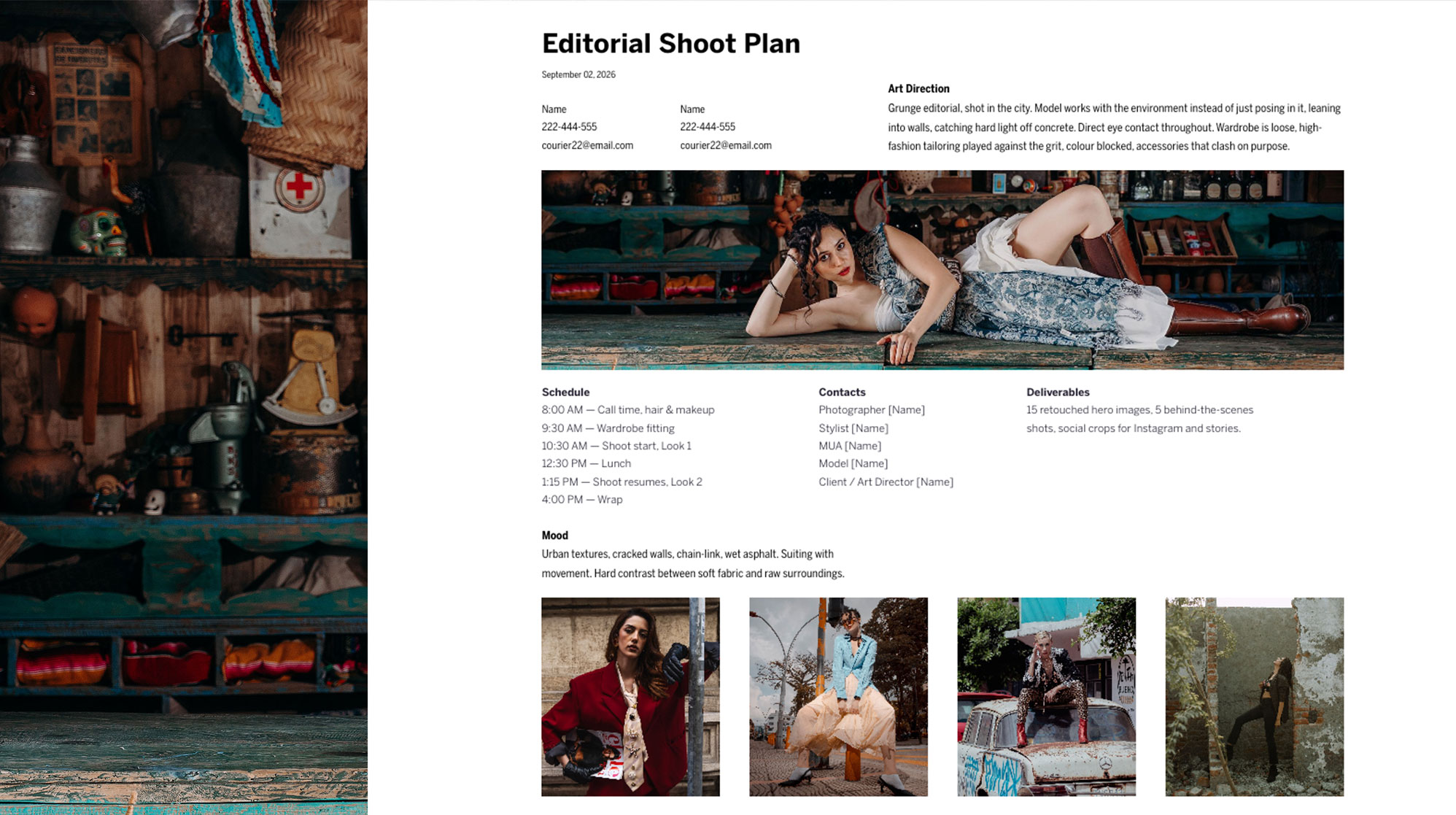
Let’s say you’re shooting an editorial project. You want to communicate your vision, you know how you want these final shots to look based on the project brief and whatever you have talked about with the client. So you come onto Moodboards and you curate those images, swatches, some ideas, and you put them all there in the moodboard to show your client.
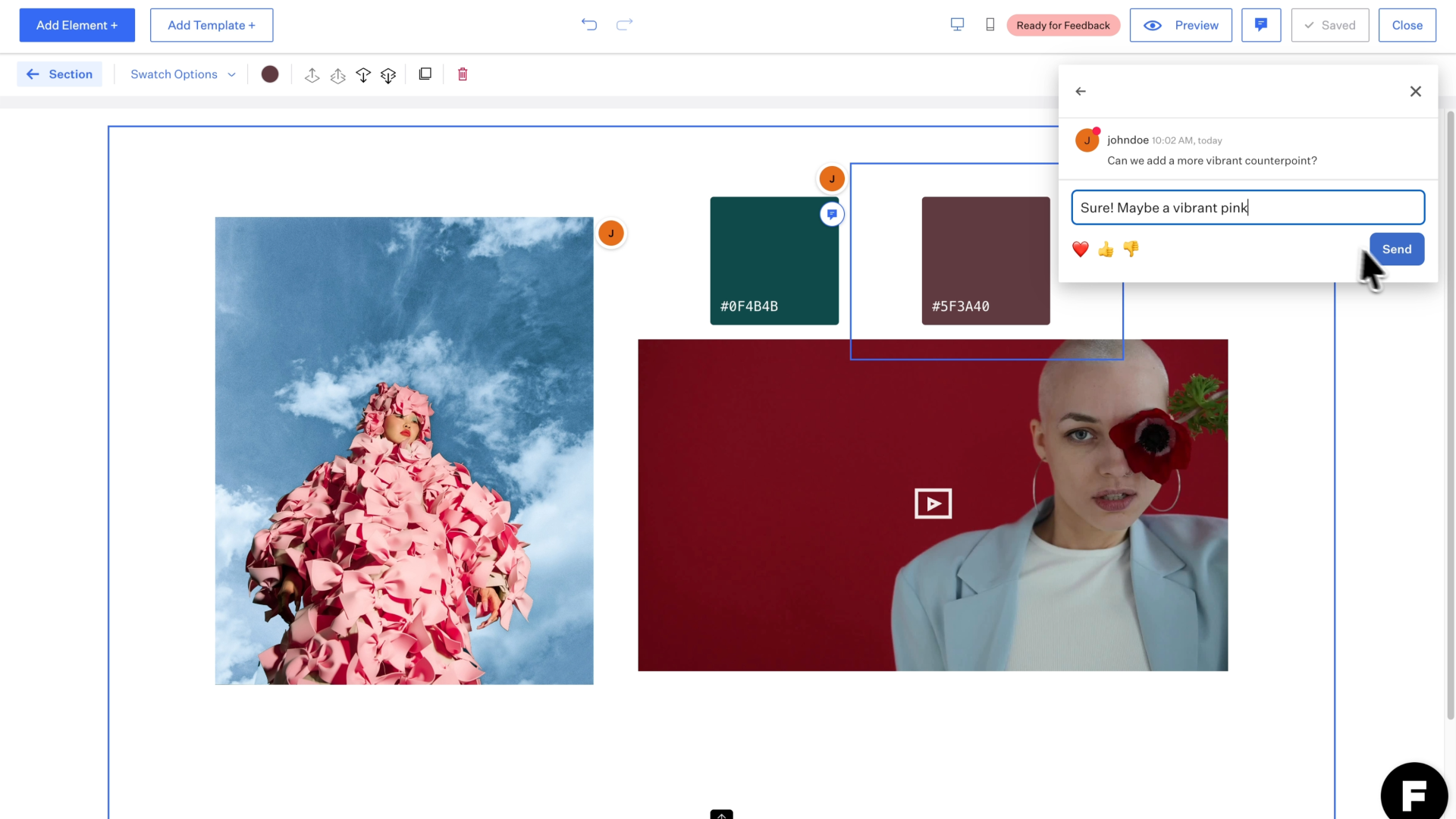
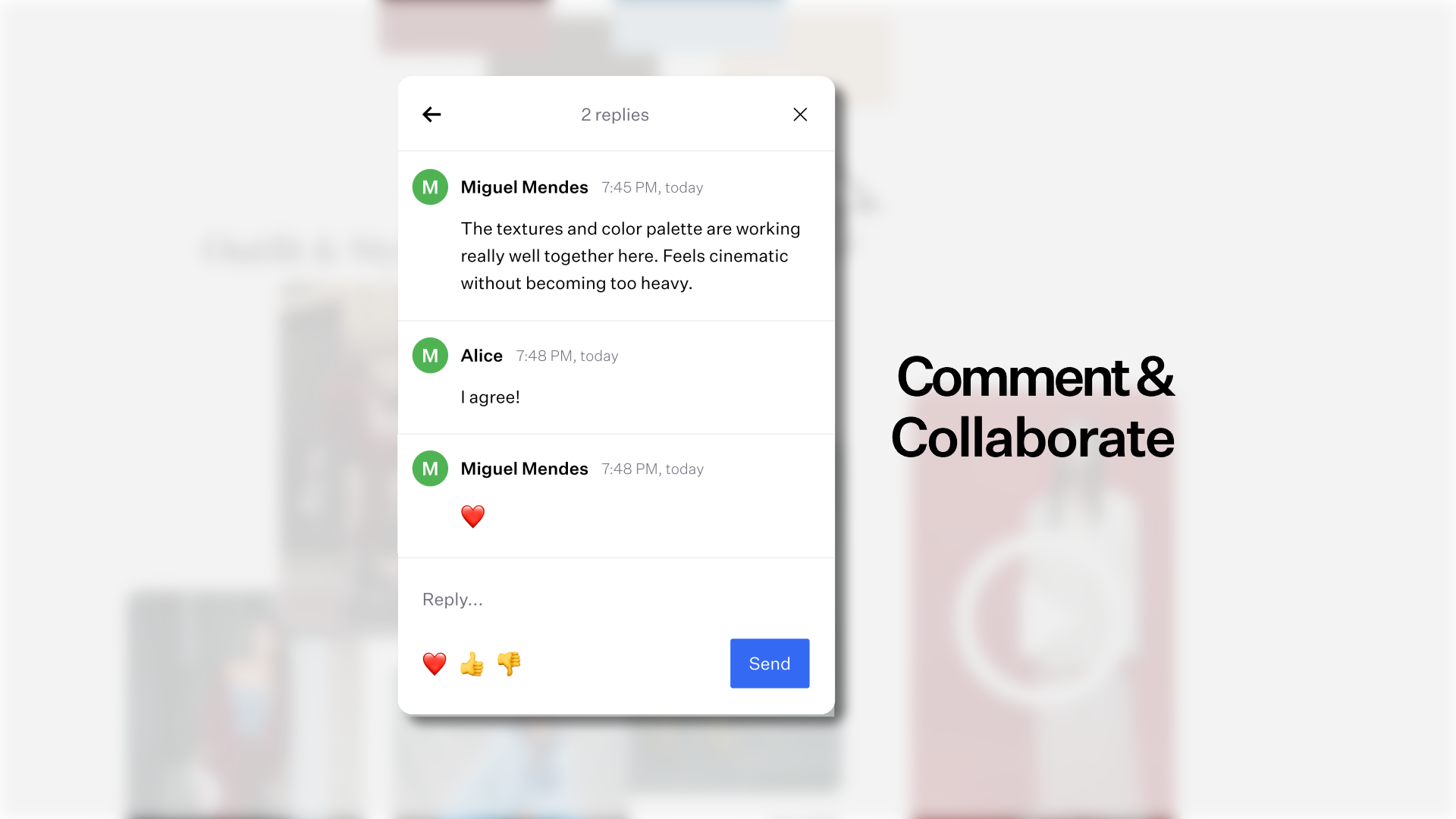
If the client doesn’t like them, it’s just a quick comment on the moodboard. They can add a comment on the backdrops or swatches and say, “I don’t love this one. Let’s change this.” And then you can reply to that comment and say, “Okay, perfect, let’s change it”. It allows you to be aligned with the client as a photographer. And so it’s a better workflow—you’re solving problems with your client before the shoot even starts.
“A moodboard is more of a living being. You start the project with your inspiration, and then it lives throughout the project as a point of source.”
What does the experience look like for the client?
For the client, it’s a very simple experience, which was the whole point of Moodboards. A client gets the link from Moodboards that you can send via email. They click the link and go straight into the moodboard; they don’t need a Format account.
They can go into the moodboard, check the references, look at your descriptions, look at your ideas, and comment on what they love, what they don’t love, what they want to change. What the client sees is a very professional layout of ideas and creative direction that they can comment on and follow through throughout the project.
Is there a common mistake or a missed opportunity that you see often in people’s use of moodboards?
Yes, so as I said at the beginning, Moodboards are both an inspiration tool and a communication tool. There’s one mistake within each of those facets that I see. The first one is on the inspiration side: it’s not about collecting, it’s about kuratieren.. A lot of people collect a bunch of different images and use moodboards as a content bank, but a moodboard should really be a curated set of inspirational assets to give a direction to the project.
On the communication side is using a moodboard as a line item that you cross off, send it, and get it approved. A moodboard is more of a living being. You start the project with your inspiration, and then it lives throughout the project as a point of source, which is part of what we wanted to allow with our tool. We wanted members to be able to use the moodboards as a source of truth and an evolving source that you can keep checking throughout the project to make sure everybody who is part of the project is aligned with the visual outcome.
Is there one aspect of Moodboards that you’re especially excited about?
I’m excited about everything. Moodboards are a great tool. Our engineering team has been working very hard on it. Our design team has been working very hard on it. I think two things excite me a lot. One is the templates for Moodboards. I’m directly working on them and I’m creating a set of templates that allow our members to start from a common point instead of facing a blank page.
The other thing that really excites me about Moodboards is to see what our members are going to do with them. I can’t wait to see how our community takes the tool and makes it their own. I think it’s just something very exciting to give a new tool to creatives so they do their creative things with it. And I think that’s the best part of it.
Alles zusammenfügen
A moodboard isn’t a box to check and forget. It’s a living document that guides every decision from the first idea to the final frame, and keeps you and your client looking at the same vision throughout. Moodboards was built to support exactly that, giving your creative direction a home on Format that grows with the project.
Ready to start your next project with intention? Explore Moodboards in your Format dashboard.