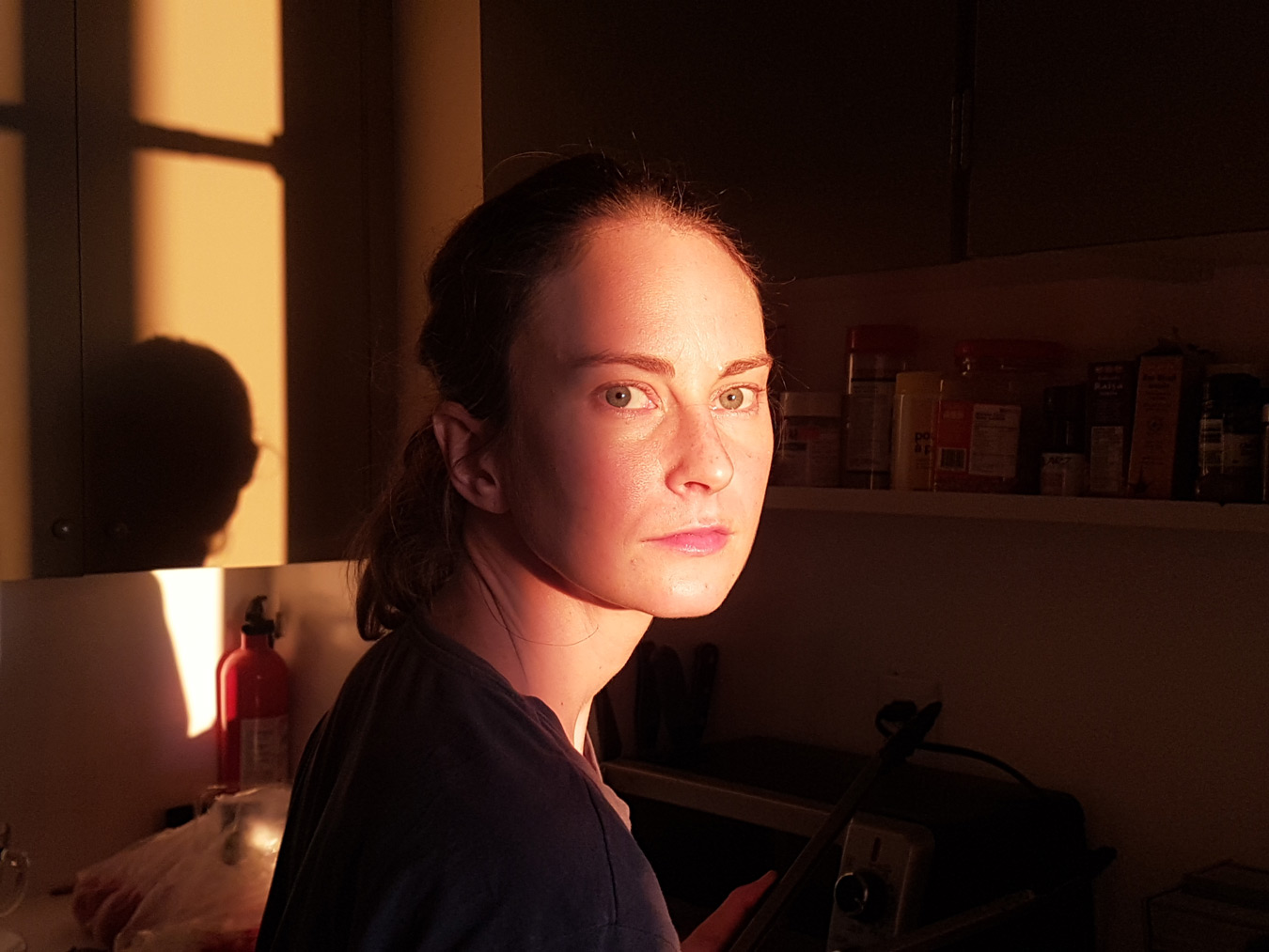


It’s spring. The flowers are blooming, the birds are singing, the patios are opening, the world is alive. And I am stuck inside, staring at my computer screen, trying to find the words to convince the Canada Council to fund a project that seemed like an excellent idea, a sure thing idea, even an important idea; until I found myself where I am now, staring down a blank page on a truly perfect afternoon.
The reality: no matter how many times you sit down to apply for a grant, you can still find yourself stuck. In this guide, you’ll learn how to:
- Define your project before you start writing
- Choose the right grant program for your goals and bandwidth
- Write a project description that speaks to all three evaluation criteria
- Work with a grant officer (seriously, do this)
- Revise with your jury in mind
What Grant Funders Are Actually Looking For
Getting a grant to fund your creative project can be, if not always life changing, certainly year changing and career validating. Funding can cover materials and studio space, travel, research, an extra pair of hands, even childcare. It can pay for the time it takes you to complete a project, letting you dial down other work and take risks that would otherwise be untenable.
If, that is, you can navigate the programs, platforms, and application components you need to maneuver through to get it. I walk clients through the whole process of grant writing for artists on a regular basis, and still I’m stymied when I have to do it for myself. The stakes just feel different when it’s your own project you’re putting out there.
If you, like me, are white-knuckling your way through your own grant application this spring, here are the steps that, in addition to a truly phenomenal amount of tea, can get you, without too much pain, to a point where you can feel confident hitting “submit.” And, ideally, get you funded, too.
Most funding programs, in Canada and elsewhere, have different types of funding for different types of activities. You can apply for funding as an individual, group, or organization to:
- do research
- create new work
- prepare for or present an exhibition
- learn new skills
- viaje
- support other artists
- do a special project
And this is without considering the various special funding opportunities that come up from time to time.
As you’re preparing, keep in mind that your application will also be evaluated based on three general criteria:
1. Merit: Is the Work Significant?
This comes down to whether the jury thinks what you’re proposing will represent a significant artistic contribution to your field of practice.
2. Impact: Who Does It Reach and Why Does It Matter?
The jury will be considering how your project will be meaningful to your trajectory as an artist, artistic career, the communities and/or collaborators you plan to work with, and the audiences you hope to reach.
3. Feasibility: Can You Actually Pull It Off?
This is honestly one of the most important parts in the jury’s decision-making: whether you have or have a plan to acquire the resources needed to complete your project, have allocated enough time to do so, and whether your budget (if you have one; the set amount for the grant if not) is adequate for what you’re planning to do. Your application might have a lot of merit and impact, but if you can’t make a case for successful completion of your plan, the grant money may go to someone who can.
Each of the application components has opportunities to show how you’re planning to meet these evaluation criteria. The trick is using them to your advantage given that you only have a limited number of characters, words, or pages to make your case.
Next, we’re going to walk through funding all or part of the creation of a new artistic project; most of the principles and many of the steps will also translate to other kinds of funding.

Step 1: Define Your Project Before You Write a Word
Whether you’re writing your first grant application or your fiftieth, for a project that feels familiar or totally new to you, start by making sure you have a handle on exactly what you want to do.
A Quick Project Clarity Checklist
- What mediums or media will I work in?
- Will it be a solo project or a collaborative one?
- What is the scale, the subject, the process as I see it?
Don’t just focus on where you want to end up—the work or series of works you’re hoping the grant will allow you to create. Think about everything you need to do to get to that point, including anything you’ve already done.
In my case, I’m applying for funding for a novel I’ve been picking at, so while I have a solid grasp of my concept and artistic goals, not to mention a fair amount of drafting in the “already done” category, there’s still a lot I have to do. This is what I’m applying for funding for:
- Doing research to fill in holes in my plot and characters that emerged in my first draft
- Revising the manuscript to reflect my research
I figure it will take between six and eight months to get through these tasks, if I can convince a funder to replace at least some of the income I’d otherwise get from freelance work for that time.
Step 2: Choose the Right Grant Program
There are three levels of public arts funding in Canada with grant programs for individual artist projects:
- Federal: Consejo Canadiense de las Artes
- Provincial / Territorial: Ontario Arts Council, Alberta Foundation for the Arts, Yukon Arts Fund, etc.
- Municipal: Toronto Arts Council, Conseil des arts de Montréal, etc.
Depending on where you live, you may qualify for multiple levels of funding, so it’s worth exploring the eligibility requirements for all of them.
Funding Amount vs. Effort vs. Timeline
Outside of eligibility, strategically, there are three main things to consider when picking your program:
- How much funding you need. Typically, provincial/territorial grants are larger than municipal, and the Canada Council allows you to apply for the largest total amount (up to $75,000 for a single grant application, or $150,000 in a year, spread across up to 3 applications). Each program caps how much you can apply for in a single application, and how many applications you can submit for the same project and/or in a given year, but if you are eligible for all three levels of funding, there’s nothing stopping you from submitting to each.
- How much bandwidth you have for grant applications. Canada Council may offer the largest project budget, but, in Ontario at least, their application is by far the most complex. If you’re new to grant writing and already feeling overwhelmed, starting with a simpler application can help build your confidence to get through the process.
- Timelines. Some programs have rolling application deadlines, meaning you can submit at any time, as long as you haven’t completed the activities you’re hoping to fund. Others have set deadlines once or twice a year. All of them have a waiting period between when you submit an application and when you find out if you’ve been successful—up to five months for Canada Council applications. As someone who has bought plane tickets without knowing if my travel funding was going to come through, there are some things I’m prepared to risk self-funding while waiting on an application result and some things I’m not. Pick a timeline you’re comfortable with, on both ends of the process.

Step 3: Understand the Core Parts of a Grant Application
Alright, so you have a project and you’ve picked a program, clicked your way through setting up an account in the portal, and are ready to write. While the structure and sections of different programs vary in their details, project grants have four main components:
- A description of your project, which might include separate sections where you discuss your timeline and the resources and experience you bring.
- An artist CV that lists your past projects and helps the evaluators understand where the project fits in your artistic trajectory and your capacity to complete it.
- Supplementary materials—normally visuals documenting your past projects.
- A budget: This should be either the amount you require to complete the project, or the set amount for the grant.
Step 4: Write a Compelling Project Description
Whether your program gives you one section to talk about your project or, like the Canada Council application, divides the written portion of the application into sections, the most important thing you need to do is create a clear narrative for your project: where it comes from, how you’ll bring it into the world, and the effect it will have once it gets there.
Making the Case for Significance
In addition to laying out your concept and giving your reader a firm sense of how you’ll pull off all that you have planned, you need to make a case for why your project is significant—the impact criteria, whatever that looks like for you. This is in part a question of what effect you hope your project will have: on your practice, your career, your community, or a wide audience whose perspective you aim to change.
But it is as much about where you’re coming from as where you’re going. What are your influences, and do you intend to build on them or challenge them? Where does this project come from, anyway?
Getting Your CV, Budget, and Support Material Right
Once the main written components are done, it’s the CV, supporting material, and budget that lay out exactly how everything will come together. These parts of the application can seem straightforward, but they’re worth a bit of extra time.
Beyond the obvious—making sure your CV is up to date and you’ve followed all the formatting instructions—there are opportunities here to improve your chances. Make sure your project description and anywhere you’re asked to talk about yourself lines up with and highlights the strengths in your CV.
Be realistic with your budget. Don’t hold yourself back from asking for what you need, but don’t push what you’re asking beyond the scope of the project you’ve described. That said, unless you’re far better at estimating how long things will take than I am (a low bar to clear, I promise), be careful not to underestimate how much of your own time you expect to spend on your activities.
Unless subsistence is capped for your program, use CARFAC to calculate your day rate. Give yourself the time you need; underestimating your hours won’t earn you feasibility points.
Not only will this help ensure that, if you’re successful, you really do have the resources to pull off your plan, it shows your evaluators that you understand the work you’re about to take on. If you want to get full marks for feasibility, proposing you’ll take three months to do six months of work isn’t going to help.
For the supporting material, whether or not you find this section complicated depends less on your experience and the quality of your previous work than on how easily that work fits into the box the application provides for it. If you find your work hace fit the provided box, I’m phenomenally jealous—I agonize over this part of any application and would very much love to be in your shoes.
But if you are stymied, the best advice I can offer is to do what I do, and have done, for myself and for my clients: come up with a plan that seems like the best possible scenario for presenting your work, and proceed to step 5, the most reassuring in this whole process.
Need a better way to present your support material? Many artists link to their online portfolio as part of their grant application. A clean, gallery-ready presentation of past work can make a strong impression on evaluators.
→ Explore artist portfolio themes

Step 5: Talk to a Grant Officer
Here is the thing about most of these programs: the people that administer them are wonderful. The grant officer responsible for your program is there to help you.
Unsure if you are putting budget items in the right category? Ask your grant officer!
Want to double check that your strategy for presenting your durational performance isn’t going to get you excluded on a technicality? Ask a grant officer!
Feeling confused and lost and a little unsure about this whole thing? Did you know that, quite often, your grant officer will call you on the phone, just in case you have follow up questions or there’s something you weren’t quite sure you needed to ask?
Bottom line, always talk to your grant officer. They’re there to help, and they will. In the world of Canadian arts funding, grant officers are the everyday heroes all of us need. Pepper them with your grant-related questions, and always, siempre take their advice. You won’t regret it.
Step 6: Revise for Clarity (and for Your Jury)
Your application is drafted, your budget grant-officer approved. It’s time for the final read through; for specifics and consistency, of course. But also for something else, which can get a little lost as you pull it all together.
This is remembering that your jury members are people, too. People like you—your artistic peers—who, for modest compensation, have agreed to read through, not only your application but dozens of others, and to discuss them all, earnestly and in good faith, most likely on Zoom.
Be kind to your jury members, and be generous to them. Be generous to yourself, too. Set up your references and explain what they are and why they are important, not in a general sense, but to you, personally, and to the project you mean to undertake.
This can be especially important if most of the writing you’ve done thus far has been in an academic setting. Your professor cares that you cite the assigned reading; your jury cares that they can understand your project enough to evaluate it and that it seems like you understand it, too. Even if their frame of reference includes none of your personal go-tos.
Quick Grant Writing Checklist
☐ Define your project scope, timeline, and media
☐ Research and select the right funding program
☐ Review all four application components (description, CV, support material, budget)
☐ Write a clear project narrative that addresses merit, impact, and feasibility
☐ Contact your grant officer with questions
☐ Revise for clarity, consistency, and generosity toward your jury
☐ Submit and celebrate

Step 7: Submit, Breathe, and Keep Going
You’ve done it! You’ve hit submit! Pat yourself on the back and get yourself a treat. In all seriousness, you should be proud. Whether your application is successful or not, putting it together is a significant undertaking, one that can force you to consider your motivations, objectives, and methods for making work in ways you might otherwise not. It can also be lonely.
The early stages of a project can be especially vulnerable, those weeks or months when you’re not sure you’re going to pull it off. It can be hard to pitch a project in those stages to strangers, no matter how excited about it you are, and scary to lay claim to ambition that depends, at least in part, on money that is far from guaranteed. This is certainly the case for me.
Give yourself a break, and tell your friends what you’re trying to do. Get their feedback on your pitch, and offer your own on theirs. If there’s one thing I’ve learned helping other people apply for grants, it’s that the more applications you’ve seen, the less intimidating the whole process is. And the more flexibility you find to put your project in its best light.
Last year, the Canada Council received 22,078 applications across all its programs and awarded 6,817 grants. Of the 3,037 that went to individual artists in all disciplines, 1,445 were to people who were first time recipients. As far as odds go, those aren’t terrible. Whether you end up funded or not, fully or partially, I can assure you you’re in good company.
Your grant application tells the story. Your portfolio shows the proof. A strong online portfolio strengthens your grant application by giving evaluators a clear view of your past work and creative trajectory. Build yours on a platform designed for creative professionals.
→ Start your portfolio on Format
Colaborador
-

Ruth Jones is a Toronto-based writer, editor, and curator. She works with arts and academic clients as a grant writer, editor, and publication manager. You can find her own work in outlets including the Globe and Mail, Toronto Star, Boston Globe, Los Angeles Review of Books, Literary Review of Canada, and CBC Ideas podcast.