

Your portfolio is the first project anyone judges you on. Before a creative director reads your case study or an agency reviews your reel, they see how you’ve chosen to present your own work. That presentation tells them everything: your taste, your editorial thinking, your eye for detail, and whether you understand how to tell a visual story.
The difference between a portfolio that opens doors and one that gets closed in three seconds is rarely about the quality of the work itself. It is about curation, narrative, and the design decisions that frame everything else.
Below, we break down real art director and creative director portfolios that get it right, what specifically makes them work, and how to apply those same principles when building your own.
What Makes an Art Director Portfolio Stand Out
An art director portfolio is not a visual archive. It is a carefully constructed argument for your creative vision.
The strongest portfolios share a few traits that are easy to name but difficult to execute:
- Ruthless curation. Fewer projects, shown with intention. Every piece should earn its place.
- Visual narrative. The portfolio itself reads like a designed piece, not a collection of thumbnails dropped into a grid.
- Process visibility. Clients and hiring managers want to see how you think, not just what you delivered. Sketches, mood boards, and behind-the-scenes context elevate the work.
- Personal brand consistency. Your portfolio’s typography, color palette, and spatial logic should feel like an extension of the work inside it.
- Clear positioning. Within ten seconds, a visitor should understand what kind of creative you are and what kind of work you want to do next.
This is what separates a portfolio that gets bookmarked from one that gets bounced.
Art Director and Creative Director Portfolios Worth Studying
The following portfolios stand out not because they follow a single formula, but because each one makes deliberate choices that reflect the creative behind it. We’ve included a mix of art directors and creative directors working across branding, editorial, digital, and multidisciplinary practices.
Steve Attardo
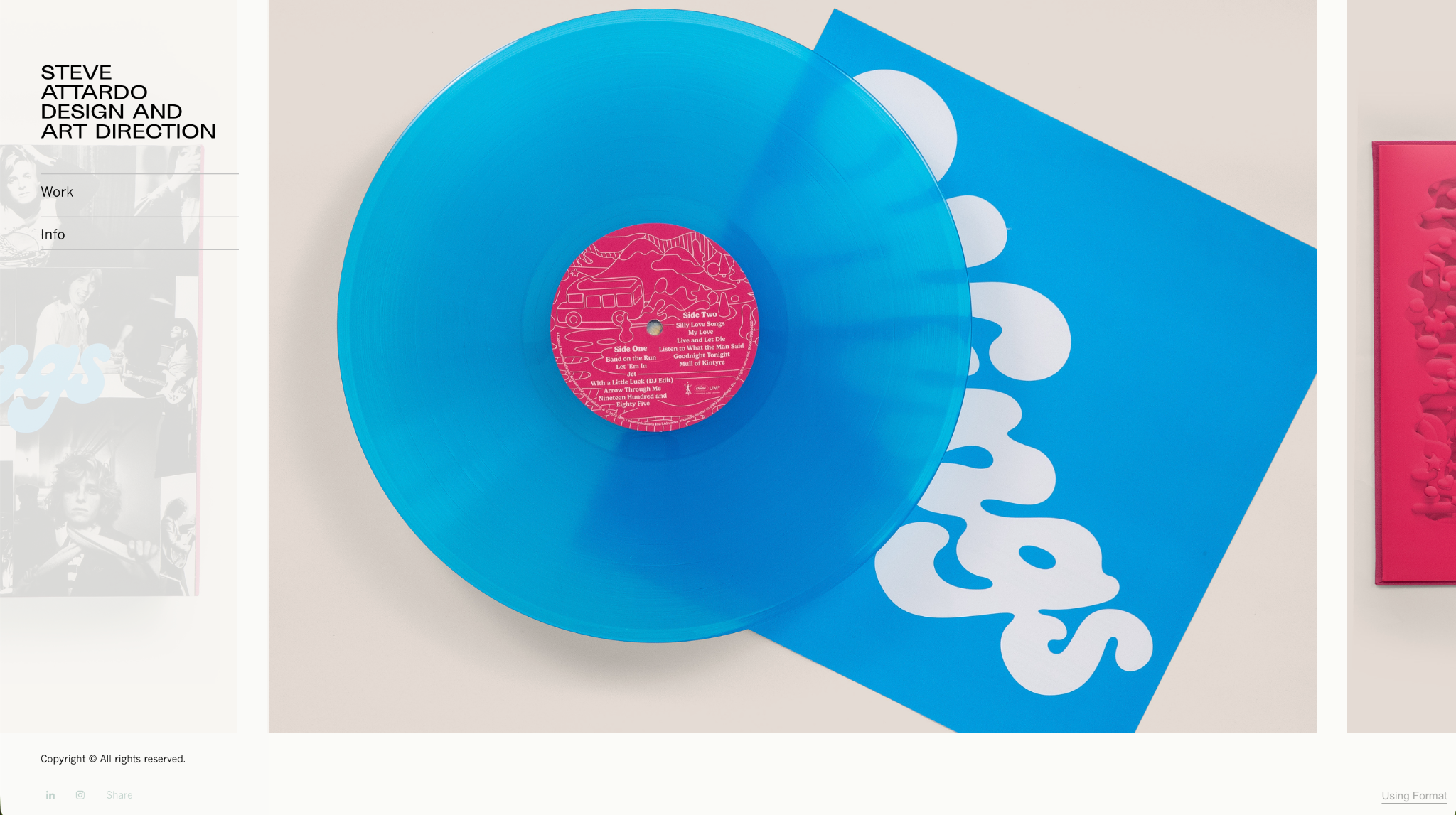
What works: Steve Attardo’s portfolio is built around book design and art direction, and the navigation reads like a publisher’s catalog: Fiction, Non-Fiction, Poetry and Essays, as well as some individual projects. Each project credits its collaborators, including illustrator Alex Trochut and animator Micah Bartel. That shows how he directs a team, not just what the finished cover looks like.
Takeaway: Organize your work the way your industry thinks. Genre-based navigation tells publishers that you understand their world, and crediting collaborators shows leadership and strength as a team-player.
Emma Morton
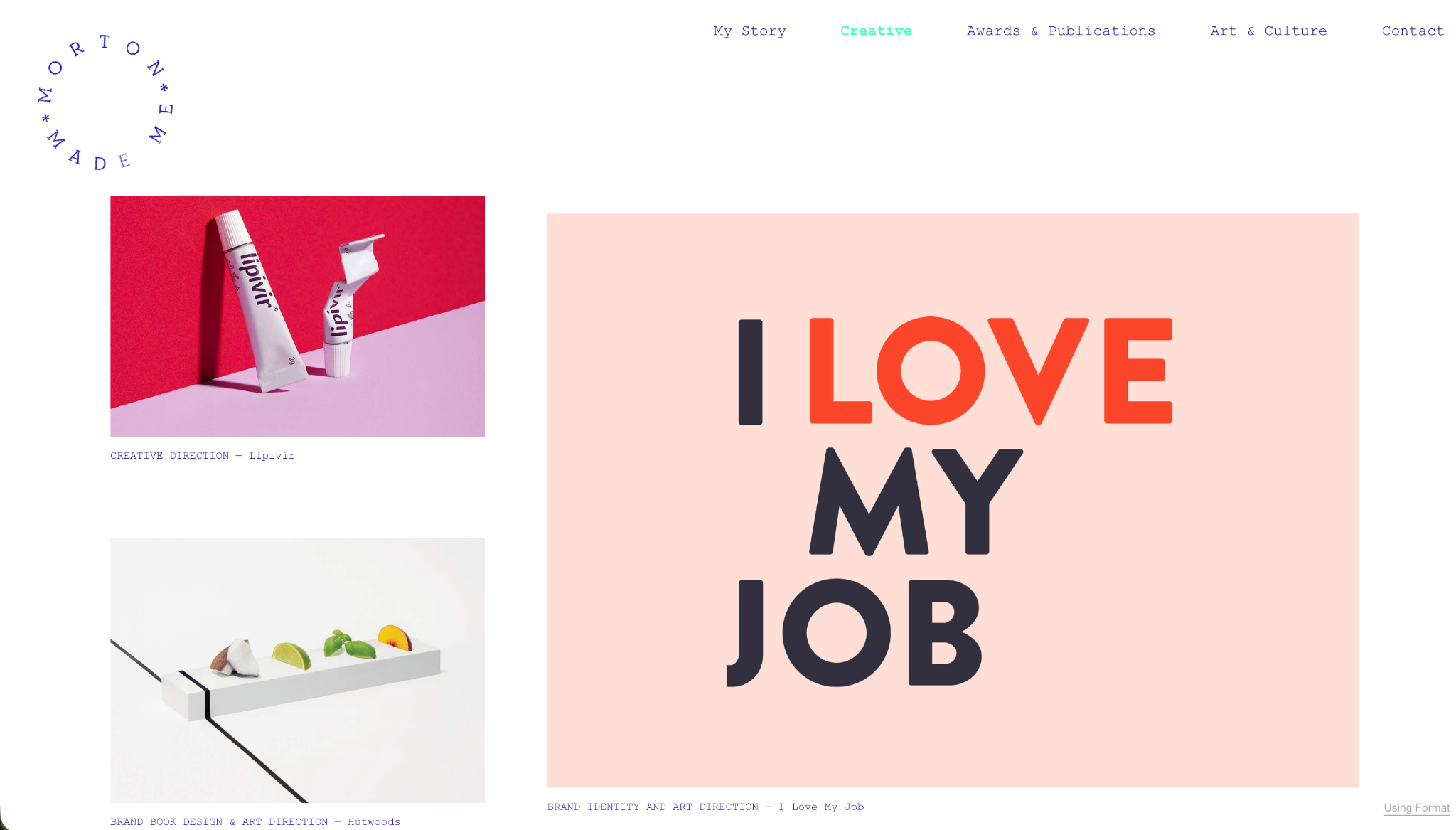
What works: Emma Morton is an art director, designer, and stylist whose work covers branding, packaging, and experiential work. Her portfolio labels each project by discipline first, then client. Visitors can see her range at a glance, and a freelance enquiries email sits in the footer on every page.
Takeaway: If your practice spans several disciplines, label each project by what you did, not just who it was for. Put your contact details where a busy client can’t miss them.
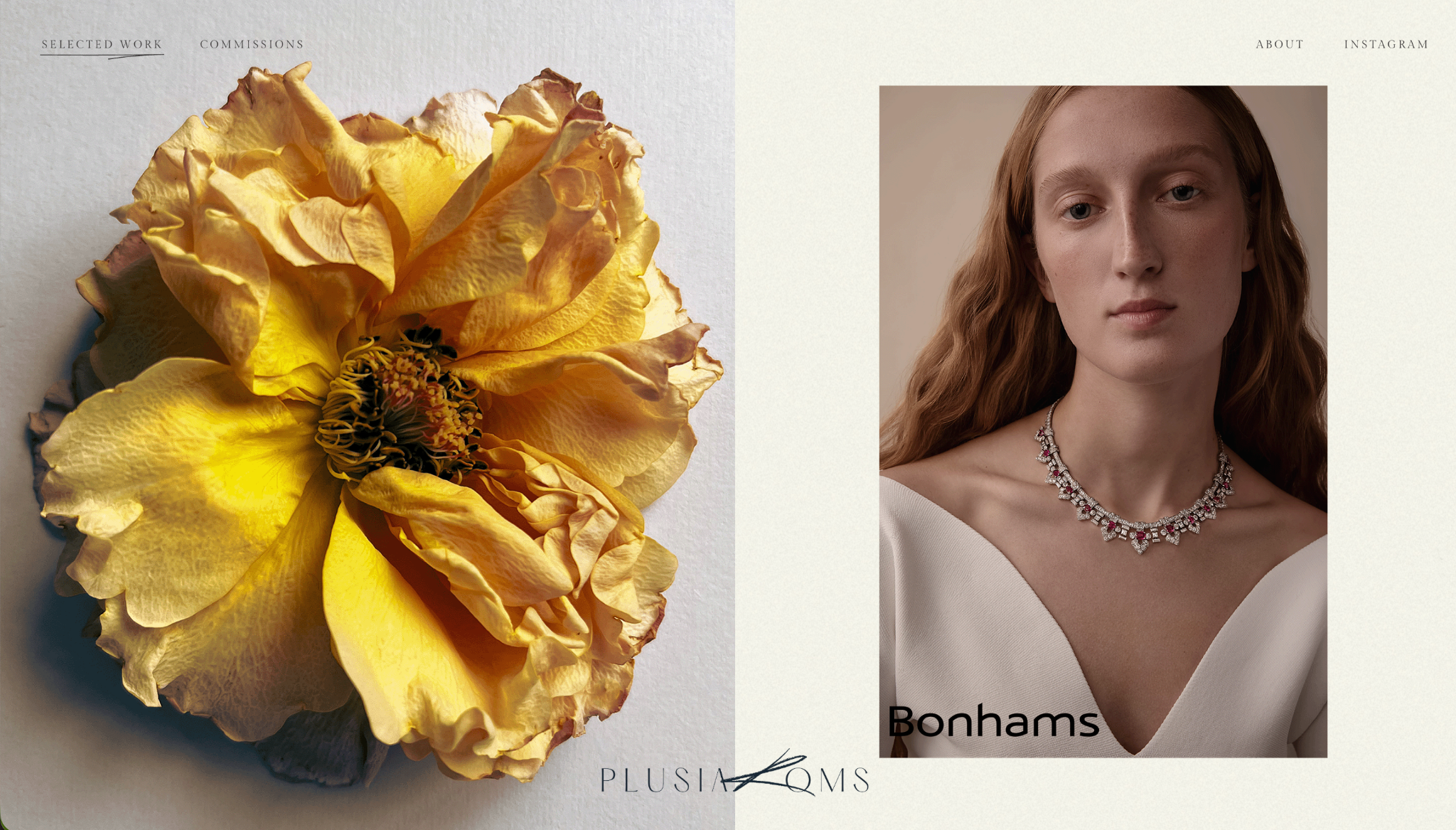
Plusia Roms
What works: Plusia Roms is a Greek art director and fashion photographer based between Paris and London. Her portfolio keeps navigation to the essentials: Selected Work, Commissions, and About. Her personal vision gets its own space, separate from client work for names like Harrods, Galeries Lafayette, Elle, Vogue Arabia, and La Perla.
Takeaway: Separating selected work from commissions lets you show both your voice and your track record. Clients see what you can deliver and what you’d make if given the freedom.
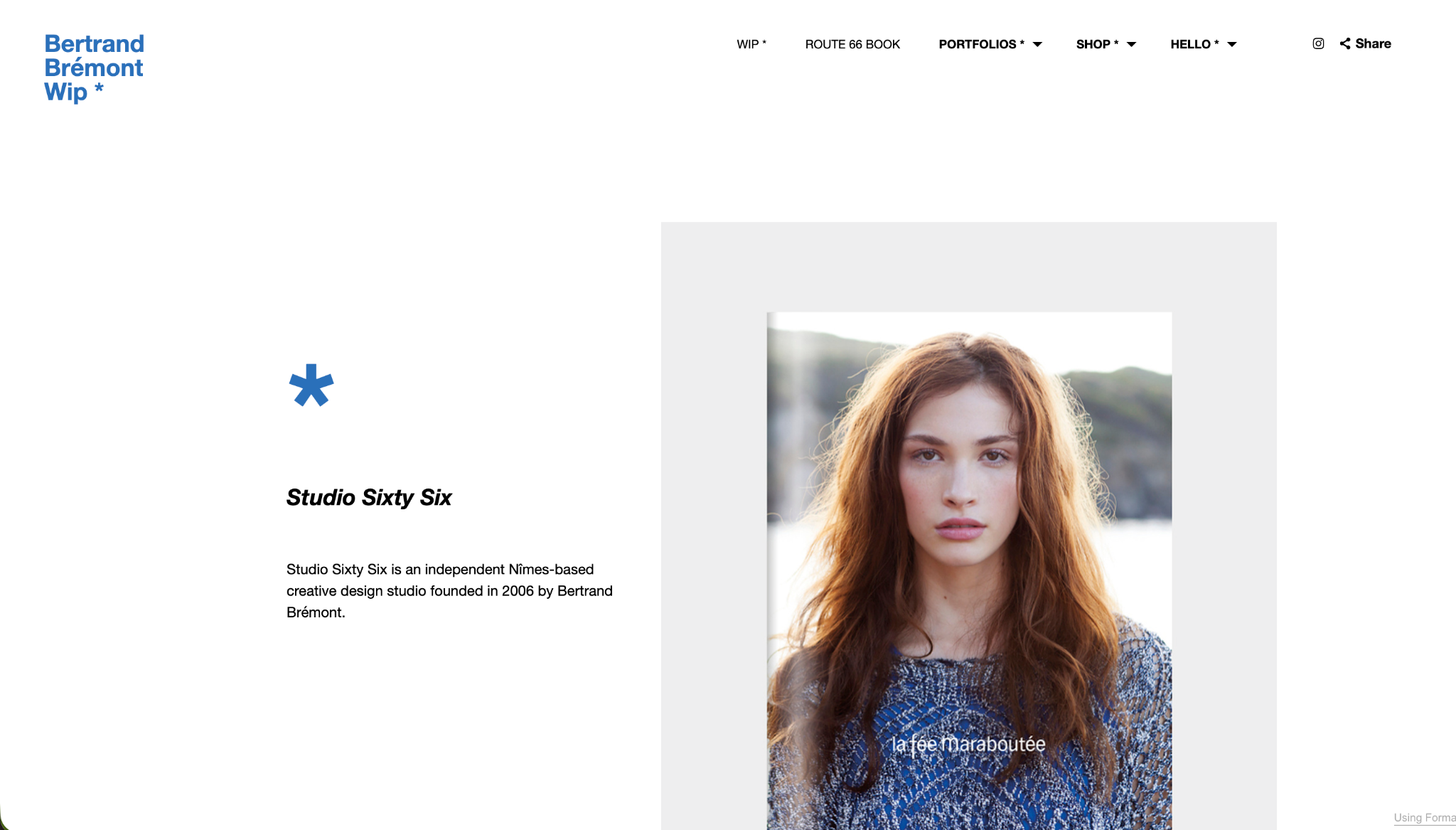
Bertrand Bremont
What works: Bertrand Brémont is a photographer and creative director who works between the south of France and abroad. In 2006, he founded Studio Sixty Six, an independent creative design studio in Nîmes. His portfolio gives the studio its own dedicated page within his personal site, listing clients such as Lanvin, Zadig & Voltaire, Etam, and Naf Naf. Visitors can follow both his photography and the studio’s direction work in one place, alongside a shop for books and prints.
Takeaway: If you run a studio and a personal practice, a dedicated studio page connects the two without blurring them. Your name and your studio each build credibility for the other.
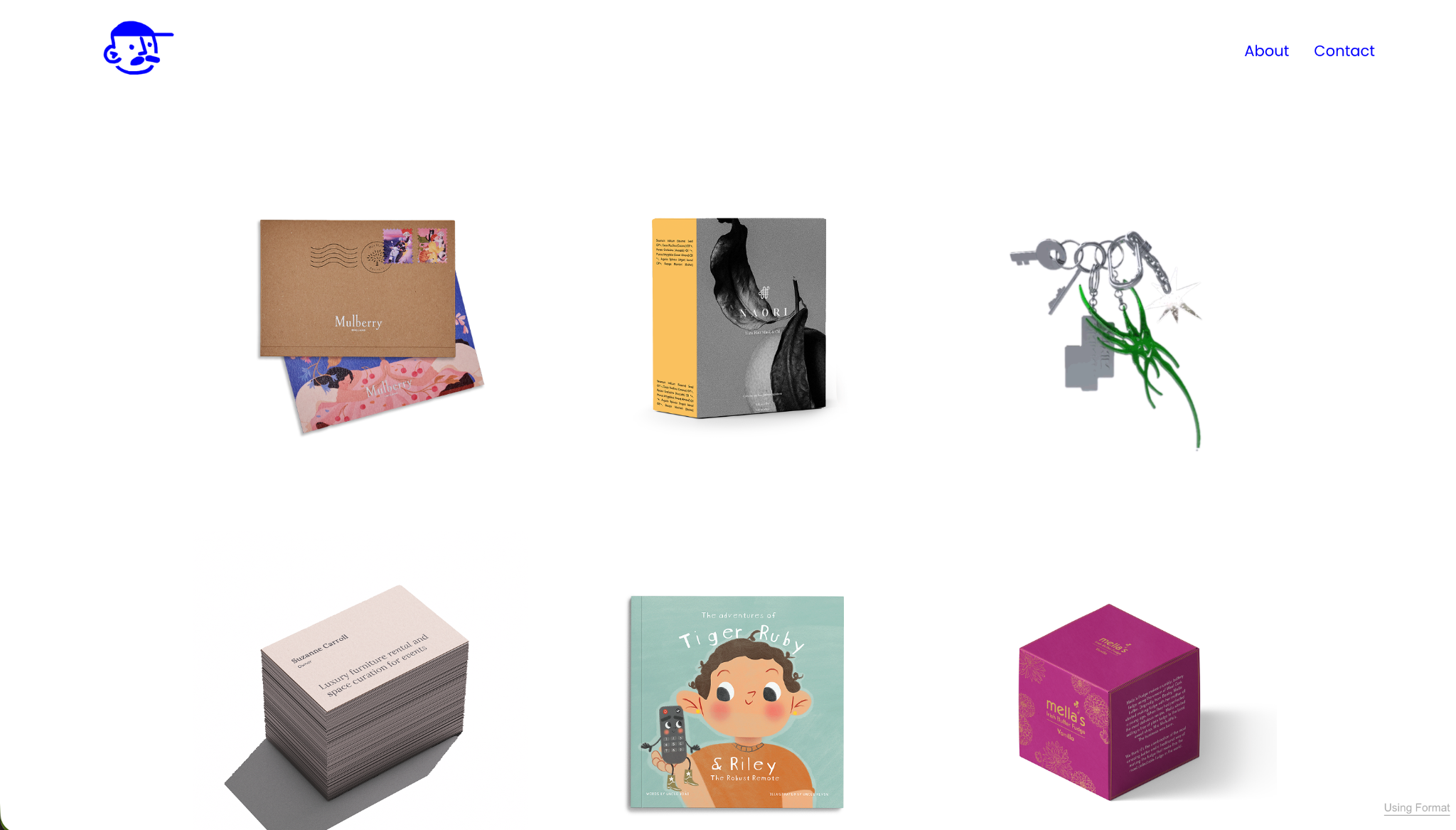
Kevin Gunning
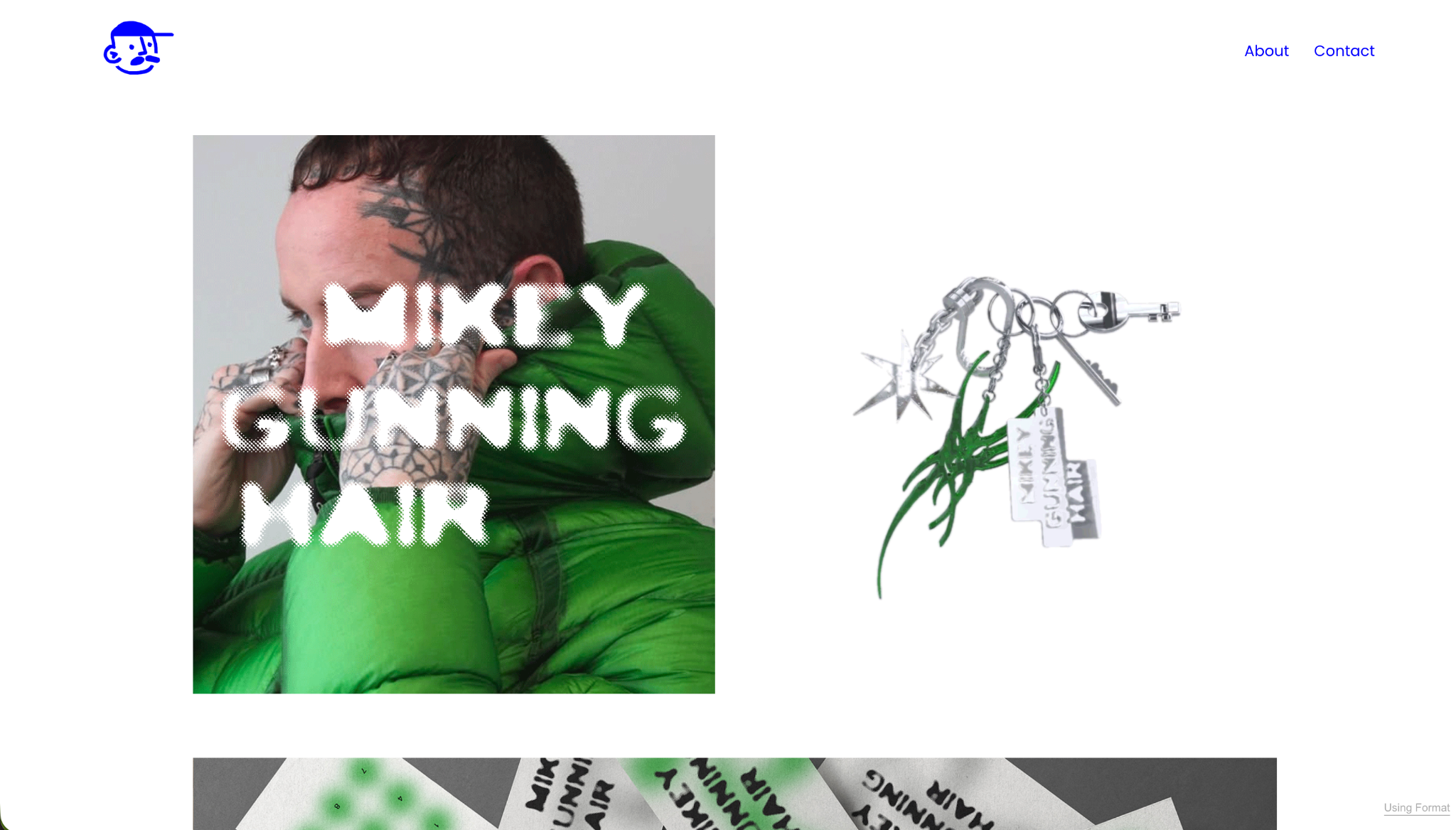
What works: Kevin Gunning is a senior creative designer from Ireland, now in London, with experience across art direction, illustration, graphic, and digital design in start-up and in-house teams. His homepage is a clean grid of square project covers, with a pared-back menu of just About and Contact. Uniform cover tiles make a varied body of work feel cohesive, and a small animated logo adds personality without getting in the way.
Takeaway: A consistent cover format turns a mixed body of work into one visual system. Keep the menu short and let the grid be your table of contents.
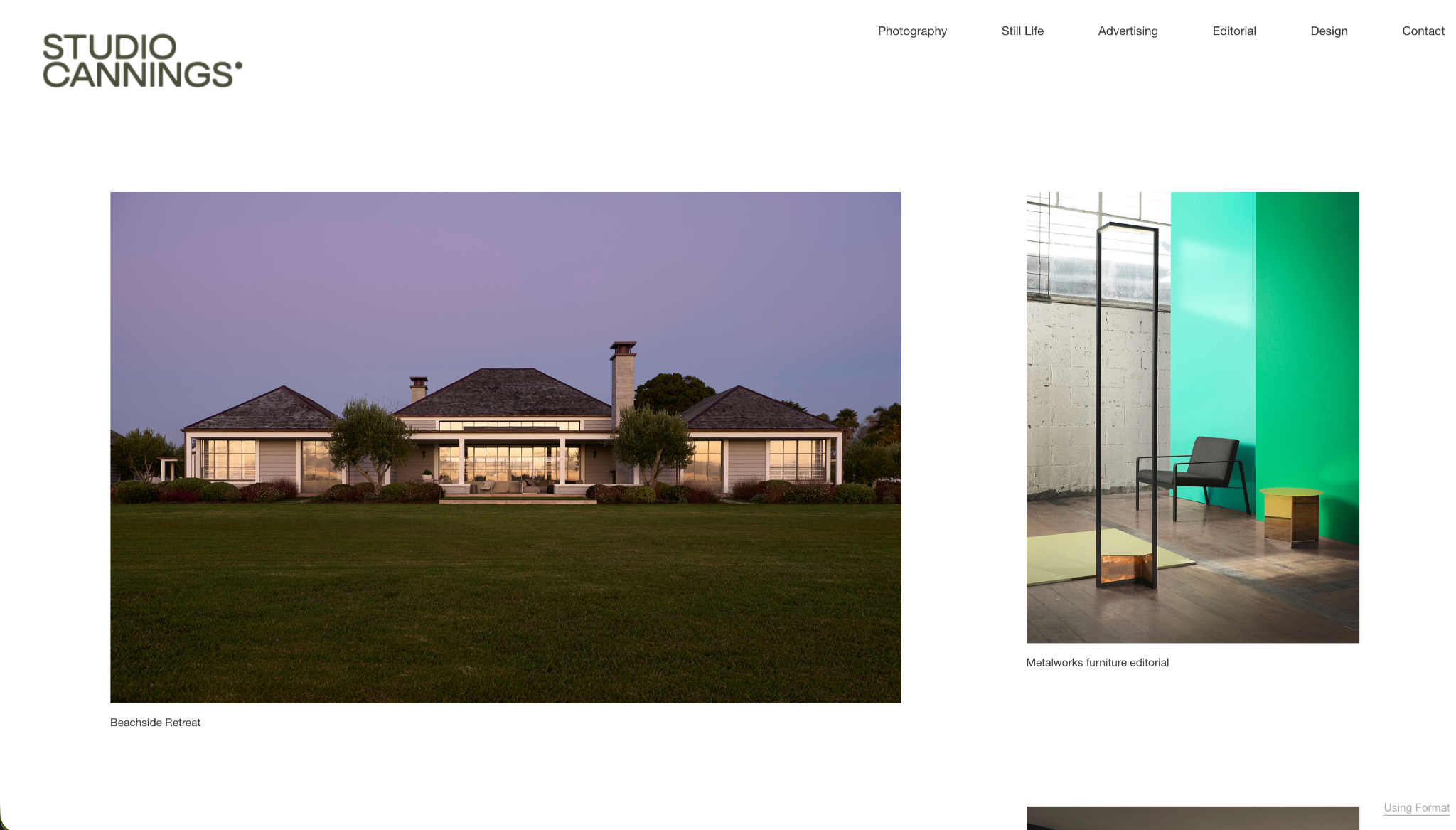
Thomas Cannings
What works: Thomas Cannings runs Studio Cannings in Auckland, New Zealand, working across architecture photography, brand design, and art direction. Architectural and editorial work sit side by side, and the shared calm, considered look ties his disciplines together.
Takeaway: When your disciplines share an aesthetic, show them together. A consistent eye across architecture, editorial, and brand work is your positioning.
Noella Boivent-Seignoux
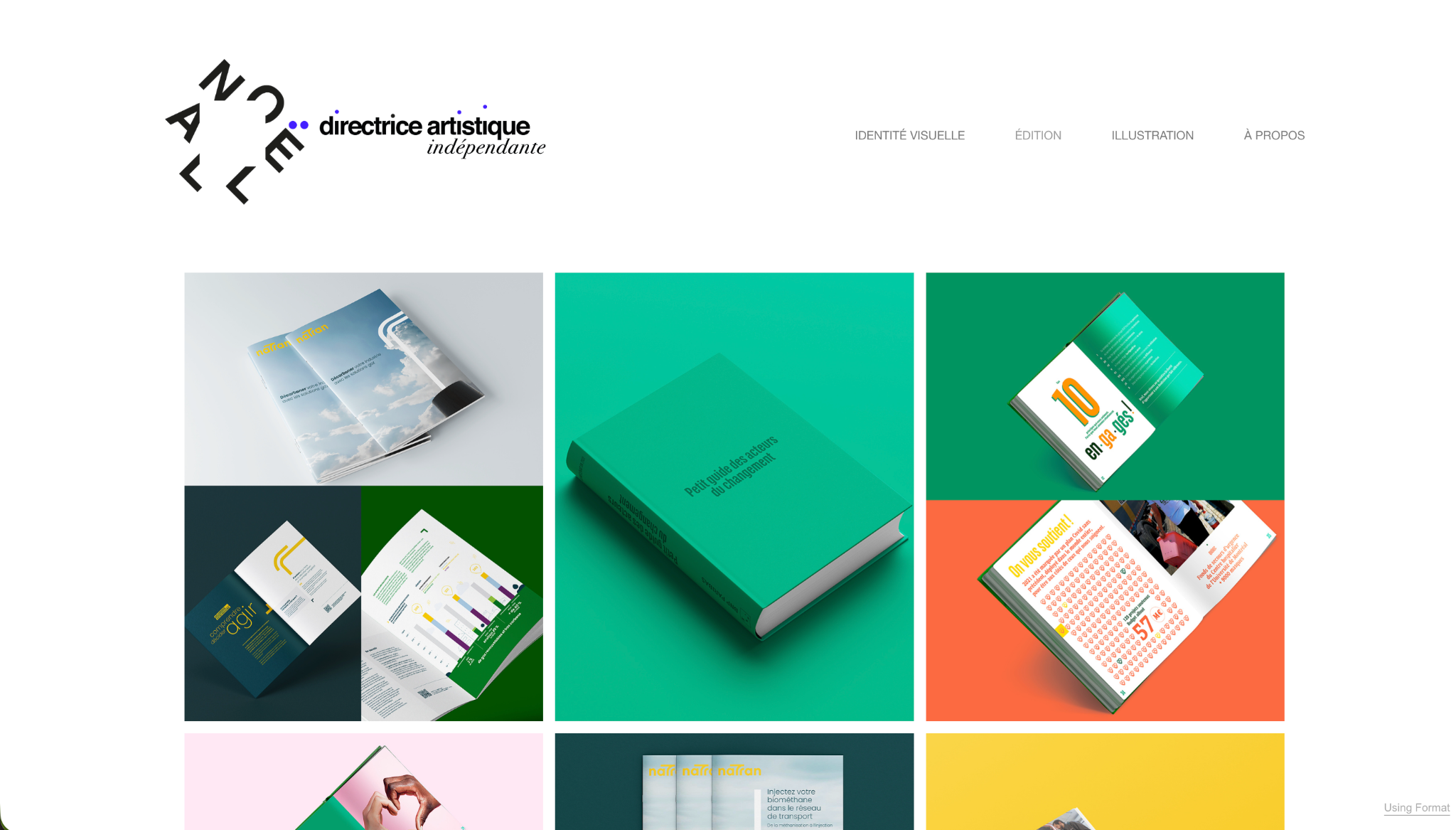
What works: Noëlla Boivent-Seignoux is an independent art director who creates visual identities and communication materials, mainly for publishing and print. She brings in motion design, 3D, and video specialists when a project needs them. Her À PROPOS page opens with a concise statement about her practice, so visitors know her purpose without needing to search for it.
Takeaway: Lead with a sentence that states who you help and how. A sharp positioning line does more work than any project thumbnail.
Your portfolio is your first project. Design it your way with Format’s online portfolio platform.
How to Build Your Own Art Director Portfolio
Studying other portfolios is useful, but building your own requires a different kind of discipline. Here is what matters most.
Curate Ruthlessly
Eight to twelve strong projects will always outperform thirty mediocre ones. Select work that reflects the kind of opportunities you want next, not just the ones you have had. If a project does not demonstrate your thinking or your taste at its best, leave it out.
Show Process, Not Just Output
Creative directors and hiring managers want to understand how you got from brief to final product. Include sketches, mood boards, strategic thinking, or documentation that reveals your decision-making. According to AIGA’s career resources, portfolio reviewers consistently prioritize process-driven case studies over polished-but-unexplained final work.
Design the Portfolio as Its Own Project
Your site’s typography, spacing, transitions, and layout choices are all being evaluated. Treat the portfolio itself as a piece in your body of work. If the container does not meet the standard of the work inside it, that disconnect will register instantly. Platforms built for creative professionals, like Format, give you the design control to make your portfolio feel like your own, without coding from scratch.
Make Navigation Effortless
A hiring manager reviewing twenty portfolios in an afternoon will not puzzle through yours. Make category labels clear, load times fast, and contact information easy to find. Mobile responsiveness is not optional. According to Statista’s 2025 global mobile traffic data, more than 60% of web traffic comes from mobile devices, and portfolio review is no exception.
Write an About Page That Positions You
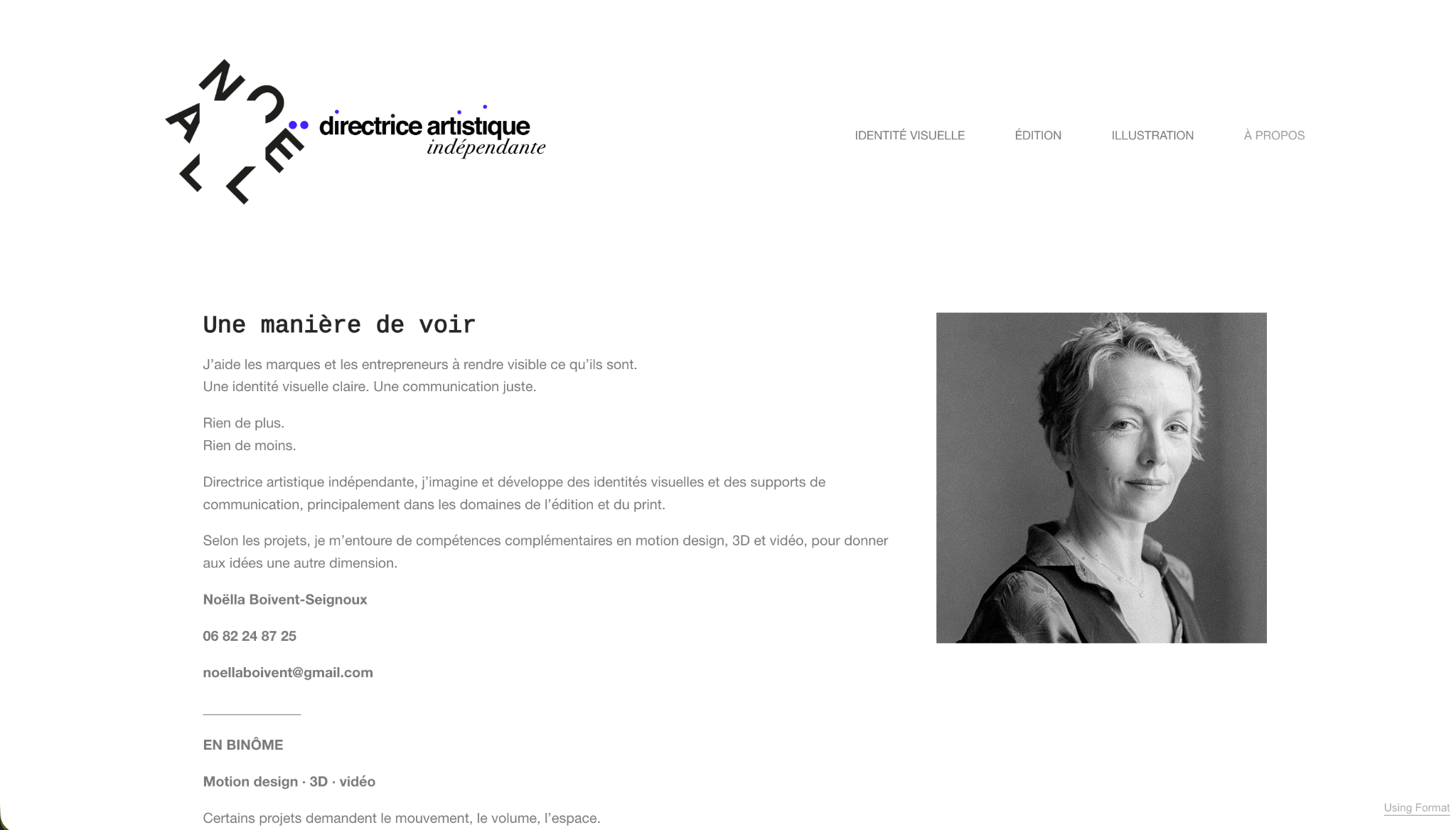
Your about page is not a biography; it is a positioning statement. In three to four sentences, tell visitors what you do, who you do it for, and what drives your creative perspective. Include a professional photo and make your contact information obvious. For practical guidance on getting this right, our dicas de design de portfólio cover the essential elements in detail.
Portfolio Mistakes That Cost You Opportunities
Even strong work can be undermined by avoidable missteps. These are the ones that come up most often from the hiring side:
- Too many projects, not enough editing. A bloated portfolio signals a lack of editorial judgment, which is exactly the skill an art director is being hired for.
- No narrative thread. If your portfolio feels like a random assortment of deliverables rather than a coherent body of work, it will not hold attention.
- Outdated work. Projects from five or more years ago that no longer represent your current skill level should be retired. Keep it current.
- Weak or missing About page. When someone is deciding whether to reach out, they want to know who you are and how to contact you. Make that easy.
- Broken links and slow load times. Nothing kills credibility faster than a portfolio that does not function properly. Test it regularly across devices.
- Leading with the platform, not the work. Default templates and stock layouts suggest you spent more time choosing a theme than designing the experience. For creatives who want their portfolio’s design to feel intentional, tools like Bloco flexível let you build custom page layouts without touching code.
Perguntas frequentes
How many projects should an art director portfolio include? Most experienced art directors keep between eight and twelve projects in their primary portfolio. The goal is to show range and depth without overwhelming the viewer. Each piece should demonstrate a different facet of your creative thinking.
Should I separate personal and client work? It depends on your positioning. If your personal work demonstrates skills or aesthetic sensibilities that your client work does not, consider including it in a clearly labeled section. If the two bodies of work target different audiences entirely, separate portfolios can be the smarter move.
Do I need a custom domain? Yes. A portfolio on a custom domain (yourname.com or yourstudioname.com) is a baseline expectation for anyone working at a senior creative level. It signals professionalism and makes you easier to find.
What is the difference between an art director portfolio and a creative director portfolio? Art director portfolios tend to emphasize visual execution: layout, typography, photography direction, and design craft. Creative director portfolios lean more toward strategic thinking, campaign architecture, and cross-channel storytelling. Many creatives straddle both, and the best portfolios for those roles show the ability to both envision and execute.
Curate your best work and give it the presentation it deserves. Start your Format portfolio.