


Canadian artist Julie Beugin walks Vienna’s courtyards and archways with a camera, then cuts the city apart and rebuilds it as collage and painting. During her residency at the Bildraum Studio, fragments of Red Vienna’s social housing become a way of asking who a city belongs to, and who gets to pass through it.
A city is easiest to know on foot. You learn its shortcuts, which gates stand open, which courtyards will let you through to the next street. For Julie Beugin, walking Vienna has been a way of getting to know a place that already had a claim on her. In 2021 she gained Austrian citizenship as restitution for her Jewish family’s exile from the city in 1939. Over years of research trips, she began “to photograph and walk around Vienna as a way to ground myself in place and make sense of this complex relationship I had to the city.”
Those walks led to her current residency at the Bildraum Studio in the Brotfabrik Wien, where she is preparing a solo show that opens at the end of November. It will be her first presentation in Austria and her first solo exhibition in Europe.
Wandering as Method
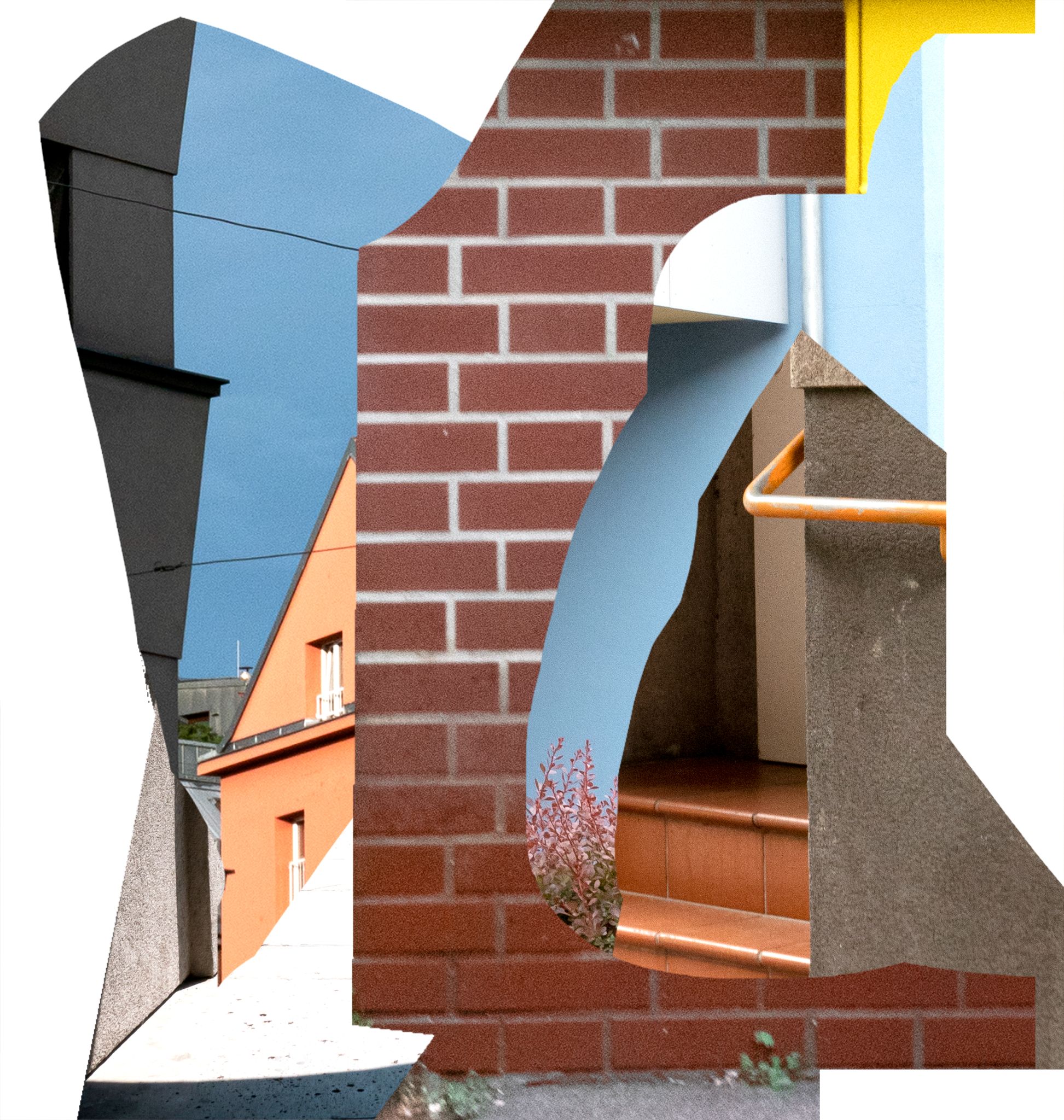
Born in Calgary and based in Berlin since 2009, Beugin has always started in the street. She builds her collages from her own photographs of ordinary architecture: a portico, an overhang, a single step, pink shadows falling across a wall. The titles of her 2020 Berlin series read like entries in a walking log. Lightbox. Canopy. Doorway. Step.
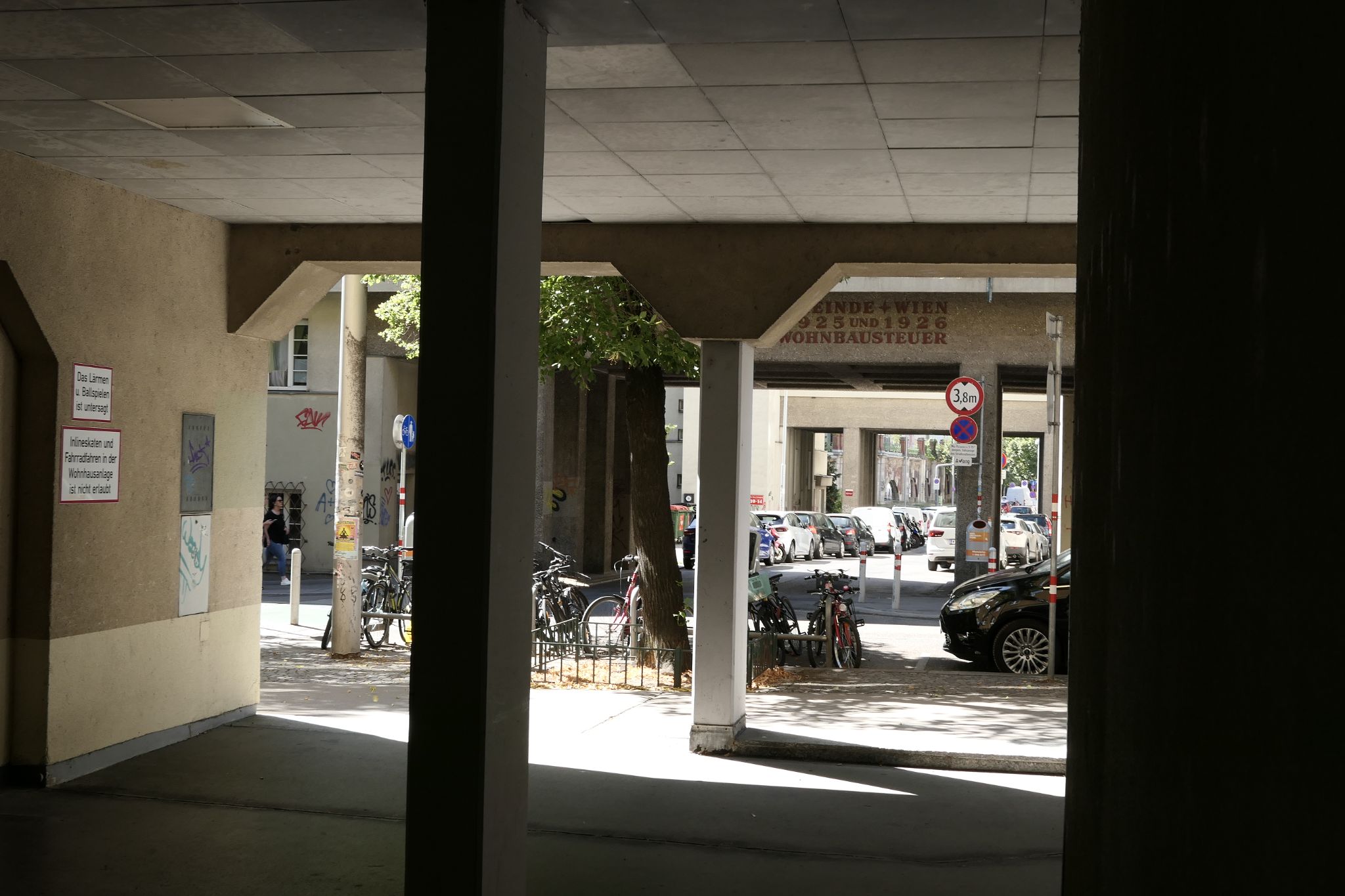
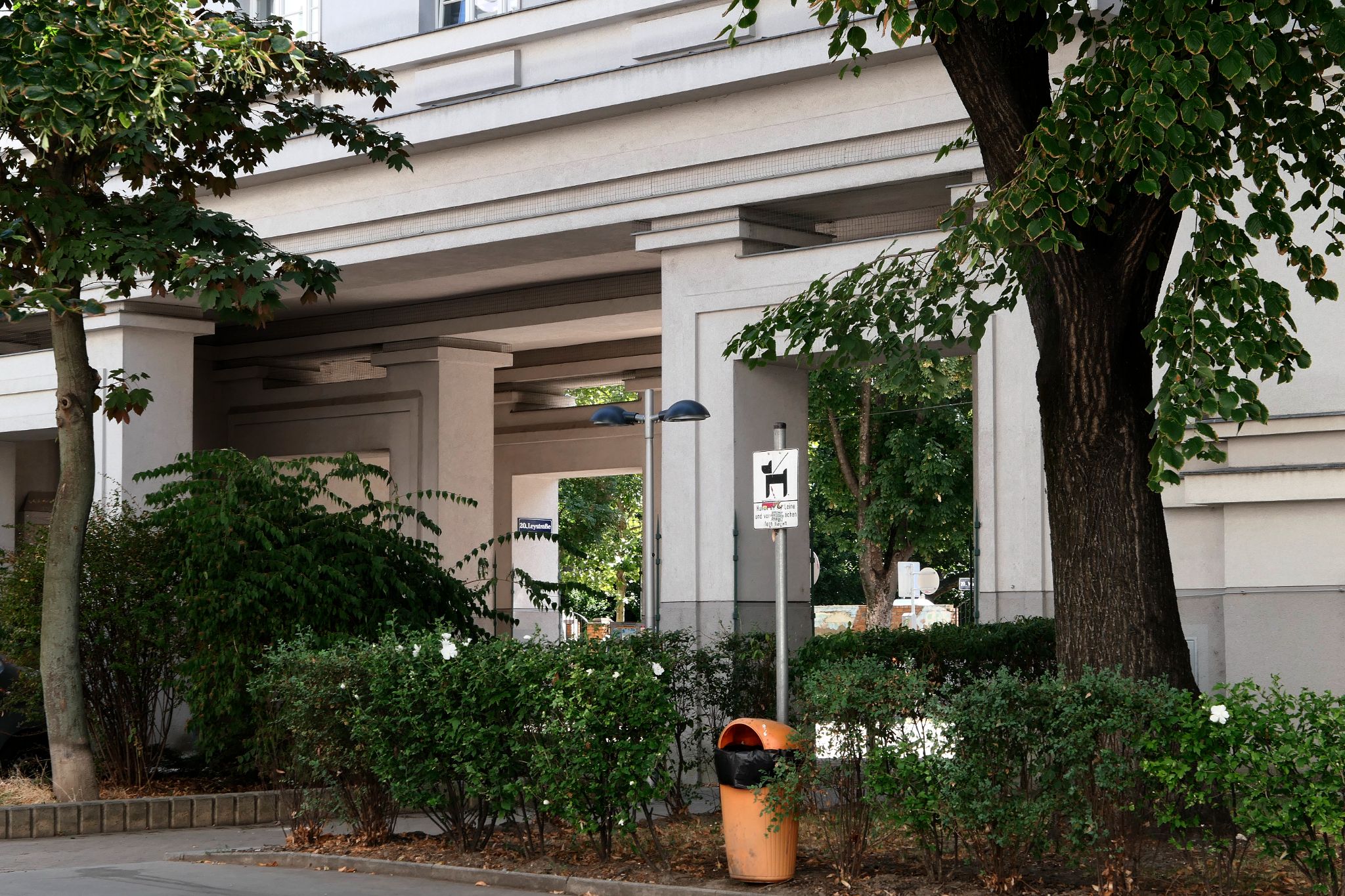
There is a long tradition behind this kind of looking. Baudelaire’s flâneur, Walter Benjamin’s arcades and the Situationists’ dérive all treat unhurried walking as a way to read a city against its official map. Beugin fits that lineage, though her attention goes less to the crowd than to the quiet corners people pass every day without registering them. She photographs the places where one kind of space gives way to another.
The Archway as Threshold
Vienna handed her a subject. In the 1920s, during the period known as Red Vienna, the city began building municipal housing on a huge scale, and following an interruption during the Nazi period, it continues to this day. Today, Beugin notes, around 60 percent of Vienna’s residents live in socially funded housing.
What holds her attention is the passageway. Many of these complexes are arranged around garden-like interior courtyards, reached from the street through large archways. The arch is where the private life of a building meets the public life of the city, and in Vienna it is often left open. These passages, she says, “connect residents with inhabitants of the greater city and create a porous flow of space between public and private.”
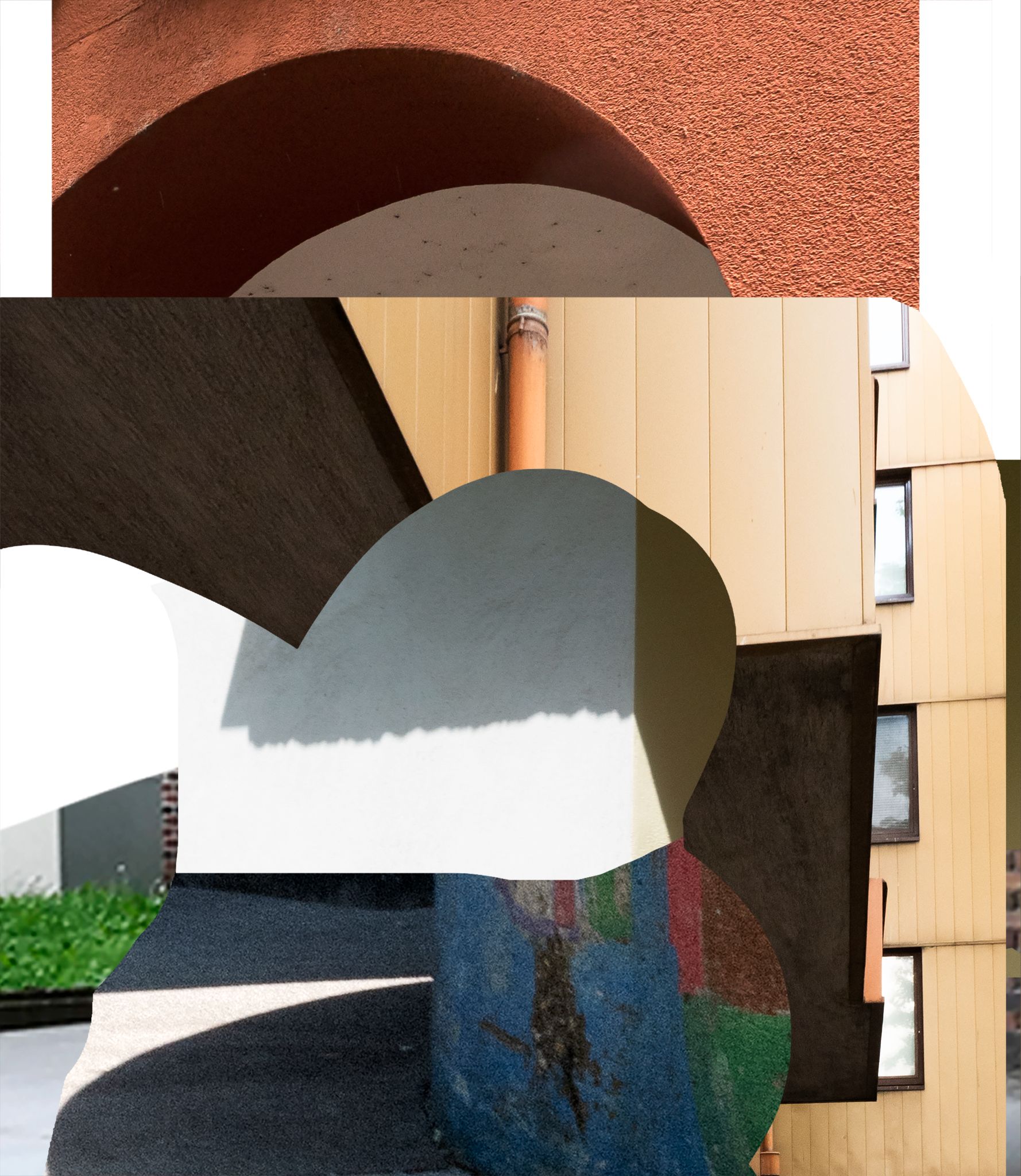
That porousness carries the weight of the project. Housing built for working people, with gardens given over to the people who live there and open to whoever walks through, is shared space claimed back for public life. Beugin wants to know whether something as intangible as belonging can live inside walls and arches. Her residency, she explains, involves “asking if a feeling of collective belonging can be embedded within this architecture.”
At a time of growing ethnocentrism in Europe, when debates over migration and integration keep hardening the line between insider and outsider, that openness matters. Beugin’s paintings don’t take up the debate directly, but they celebrate an architecture built to make room for people to live together in the city.
For an artist whose citizenship is itself an act of restitution, the question is personal. A courtyard that lets a stranger walk through becomes a small model of a city making room again for people it once pushed out. Anyone who has cut through a courtyard to save a few minutes knows the small thrill of it, the feeling of being let in. Beugin’s work holds on to that moment and asks what it might mean at the scale of a city.
Making the Everyday Strange
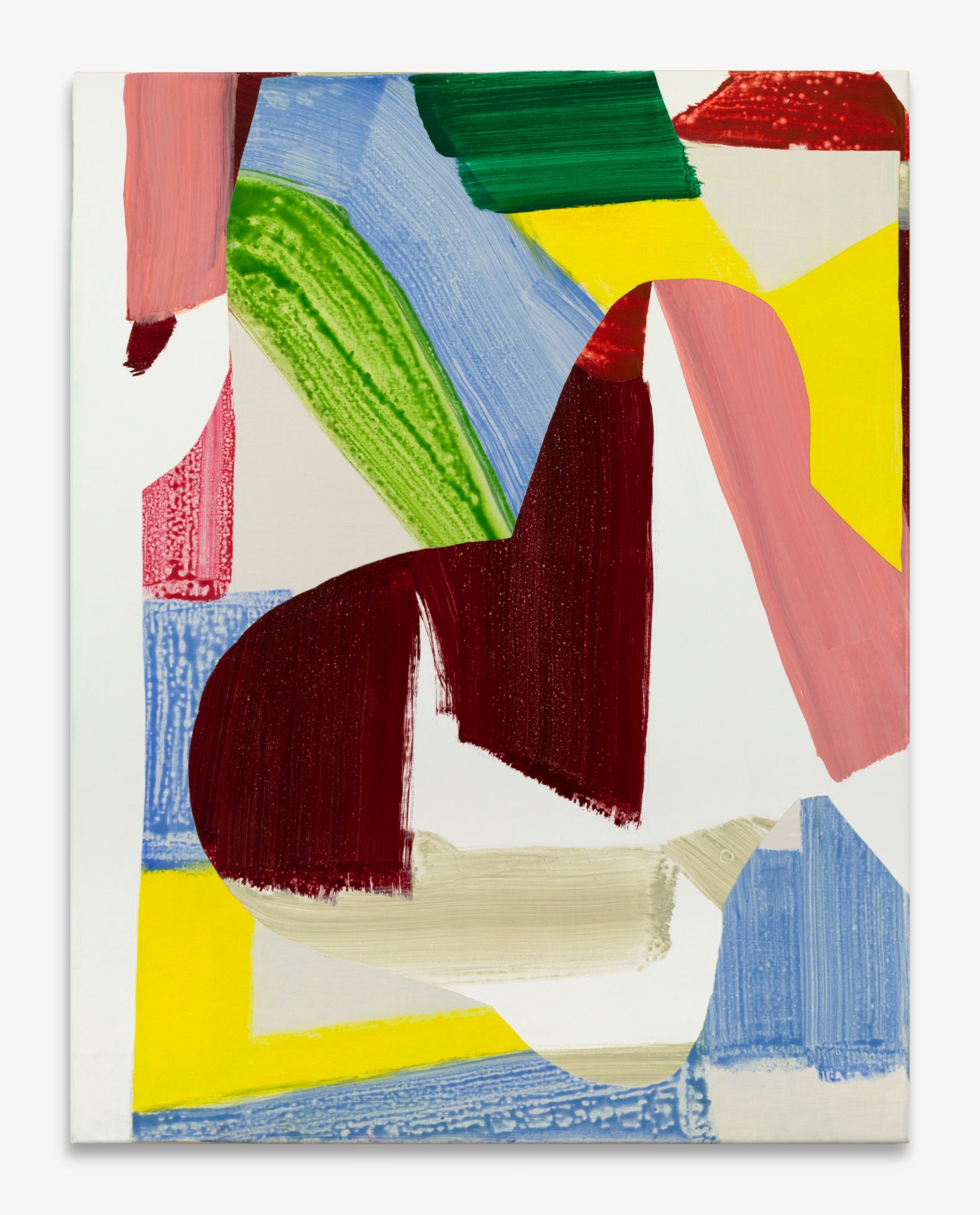
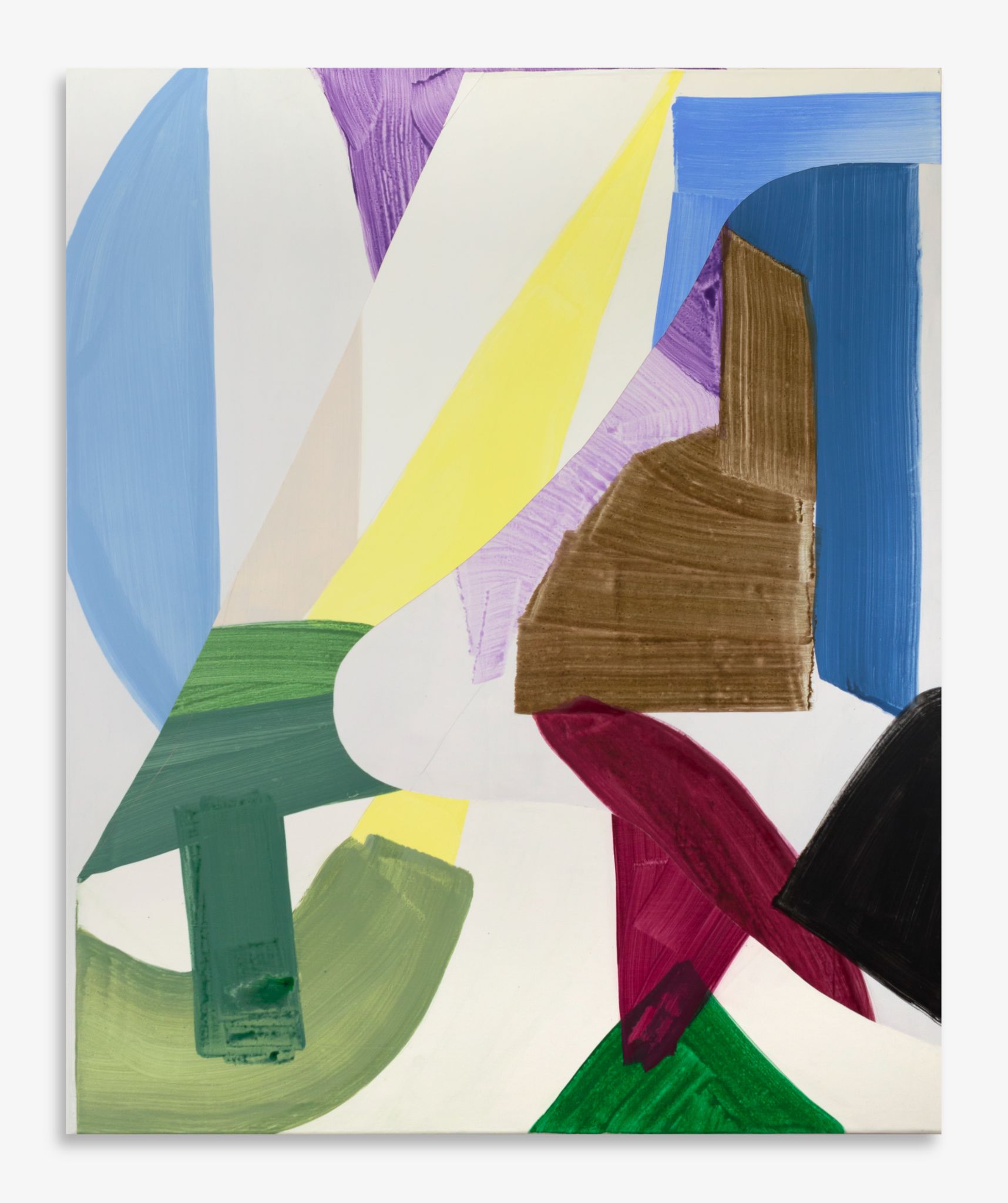
Back in the studio, the photographs get taken apart. Beugin fragments and abstracts details such as these passageways, and “in this way I transform everyday architectural details into strange and unfamiliar forms.” Works on paper are where she figures out her color relationships and tests how they might interact as collage on canvas.
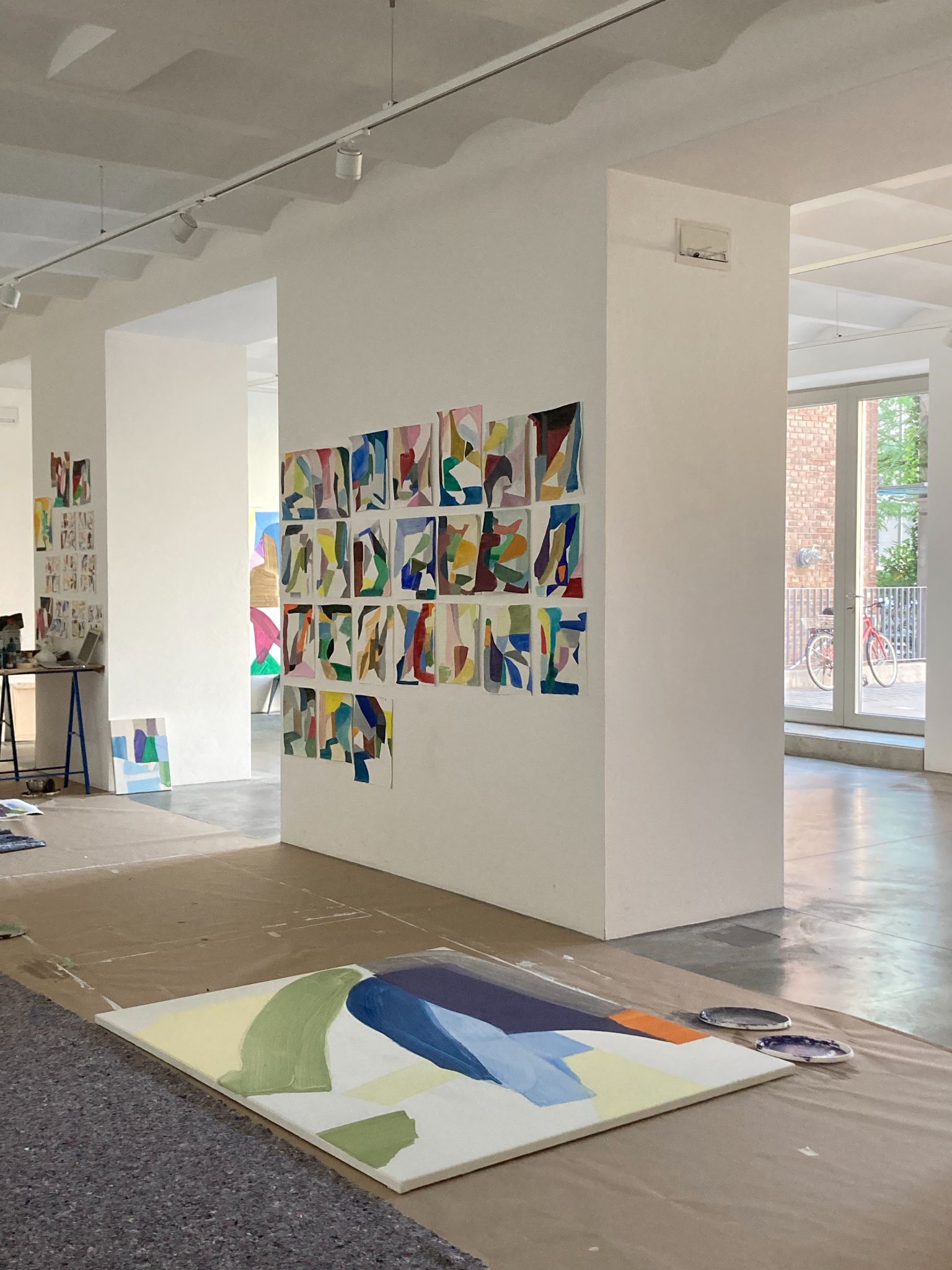
For the residency she is expanding her digital collages into wall-sized installations, built to “activate the gallery as the viewer moves through them.” The exhibition responds to the architecture of the Bildraum Studio itself, weaving shifting perspectives through the room in painting and photographic collage. Visitors will walk the work much as Beugin walked the city: one threshold at a time, never seeing the whole at once, with a sense of surprise and discovery.
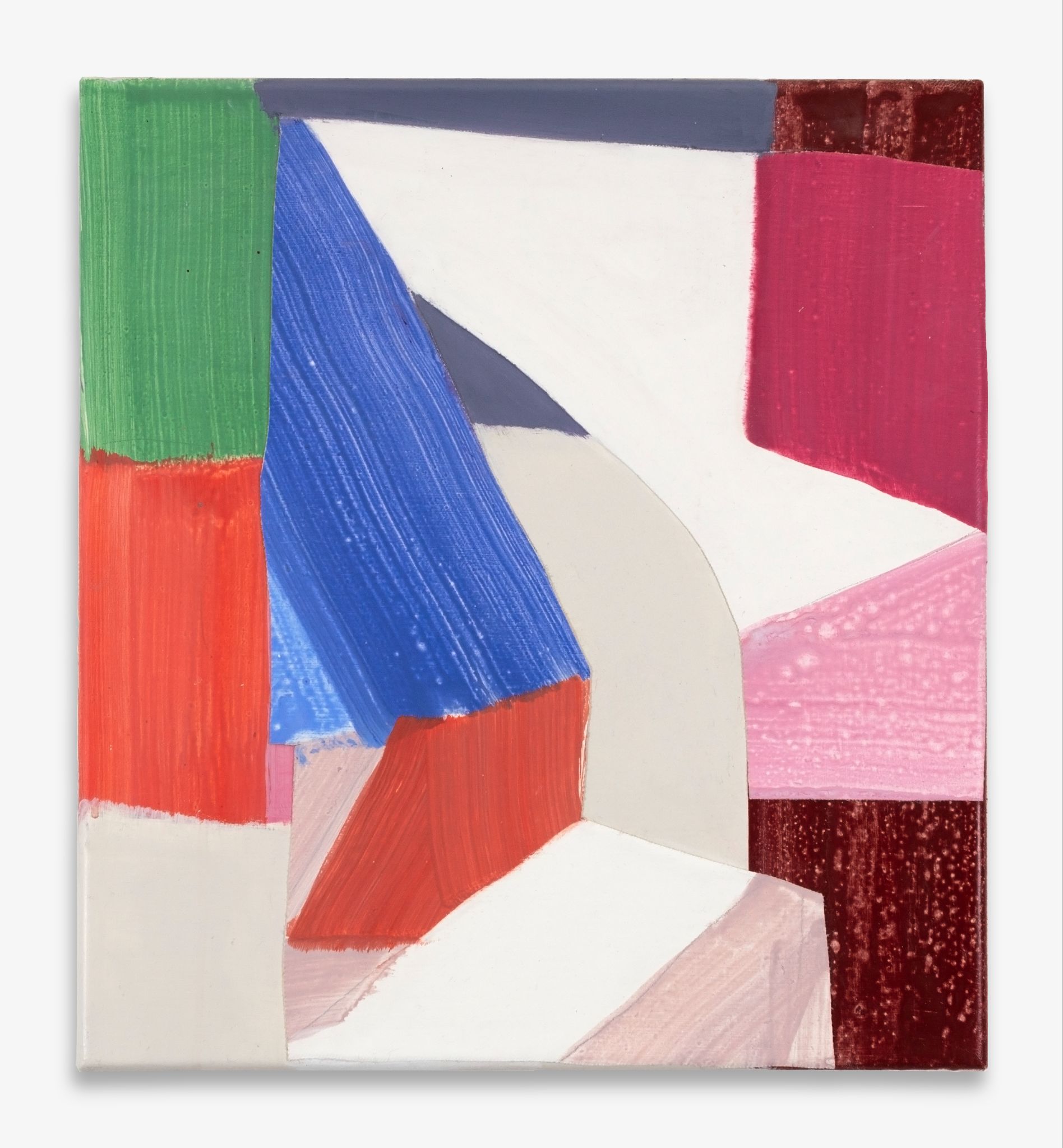
The show’s title, A Wide Place Stranger, comes from Gertrude Stein’s Tender Buttons (1914), a book that uses repetition and juxtaposition to make ordinary objects strange. Beugin reads the word two ways. “I understand stranger to mean both I am a stranger in Vienna and to make strange, as in my collage and abstraction.” It echoes the Russian formalist idea of ostranenie, defamiliarization, where art makes the familiar strange so that we actually see it again.
Beugin’s Vienna isn’t the Vienna of postcards. It is a city of gates and courtyards, of spaces that belong to everyone and no one in particular, seen by someone who arrives both as a returning citizen and as a newcomer. Her collages don’t resolve that tension. They let you walk around inside it.
A Wide Place Stranger opens at the Bildraum Studio, Brotfabrik Wien, Absberggasse 27, Vienna, on November 26. Beugin’s residency runs through December 18, 2026.
To view more of Julie Beugin’s work, visit her Portefeuille Format.