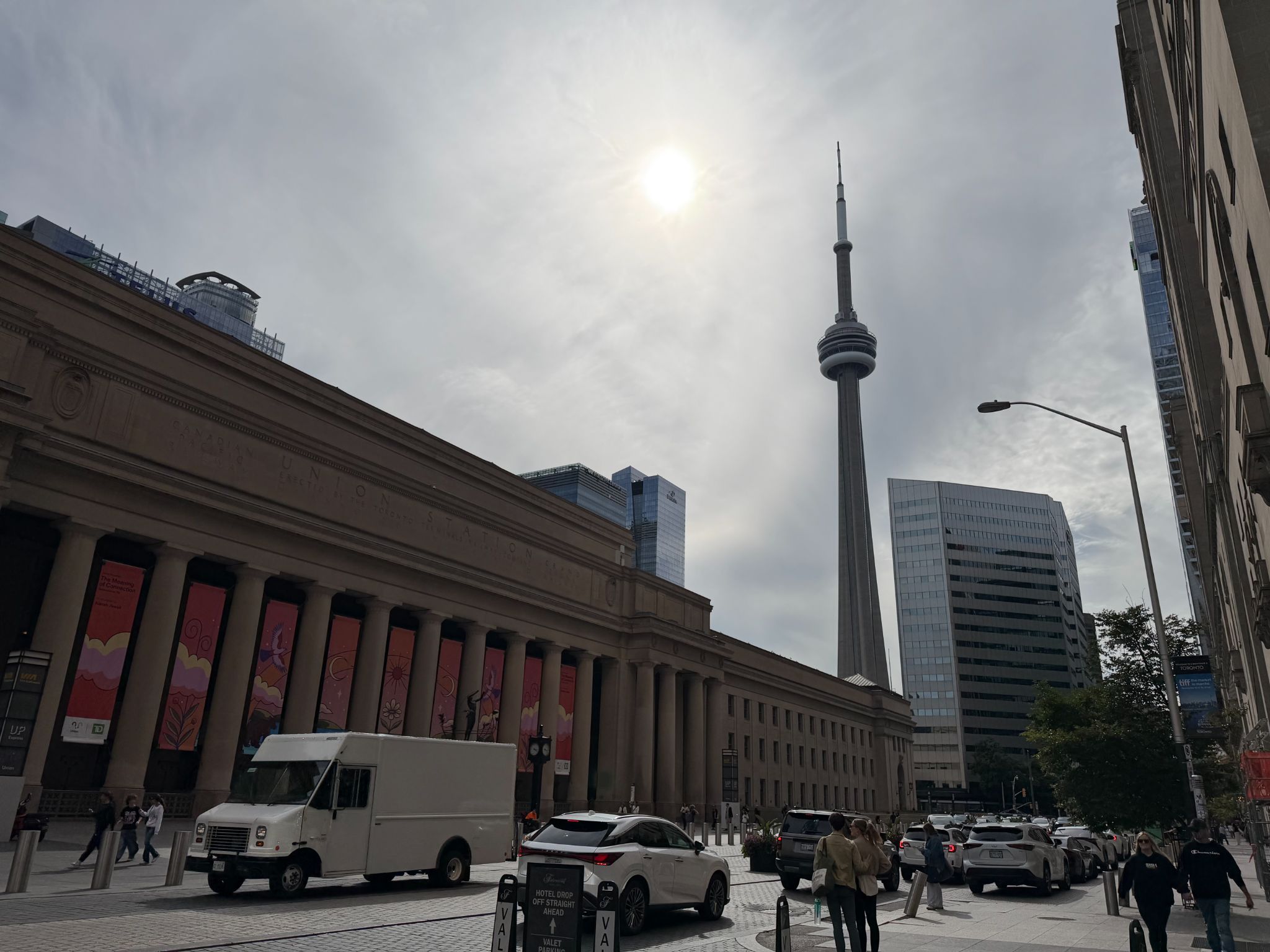



I spent a week at the Toronto International Film Festival watching ten films, sitting in on director Q&As, and learning how to navigate one of the busiest festivals in the world. Here’s what stood out on screen, and what I’d tell any creative planning their first trip.
For anyone who works in visual media, a film festival is one of the best crash courses you can get. You see work before almost anyone else, often with the people who made it standing at the front of the room afterward, explaining how they pulled it off. Most of my screenings ended with a Q&A, and I left several of them thinking about a composition, a sound cue, or an effects shot for days.
Toronto made it easy to take it all in. It’s a shockingly beautiful city with great public transit and food from every cuisine you can imagine, and my Format coworkers there made me feel at home. Below are the ten films I saw, followed by practical tips for getting the most out of the festival. If you only have time for three, my standouts were River, Look Backet The Assassin(s).
The Films I Saw at TIFF 2026
River (Joshua Giuliano)
My favorite film of the festival, and one of its highest-profile acquisitions. This Midnight Madness debut was originally set to be distributed by IFC and Shudder, but Universal picked it up during the festival for about ten million dollars. It’s a meat-and-potatoes slasher: Jane Levy and Jessica Rothe play sisters stranded on a small boat in the middle of a river when a faceless masked killer appears on the banks.
It doesn’t reinvent the wheel, but it doesn’t have to when it’s this well put together. Like The Strangers, it gives you nihilistic killers without a clear motivation, because the motivation isn’t the point. What matters is how the protagonists handle the situation. There’s some Wes Craven in it too. What really sets it apart is style and atmosphere: great sound design and some impressive minimalist compositions. Levy and Rothe are both fantastic, and I expect this one to be talked about a lot when it goes wide next year.
Look Back (Hirokazu Kore-eda)
Kore-eda’s live-action adaptation of the one-shot manga by the creator of Chainsaw Man, which was also adapted into an hour-long anime. Two young girls find a bond and a creative spark through their shared love of drawing comics. It’s a film about friendship and about the effect creative work, and other people, can have on your life, no matter how small or large. The second half is a real tearjerker.
For creatives, this one hits close to home. I’d argue the story works slightly better animated, since a film about drawing comics makes a little more sense in that medium, and the shorter runtime gives the anime an immediacy and directness. What this version offers in exchange, at about twice the length, is more intimacy and warmth. The cinematography is stunning, and both leads give incredible performances. If you haven’t seen the animated version, watch it. It’s only an hour long.
The Assassin(s) (Hur Jin-ho)
A South Korean political conspiracy thriller based on the true story of the attempted assassination of the South Korean president by a Japanese national in the 1970s. A reporter and a police chief try to uncover what actually happened, because what they’re finding doesn’t match the official story. It’s very JFK in its construction, with a little Pleins feux sur l'avenir in its power-of-the-press angle.
At about two hours and fifteen minutes it’s a little long-winded, but the story keeps pulling on threads and keeps you guessing. It also paints a brutal picture of a government ruled by violence and what that meant for the people living under it.
Inherit (Banjong Pisanthanakun)
The first film I saw, a Thai black magic horror movie from the director of The Medium et Shutter. After the grandmother of a wealthy family dies, her sister arrives at the family house. She’s supposed to be 86, but she looks like a 20-year-old model. It turns out she’s hosting a centipede demon.
It leans on jump scares, in the vein of Insidious, but the set pieces are executed really well. A sequence on an escalator will stay with me for a long time. Davika Hoorne is the standout as Woranart, the sister, balancing seductiveness with real menace. The over-the-top ending isn’t satisfied with itself, so you get three or four of them and the film overstays its welcome a little. Still, with Banjong and Davika there for a Q&A, it was a great way to start the festival. For fans of Asian horror, Insidiouset The Substance.
The Spiral (Paolo Strippoli)
An Italian horror film from the director of A Classic Horror Story, rumored to be Italy’s pick for Best International Feature at the Oscars. It has a prestige, Italian arthouse feel, with shades of Parasite and a Twilight Zone-style premise. When a rich family’s daughter is at risk of losing her leg after an accident, a witch of sorts offers the mother a monkey’s paw deal: trade one tragedy in her family for another. It doesn’t go to plan, and the witch keeps coming back with new choices.
My main issue is that it stays at the same register throughout. I wanted it to build and escalate as she juggles the tragedies she’s causing. Fun tidbit: Willem Dafoe was at my screening, skipping the industry screenings to watch with the public like everyone else.
Kick On (Nick Kozakis)
An Australian action-horror-thriller in the Green Room siege mold. A group of twenty-something friends on a night out go to buy drugs from the failson of a Russian gangster at the top of a high-rise. He’s high, overly friendly, and handing out drinks, and things spiral until he kills someone. From there it becomes a fight to get out. It starts at the register of the drug deal scene in Boogie Nights and escalates into Green Room insanity.
The Philippou brothers (aka RackaRacka) are a clear influence. At the Q&A, Kozakis talked about working with the same visual effects team, who have also worked on films like Mortal Kombat, and it shows. This was the gnarliest film of the festival, with some of the most brutal gore I’ve seen outside of torture horror. It’s not for everyone, but it has a madcap, propulsive energy. It feels like a nice progression from his underrated last film, Godless: The Eastfield Exorcism, which dug into religious hysteria and repression in a way exorcism movies rarely do. Worth seeking out, even if it ends up on streaming.
Alpha Gang (The Zellner Brothers)
The new film from the directors of Sasquatch Sunset, Kumiko, the Treasure Hunter, and episodes of The Curse. Léa Seydoux, Dave Bautista, Lily-Rose Depp, Riley Keough, Cate Blanchett, and Chris Pine play aliens who arrive on Earth with 1950s biker gangs as their only reference for humans. So they wear leather, do sock hop dances, and treat emotions as a virus you catch if you stay too long. Earth here is a strange, semi-medieval Eastern Europe, and they mostly hang around trying to work out their plan.
It’s been getting middling reviews, but I found its absurdist energy a lot of fun. Bautista gives it everything, and Seydoux stands out too. It plays almost like a more verbose sequel to Sasquatch Sunset, taking the same fish-out-of-water, nature-doc approach and extrapolating on it in interesting ways. Not for everyone, but I wouldn’t be surprised to see a wide release next year.
Arrested Memory (Sabu)
The latest from Sabu, a Japanese director of crime-action comedies. A superstar police detective in Taipei is working a High and Low-style kidnapping case when stress-induced amnesia wipes his memory. Stuck between both sides of the case with no idea who he is, he stumbles through a comedy of errors. Someone described it to me as Dougie Jones from Twin Peaks: The Return as a superstar detective, which is fairly accurate.
It gets uneven at times, but the comedy is very funny and the action is strong. The dialogue mixes Taiwanese and Japanese, and my screening used two subtitle colors to tell the languages apart, a small design choice I found really interesting. Sabu did a fun Q&A afterward. Worth a watch when it hits VOD.
HALF (Samjad)
An Indian action-horror-revenge-Western-vampire movie. That’s a lot of genres, but all you really need to know is that it’s a gory, wild revenge story with action choreographed by the person behind The Raid. A brother and sister, daywalker vampires who essentially can’t be killed, pick off a group of kidnappers and criminals one by one in the desert between India and Pakistan.
There isn’t much story, but the action is wall to wall and excellent. The music is a bit relentless but good. Any action fan should seek it out.
Anchors Away (Matt Barats)
The new documentary from comedian Matt Barats, who previously made Cash Cow. His style riffs on Ross McElwee: personal essay films with direct-to-camera address and dry, deadpan voiceover. After his girlfriend breaks up with him following a marriage proposal attempt, he moves onto a boat in a marina by the airport in New York City and goes back through the tapes he recorded growing up.
It’s occasionally very funny, and it invites comparison to John Wilson. But where Wilson obsessively records the world around him and follows its rabbit holes, this film stays inside Barats’s own head. That paints a textured self-portrait, but it can also feel self-indulgent by the end. The music was great, and the Midnight Madness crowd loved it. It was my least favorite of the festival, but it had one of the liveliest audiences.
On My Watchlist
A few films I missed and want to catch: Bad Lieutenant: Tokyo, Takashi Miike’s take on Bad Lieutenant; Mr. Nelson, Did You Kill People, the English-language debut from Shinya Tsukamoto and his Vietnam War movie; Vintage Violence, the new Eugene Kotlyarenko movie (The Code, Wobble Palace, Spree); and The Face of Horror, the new film from Anna Biller, director of The Love Witch.
Making films of your own? Give your work a home built for filmmakers. Build your film portfolio on Format.
How to Plan Your First Trip to TIFF
Getting Around Toronto
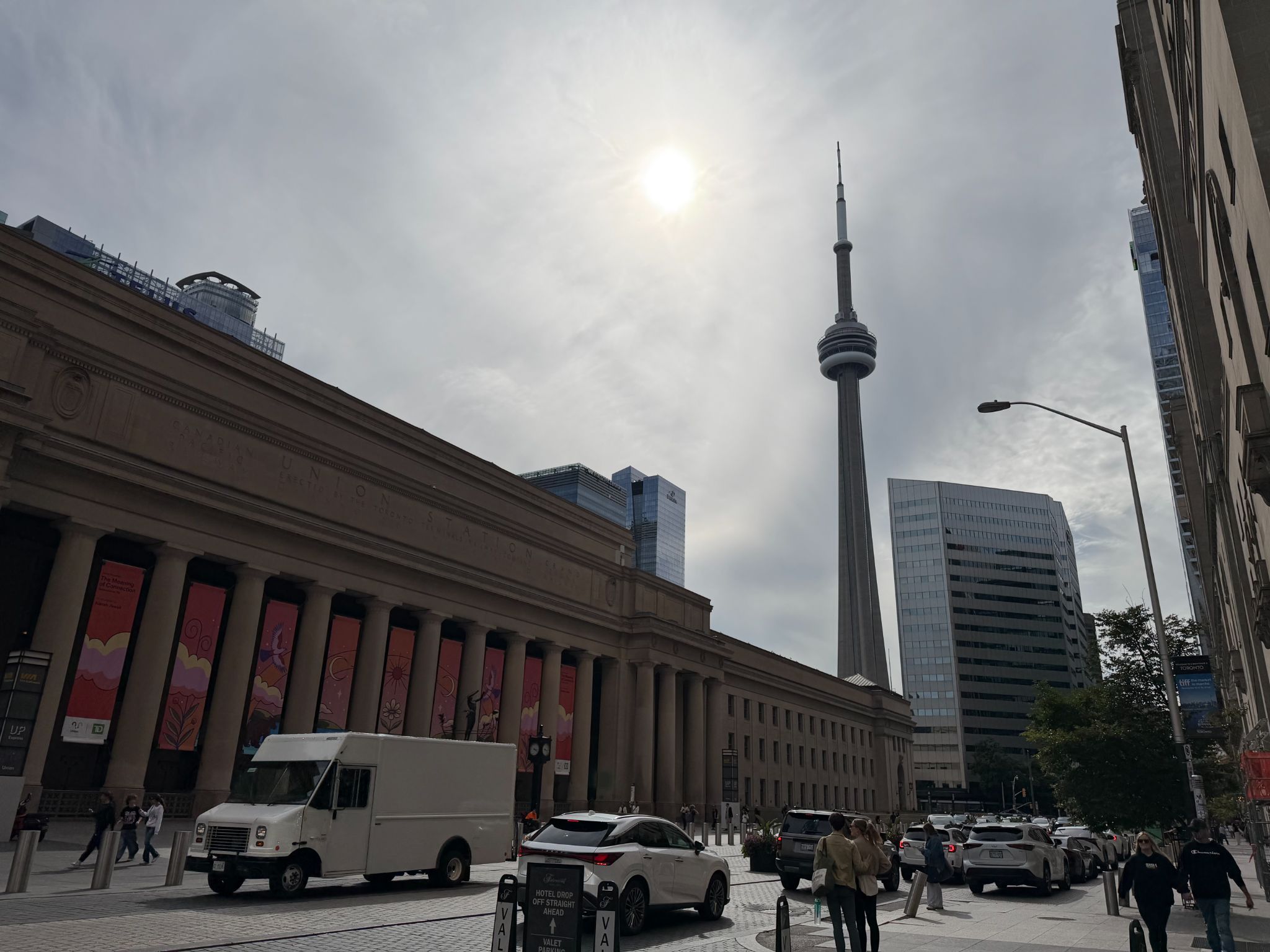
Toronto isn’t the friendliest city to drive in. If you’re driving up, find a place to park and rely on public transit. The streetcars are great, the subway is robust, and the bus network fills in the gaps. Fares run through the Presto system, about $3.30 CAD per ride with free transfers that last two hours, so you can go from streetcar to subway to bus within the transfer window without paying again. I was all over the city during my week there, and I couldn’t have covered nearly as much ground without it.
How to Get TIFF Tickets
Tickets are competitive. TIFF offers membership tiers, from around $200 to thousands of dollars, that come with early ticket access. If you don’t live in Toronto, I’m not sure it’s worth it. I bought public tickets, which meant a lot of my top picks were sold out by the time I could buy. That pushed me toward films lower on my list, and several of them turned out to be highlights.
A few ways to improve your odds:
- Bookmark sold-out screenings and keep checking. People return tickets, and there are sometimes additional drops. Refresh the page a couple of times a day. Four or five of my screenings came from doing exactly that.
- Use a festival planner. Tiffr has been around for a while and is pretty robust. The newer TIXPlanner also works for festivals like Cannes and the New York Film Festival. I used TIXPlanner constantly, and it steered me toward screenings I ended up loving.
- Try the rush line. Without a ticket, you can join a designated rush line outside the cinema. About 15 minutes before showtime, staff count the empty seats and sell them to the line. Expect to wait a couple of hours, so bring a book.
Planning Your Festival Days
- Leave room for Q&As. Most of my screenings had a Q&A with the director and some of the cast. Build in time afterward so you don’t have to rush out. For creatives, this is where you get real insight into how a film was made.
- Plan around Midnight Madness. TIFF’s genre program is a highlight, but a midnight screening downtown might not let out until 2 or 2:30 a.m. Have an easy way home, and don’t book anything early the next morning.
- Don’t overschedule. On your first trip, aim for two films a day and add a third if you have time. Leave room to wander. Toronto is full of interesting shops and sights, and exploring was as much a part of the trip as the films.
What to Bring
They check bags at the door, and you’ll be out all day, so travel light. Toronto gets cold quickly, so wear layers. I carried a tote bag with a book and room for my jacket. Save shopping for a separate day if you can. And drink plenty of water. It sounds obvious, but it’s one of the biggest factors in enjoying a long day of screenings. You can buy water at concessions. Some venues allow your own bottle and some are sticklers about it.
Where to Eat
Toronto is an embarrassment of riches when it comes to food, and my favorite meals were at the dive spots. Chinatown is a great place to start. A hole-in-the-wall dumpling spot there served some of the best soup dumplings I’ve ever had, and an Indian street food place made me a mint chutney grilled cheese with peppers and onions that was sublime. Don’t over-rely on Google Maps. Be curious and let your wandering lead you.
Talk to the People Around You
Whatever line you’re in, strike up a conversation. Everyone there loves movies, and the rush line in particular is full of interesting people. In my experience, people in Toronto were friendly and easy to talk to, and some of those conversations were a highlight of the trip.
I’m already planning to go back, whether to TIFF or another festival. If you’ve been thinking about it, go. Just leave room in your schedule for the unexpected.
Inspired to share your own work with the world? Start your free trial on Format.
Contributeur
-

Ben Sheetz is the head of video at Format and a multidisciplinary artist working across video art, digital art, music, filmmaking, and design. For the past nine years he’s co-hosted Pod People, a weekly horror movie podcast, with a few longtime friends. He studied in Milwaukee and now lives in Durham, NC.