Dans l'atelier de Winnie Truong : dioramas, animation et le nouveau thème « Bloom »
Winnie Truong is a Toronto-based multidisciplinary artist whose practice has evolved over the past decade from flat, colored-pencil portraits into a more immersive, sculptural, and animated body of work.

Portrait of Toronto-based Multidisciplinary Artist Winnie Truong.
Toronto-based artist Winnie Truong has spent over a decade building worlds out of paper, pencil, and form. What began as intricately rendered colored-pencil portraits obsessed with hair, has evolved into something stranger and more alive: diorama sculptures, stop-motion animations, and paper environments where the human body dissolves into flora, fauna, and myth. Her work is represented by Patel Brown Gallery in Toronto, has been exhibited internationally, and this September heads to the Armory Show in New York.
Truong has also been a Format member since 2017, and she recently partnered with the Format team to design a new theme for her portfolio, built specifically around the way her practice moves between drawing, sculpture, and animation. We sat down with her in her studio to talk about that collaboration, and about the journey that got her here, in her own words.
The Hinge Point of 2016: and the move into dioramas and animation
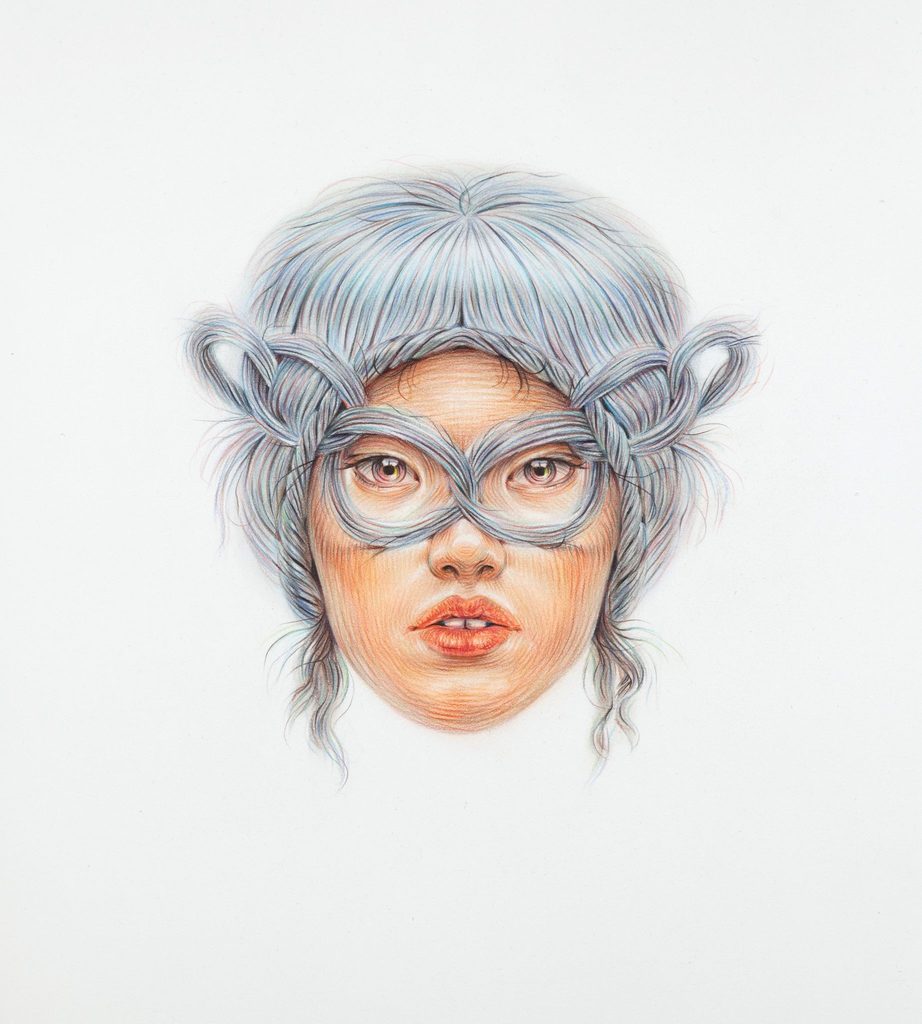
Truong trained as a painter, but by her final year of art school had pivoted almost entirely to drawing. “I feel like when I was at school I struggled a lot with painting. It’s just not an intuitive process for me,” she said. “As someone who’s always sketched as a child during moments of boredom, the immediacy of line work has always captivated me.” That instinct crystallized into a body of large-scale, colored-pencil hair portraits.

Un guide pour améliorer vos compétences en photographie
Améliorez votre photographie grâce à notre guide de ressources gratuit. Bénéficiez d'un accès exclusif à des conseils, des astuces et des outils pour perfectionner votre art, construire votre portfolio en ligne et développer votre activité.
Recevez le meilleur de Format Magazine dans votre boîte de réception.
“I was interested in hair as a subject matter because it’s so naturally imbued with these conversations about beauty, the possibilities of different social and gender norms, and identity, built into this thing that is so naturally occurring on all of our bodies,” she explained. “Every mark I saw was a direct translation to hair. The labor of creating this full head of hair as a subject that was meandering and doing strange things, as a stand-in for the actual recognizable representation of the subject, was very interesting to me.”
After six years of that work, a trip to the Picasso Museum changed the trajectory of her practice. “I just happened upon this sort of small plinth display of these cardboard maquettes,” she recalled. “The sense of play and simplicity of form really made me want to dial myself back, taking in the work of an artist with a really grand, experimental, spanning practice, and thinking how I could dial my own work back to create a new kind of groundwork.”
Her flat portraits had, by then, started pushing at the literal edges of the paper. “There were figures and environments that kind of reached the edge of the white plane of paper. I think that was the moment I literally reached the frame with the work, and it suddenly bled into wanting to create these more environmental, atmospheric worlds,” she said. “The 3D element allows me to bring these images closer to our own reality, in a certain way that gives an extended immersion into that world.”
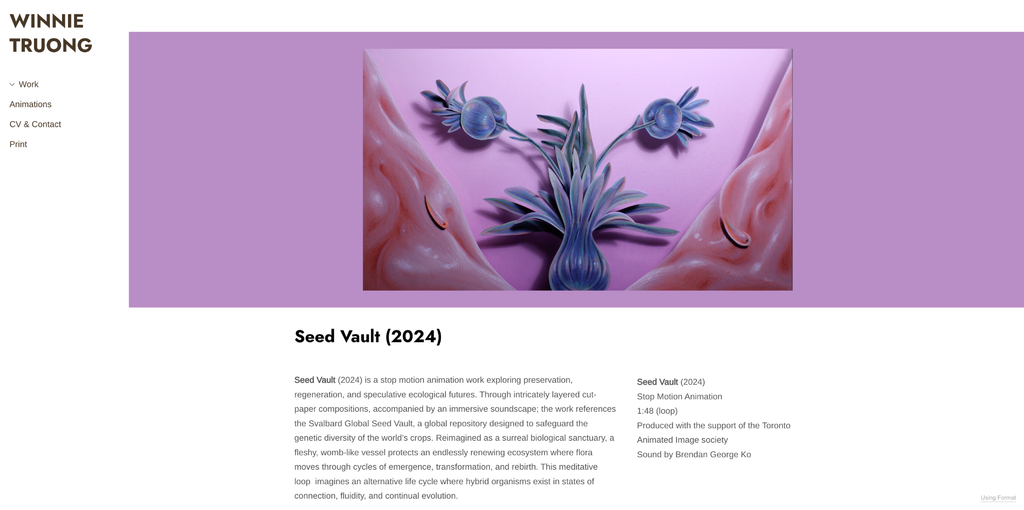
Animation followed naturally. “With the dioramas, I’m cutting out pieces and I’m arranging and rearranging these sort of disparate elements. Until I glue them down, there are infinite possibilities. A stem or a fingertip could be bent to create a different gesture or narrative sequence, and a lot of those changes in time is lost in creating these cut-paper pieces,” she said. “So with the stop-motion animation, I am able to actually capture, in time and space, the moment-to-moment movements that are otherwise lost in the dioramas.”
Her sets are built from stacked planes of glass, shot from directly above. “A lot of how I create these compositions, I’m almost presenting a stage. There’s a lot of looking into how classic stage sets are built, and early animation techniques, but with the top-down multi-plane set up of stop motion, I have the camera up above, and different layers of glass with drawing elements at the frame, so you can actually see how some of the pieces move in and out of space as I manipulate them, painstakingly, layer by layer.”
Bodies Becoming Landscape
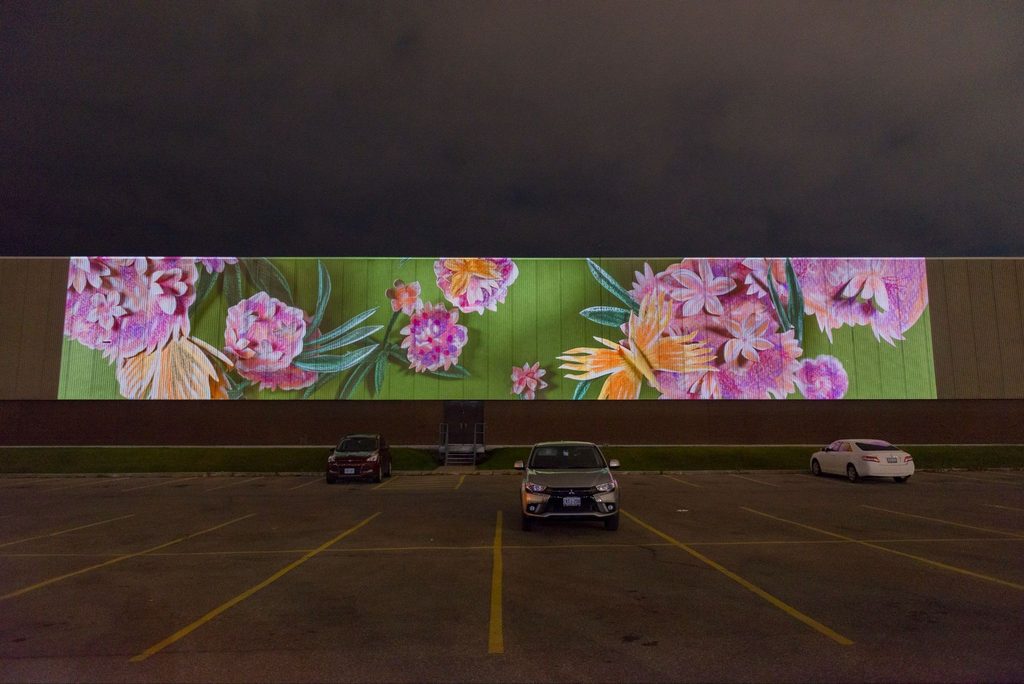
Truong describes the world she’s building as sitting somewhere between the human and the botanical, filtered through a feminine lens. “I’m looking to find these sort of moments of hybrid identities between plants and this human world, specifically through the lens of the feminine form,” she said. “I see these environments in this sort of timeline, either at the primordial beginning or the post-apocalyptic end of the world that we may or may not know. So there’s something familiar about it, but there’s also this sort of supernatural edge to it that I think is very alluring.”
That edge, she says, comes from somewhere personal. “A lot of how and why I make it is to process these emotions. There’s just so much eco-anxiety with being a woman and being a parent in the world, and thinking about the future, while processing the overwhelm of our current condition. There’s beauty and there’s an abjectness to how these environments are being built in my work that parallels my experiences.”
Earlier work showed bodies and plants coexisting as separate but related forms, “women creatures as these sort of oppositional forces that weren’t of our world,” as she put it. That’s shifted. “The body has completely dissolved into the earth and has sort of rebuilt itself as part of nature,” she said of her most recent pieces. “It’s more of a suggestion of a new way to coexist. You see some hands, but the silhouette and the portrait emerge almost in this camouflaged way, that it really takes closer examination to notice. And perhaps that is a better relationship for all of us when we’re out in nature: to spend time and notice the strangeness and the beauty that is around us while we can.”
She’s just as precise about the process. “I have a color story. I kind of see an order of works as different atmospheres,” she said. “I use a pen knife, and I create silhouettes onto the color paper that I work with. I’ll create a general composition of the larger shapes, and then somewhere in there I actually start just drawing onto it. Drawing is such a core part of my practice, it’s not something I’m willing to fully let go of. The labor of creating the textures and the line work, the meandering, fluid, organic texture, is what makes the world come to life to me, and gives everything in these environments their own signature of my artist’s hand.”
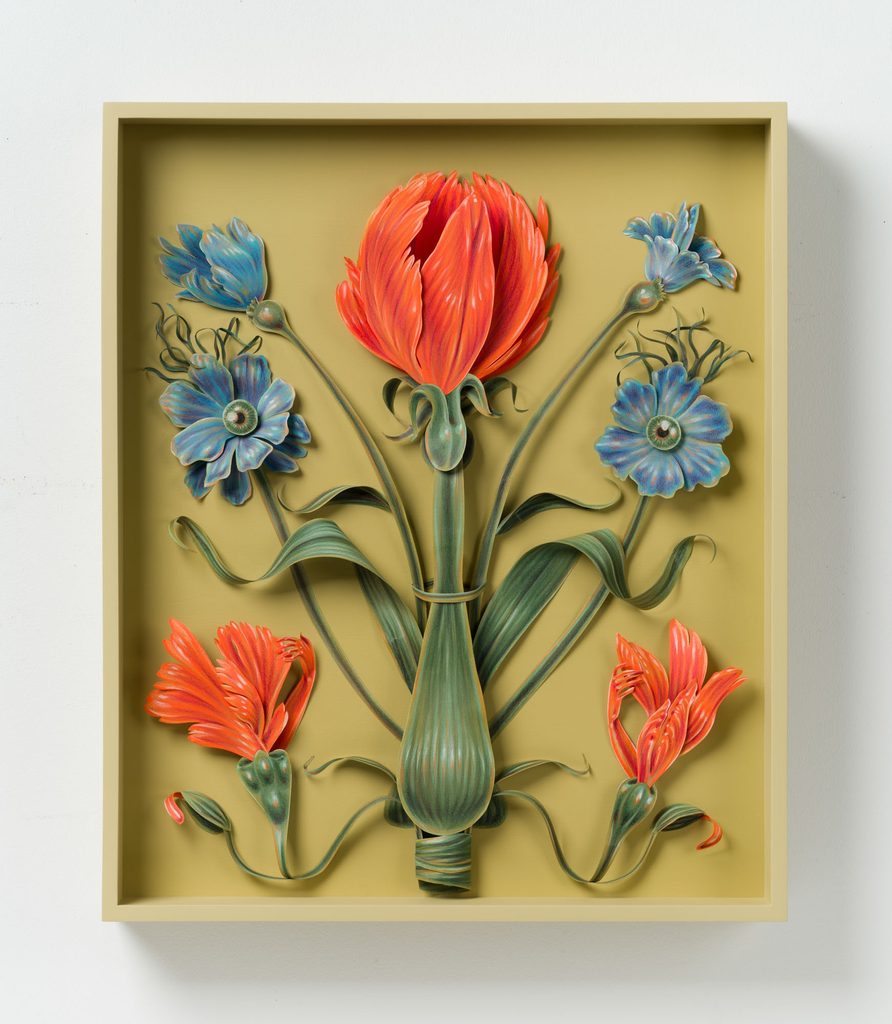
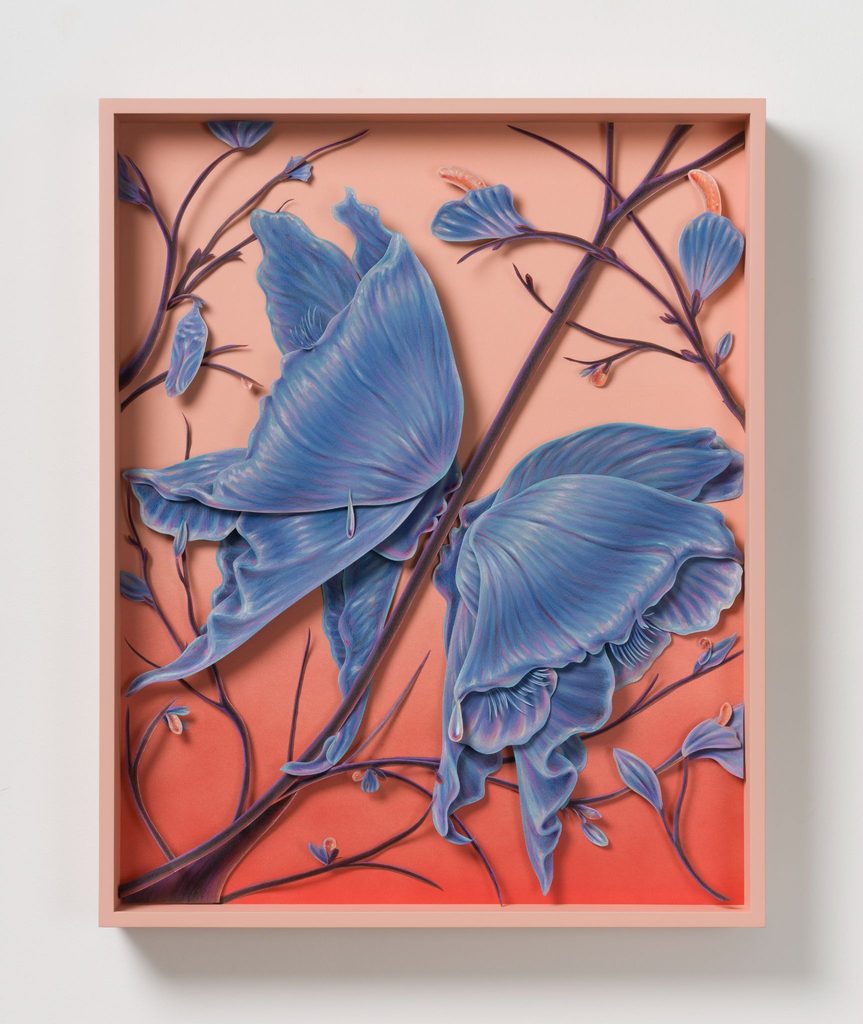
That transparency has limits, though, and they’re deliberate. “As an artist with a very labor-intensive practice, I don’t necessarily show too much process in relation to my dioramas or sculptures. I think a lot of the labor is apparent in the construction or the drawing itself,” she said. “But within the website, I think it’s important to show my process when it comes to animation, because it’s such a deviation from the analog, especially for an audience that’s familiar with my physical work, to see how it actually translates: that they’re drawn elements that I then bring into an animation studio and manipulate in 3D space. I think that adds a little bit more to the magic.”
Building a Portfolio That Keeps Pace with the Bloom theme
Truong’s site has changed shape considerably since she first joined Format nearly a decade ago, and the new theme, Bloom, she developed with the Format team was built to solve a specific problem: her practice had outgrown her old portfolio’s structure. “The things we prioritized were different ways to show, specifically, the animation works, which wasn’t really incorporated into my previous iterations of the website,” she said. “I would have examples of animations without embedded video. Now there’s this more playful integration of it, while also carrying through galleries and exhibition catalogs to give better context to the other parts of my practice.”
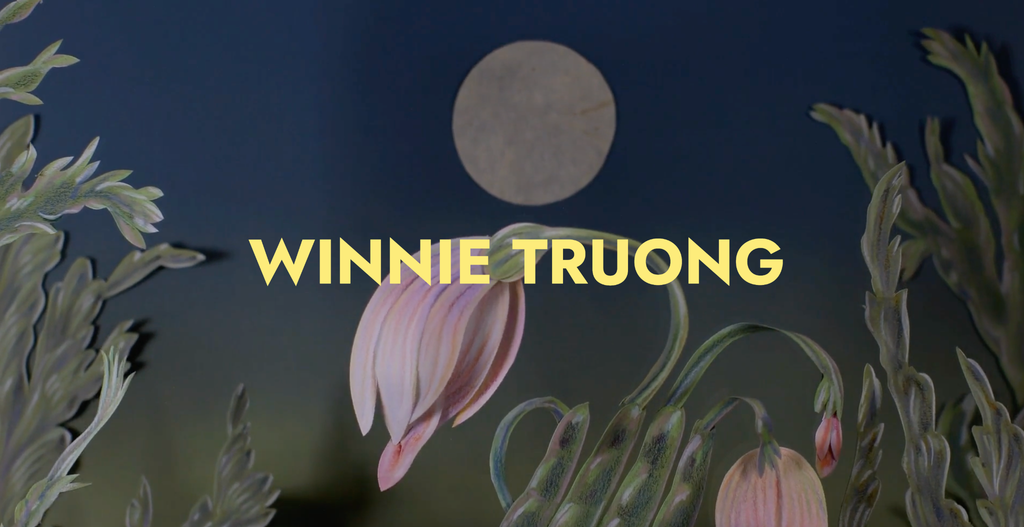
The resulting theme includes:
- A dynamic, looping video title page. “One of the main things we were working on was getting this animated title page. I think it’s a really beautiful way to create a world already within my practice. My animations themselves are meant to be these looping moments, this is one, and you get to enter through there.”
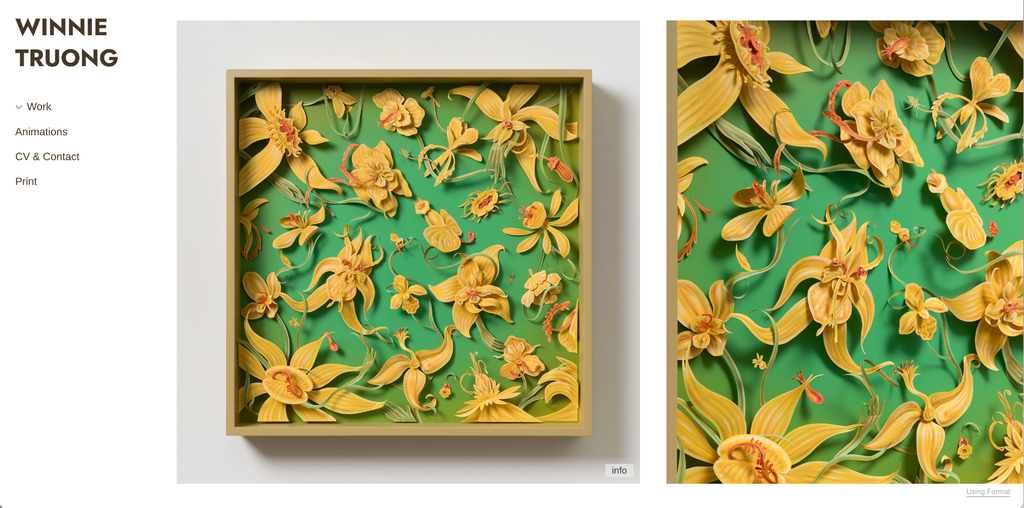
- A dedicated navigation structure separating diorama sculptures, animations, and installations, alongside a distinct exhibitions section. “That kind of separation creates a different context for viewing the works, based on the venues and the collections of work that were actually on exhibition.”
- A horizontal-scrolling gallery page, styled like a slideshow. “I like the cleanliness of how you can kind of reel through it. I love that you can click through and offer more title information and context as needed, and then return, or continue onward, like a slideshow.”
- Flex Block layouts for the animation pages. “The ability to create my own composition with embedded video, and incorporate an actual animation example with the in-situ documentation of the work, has been very helpful, being able to tile things accordingly, based on where I want folks to focus.”
- Client galleries, a feature she recently discovered, for curating private selections of work to share with specific collectors or curators, with tracking on how recipients engage with what’s sent.
The theme, titled Bloom, will be available for other artists to apply to their own Format sites as of August 25, 2026, something Truong is genuinely excited about. “I’m also just very excited that other artists will be able to apply this theme to their websites,” she said.
Why Format
Truong has been with Format since 2017, and she’s unambiguous about why she’s stayed. “I chose Format because it’s the most artist-forward. I’ve used previous website builders, and artists are kind of slotted in next to more e-commerce, brands, and stores, and that’s great, but the portfolio aspect of it has been unparalleled,” she said. She also points to a feature she discovered more recently: “The ability to curate different selections of the work for a sort of private presentation to specific people has been very helpful.”
As someone who describes herself as not particularly tech-savvy, she credits the platform’s support for making the day-to-day easier. “I would absolutely recommend Format to other artists. Beyond just being artist-oriented and being able to quickly drop things in, and having these themes that are built for artists, or even by artists, when there are little tweaks and things that I want to do, and I’m not quite sure what the possibilities are, I can actually get a human to help me in the chat. And it’s been a real help.”
What a Portfolio Is For
For an artist with as varied a practice as Truong’s (gallery exhibitions, art fairs, public art projections, book covers, editorial illustration) a dedicated portfolio does something a social feed or a gallery’s roster page can’t. “I think it’s the thing that creates a greater context of my work for people who’ve encountered me and want to know a little bit more, want to see what else I’ve done,” she said. “It’s different than what you’d find on a gallery or representation page, which is more of an introduction and examples, whereas here, I’m in control of what I can show. I have a very broad history of experimentation, and I’m able to include that.”
It also changes how her work gets discovered. “Not everyone knows that I have this sort of animation side quest that I deal with,” she said. “They get access to works that maybe showed somewhere distant, and they haven’t encountered it, so now it’s a way to be reintroduced to it.”
Her advice to artists just starting out doubles as a fitting description of her own trajectory: “Just be persistent, and have a vision. There’s one thing to be kind of a generalist, but be a generalist with your specific hand. I do kind of everything, but I do it with the focus of my abilities. I guess there’s a bit of a signature, a lot of me, in everything I do.” Across drawing, sculpture, animation, and now a portfolio built to hold all three at once, that hand is unmistakably hers.
Winnie Truong is represented by Patel Brown Gallery, Toronto. Her diorama works will be presented at the Armory Show in New York at the end of September.
Cover image: Winnie Truong, Open Ceremony, coloured pencil, cut paper collage on panel, 2026
Construisez votre portefeuille avec Format
Classé #1 créateur de portfolio en ligne par les artistes et les créateurs.
Construisez votre portefeuille avec Format
Classé #1 créateur de portfolio en ligne par les artistes et les créateurs.