A Conversation with Food and Lifestyle Photographer Evan Sung
Evan Sung is a prominent food, lifestyle and travel photographer based in Brooklyn, NY. Known for his long freelance tenure with The New York Times, his prolific career has seen him photograph over 60 cookbooks, working with Michelin-calibre chefs. In a career that has taken him from Iceland to Emilia-Romagna and from Senegal to Seventh Avenue, his work is driven by curiosity and a collaborative spirit.
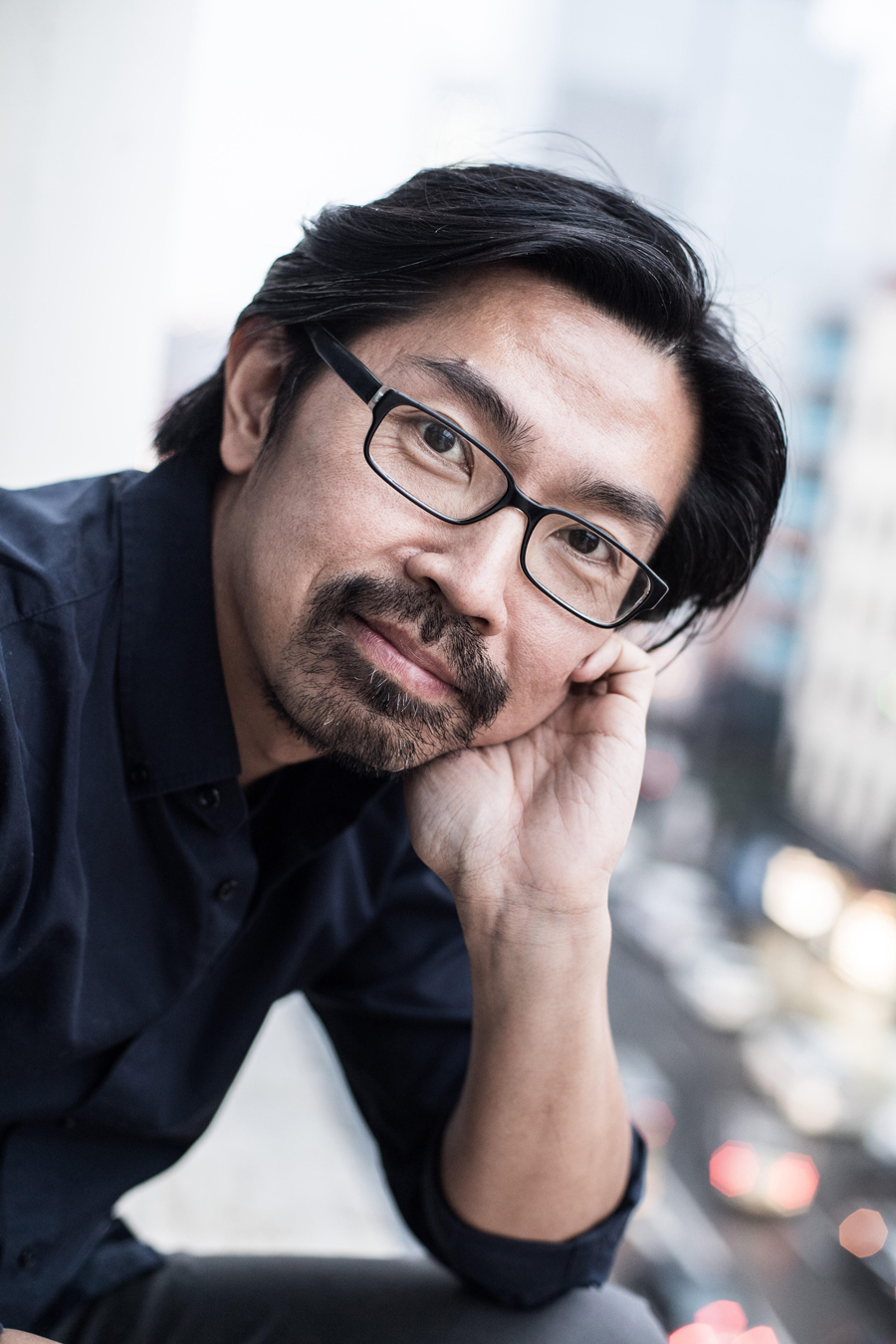
Food, lifestyle, and travel photographer Evan Sung. Image by Sara Kubida.

An Unexpected Path into Photography
Can you tell us about how you came to photography as a medium and career?
I didn’t study photography—my academic background was in psychology, and after my Bachelor’s, I intended to pursue a PhD in literature. A camera didn’t get into my hands until the end of college, and at that point, it was just a hobby.
When I realized that the PhD wasn’t the one that would make me happy, I decided to see if photography could be a job for me, and it was assisting that became my education. After assisting and managing photo studios in New York, I was eager to get work in Paris, where I’d studied French. I grossly overestimated how easy it would be to find work there, but after a lot of searching, I found a photographer to assist. It was with him that I learned about how a camera can open the door to so many different worlds. That assisting process was invaluable. It was my education in the aesthetics of photography, the business of photography, and the mechanical and technical aspects. I had to learn a lot just by getting my hands dirty.
But that degree in psychology didn’t go to waste! I think it also informs my work, especially when it comes to building trust with clients/chefs and being a good human.


Una guida per migliorare le vostre abilità fotografiche
Migliorate la vostra fotografia con la nostra guida gratuita. Ottenete l'accesso esclusivo a suggerimenti, trucchi e strumenti privilegiati per perfezionare il vostro mestiere, costruire il vostro portfolio online e far crescere la vostra attività.
Ricevi il meglio della rivista Format nella tua casella di posta elettronica.

Breaking Into the Food & Lifestyle Publication Industry
New York is a city with a rich food scene, but what led you to food and hospitality photography?
When I came back to New York, I was looking to shoot anything. I gave myself a project of photographing artists in their studios and eventually built up a portfolio that I shopped around and led to a freelance contract with a smaller New York City paper, The New York Sun. One day, they asked me to shoot a restaurant review, and I realized that my time assisting in Paris had given me the skills to approach the situation. I enjoyed the work—and they liked the results, so they kept asking me to do more.
This was around 2004-2005, a time when food media was really taking off with the rise of blogs and publications like Eater e Grub Street. It was a happy accident that I just ran with. I was quickly picked up by Il New York Times, which opened up opportunities in other sections like style, real estate, and general news. I was happy to have the diversity of subjects, but over time, just from working around the milieu so consistently, I realized that the world of food and hospitality had become my life; I embraced it and it embraced me back.


The Art of Collaboration
When you photograph chefs and their work, do you see a relationship between the approach and your earlier portraits of artists in their studios?
I certainly wouldn’t approach the two worlds any differently. Chefs, especially those working at the highest level, are artists. They possess a creativity akin to that of a painter or a photographer. I see both artists and chefs as creative individuals putting a piece of themselves out there for public consumption. That kind of presentation comes with a lot of risk, for judgment or evaluation.
When I photographed artists, I was always keenly aware that their studio was a private space, and letting me in was an act of trust. I always wanted to honour that. The same applies to stepping into a kitchen. It’s about building trust and respect and acknowledging the vulnerable position of the creative person in front of you.
Absolutely. It’s an art form, just a very different medium and one that is quite ephemeral. I think it makes the work of the photographer, and the photograph, all the more important to the chef that there’s a record, a document of its existence.
Yes, and that’s where the relationship with the photographer and chef comes in.

Building a Reputation as a Photographer
As your work captures such intimate glimpses into a chef’s work. What do you think is the most crucial element in your process?
Trust. When I first started at Il New York Times, that brought a certain level of legitimacy that gave me a head start. People assumed that if the I tempi was sending me, I was a photographer who wouldn’t screw up the shoot. From there, it was about not violating that trust and building on it. The more I worked, the more chefs in their network would say, “Evan’s okay, Evan gets it.” I had to learn all that and build that reputation. When a stranger with a camera is around, there’s always the potential for awkwardness or embarrassment. The key is to earn a place of trust so they feel safe and comfortable.

Representing a Culture & Traveling as a Working Photographer
How do you approach capturing the culture of a place alongside its cuisine?
I’ve been very lucky to photograph a lot of great projects, but the ones I love the most are the ones that take me abroad. They allow me to travel and discover new places.
In my work I approach the food part as a food shoot and then the architectural part as an architectural shot. I like to get closer up to the food and make the viewer feel that kind of intimacy with each dish.
Working on the Senegal cookbook, where I travelled all over the country with a chef who knew the cuisine intimately, was a fabulous experience. When the book was published, Chef Thiam told me it felt like Senegal to him, that it had the energy and vibrancy of the country. To me, that was the greatest compliment because I was just a kid from New York trying to capture that energy.
Fortunately, I speak enough French to engage in a Francophone culture. This experience, and others like it, showed me that food is so much more than what’s on the plate. It’s history and culture, all condensed and represented. Being able to explore and document that, in addition to the beautiful plates of food, is incredibly rewarding.


AI in Photography: Adapting to New Tools
The landscape of photography is changing rapidly with AI. I can think specifically about how Adobe marketed their tools, using an example of generating the perfect image of a tomato in a bowl for a cookbook cover. How do you feel about the development of these new tools, especially in a field like yours, where you are documenting something so intrinsically human?
It’s a force you can’t stop, but you can try to adapt. I’ve found some AI-generated tools, like the removal and erasing features in Adobe, to be incredibly powerful and valuable. They allow me to focus on the creative aspects of the job without getting bogged down in minor technical tasks.
When it comes to something like a generic image of a tomato, AI has its utility. However, I’m fortunate to work with people who have a very unique and idiosyncratic view of their craft, which is hard for AI to replicate. A creative person wants to work with someone who can document their craft with a degree of sensitivity and uniqueness, which is the human element that keeps people working together. I hope that continues.

Building Your Brand: The Role of Social Media and Portfolio Websites
So much of the work of a freelance photographer is self-marketing, I’d love to hear about the role of social media and your portfolio website in your business.
Penso che Instagram and social media obviously do great things for networking and have helped my business in many ways. The fact that it spreads imagery around internationally and that a chef on the other side of the world might be familiar with a place that I’m shooting and with my work is incredibly powerful. I don’t know how we could have done that before. So I am grateful for that aspect of it
It’s still important to have a portfolio site. While Instagram is a good first stop to see a quick snapshot of a photographer’s work, a portfolio site gives you a better sense of their entire body of work all at once. I’ve been using Format for about 11 years now, and I appreciate how easy it is to update and redesign.
It’s another way of showing a curated view of my work, one that’s more static and refined than the constant stream of social media. It’s an all-in-one representation of what I think is essential in my work, and it’s nice to have a dedicated place to present that.


How Do You Share Your Creative Vision?
As Evan shared, a portafoglio website is the best way to present a polished, all-in-one representation of your work, with complete control over your creative vision. You can see the full breadth of Evan’s stunning images, from his international projects to his editorial work, by visiting his portfolio site. Like Evan, you can build your own professional portfolio today and take control of your creative brand with a 14-day free-trial with Format
Career Advice for Emerging Photographers
Given your unexpected path, what advice would you give to aspiring or emerging photographers?
The biggest thing for me is being open to possibility and saying yes more often than no. My career has been full of happy accidents, and that’s because I’ve often jumped at opportunities without fully knowing what was coming.
I’ve learned that being a little uncomfortable is my comfort zone. I would also say to trust your instincts and your gut. There can be a lot of anxiety about making the “right” choice, but sometimes the best thing to do is just find something that sounds fun and interesting and discover what it can be.
Beyond that, I believe in being a good human being. Timeliness, responsiveness, and being accommodating or collaborative go a long way. No matter how talented you are, these skills are what earn people’s trust and make them want to work with you again. I attribute a lot of my continued work and success to these generally humane ways of being.

See more of Evan Sung’s work on his Sito web del portfolio Format, and check back for the announcement of his latest collaboration, a cookbook. If you’re in or visiting NYC, you can also see Evan Sung’s work in his exhibition “Veneración”, opening October 17th, 2025 in the new gallery space at Loupe Digital.
Watch Evan’s video interview below:
Costruite il vostro portafoglio con Format
Il costruttore di portfolio online #1 è stato valutato da artisti e creatori.
Collaboratore
-

Julia Martin è un'artista interdisciplinare e scrittrice di Montreal. Con un master in arti visive e un master in fotografia, il suo lavoro è stato esposto in Canada, Cina, Francia e Finlandia, anche in diverse residenze d'artista. Ha insegnato all'Università di Ottawa, ha fatto parte di giurie artistiche e ha quindici anni di esperienza come fotografa freelance. La pratica artistica di Julia potrebbe essere meglio descritta come "storie tristi punteggiate da battute"."
Anche se a volte è il contrario.