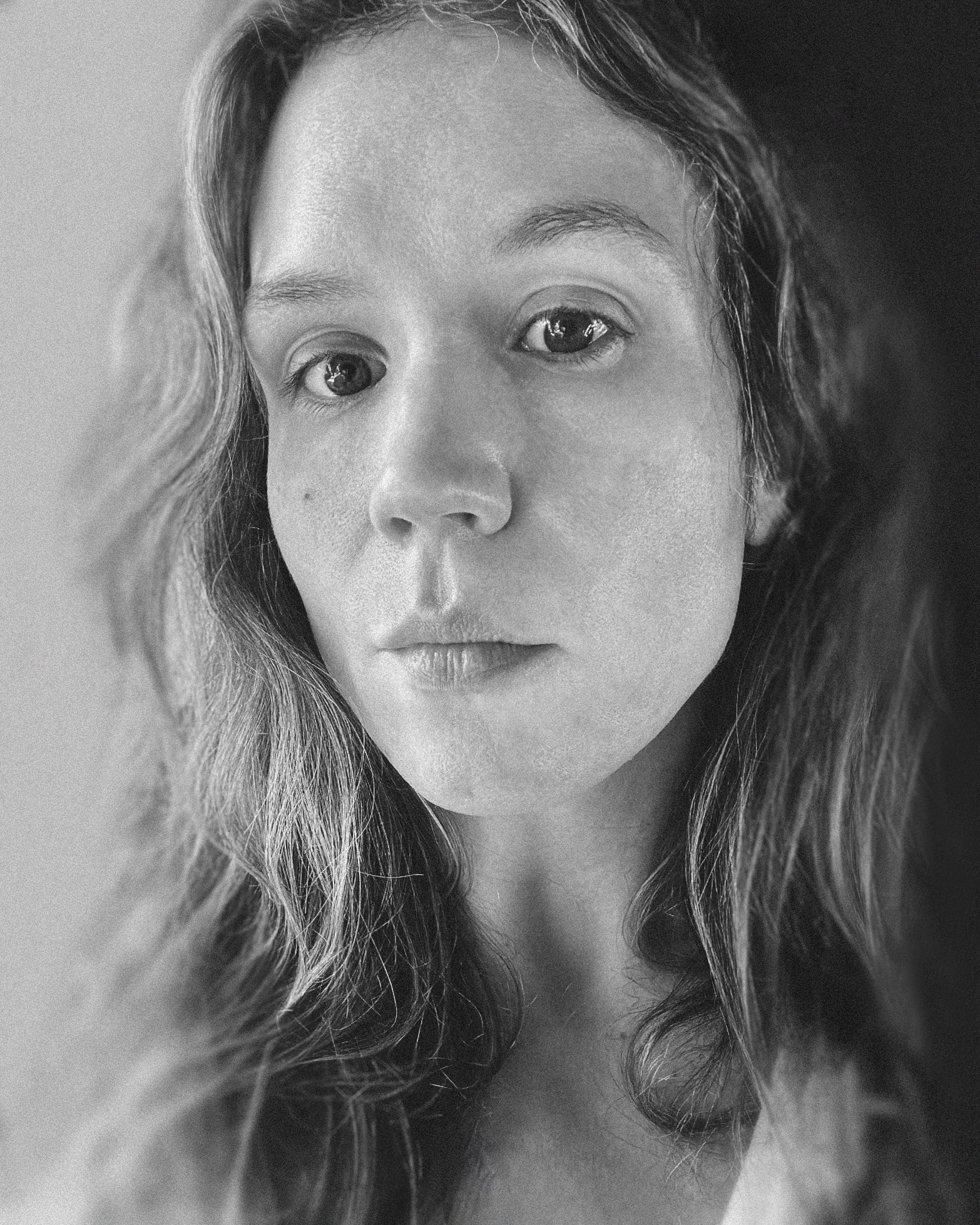
Photojournalist Emily Garthwaite on Storytelling, Empathy & Humanity
Leica ambassador and award-winning photojournalist Emily Garthwaite reveals her approach to storytelling: prioritize empathy, joy, and human connection over spectacle. In this interview, Garthwaite explores trust-building with subjects, subverting photojournalism stereotypes, and advice for emerging photographers—reminding us that curiosity and gentleness are as vital as technique.

Photojournalist Emily Garthwaite.
Emily Garthwaite brings a buoyant energy and generosity to our interview, demonstrating why she has the ability to get close to her subjects to capture the deeply human, intimate and beautiful images that she has become known for. Key to her empathetic approach, firmly rooted in a sense of ethics, is Garthwaite’s understanding that she is more than what she does. In acknowledging her own multitudes, she gives her subjects the space to be more than the events they’ve lived through. Not there to tell a story, a narrative pre-determined, she earns the trust placed in her to tell their story. I’m thrilled to meet her, and share a little of hers.
Emily Garthwaite’s Journey Into Photojournalism
Tell me how you started in photography.
I’ve been working as a photographer for about 10 years now. It all really started when I was 14 or 15 and there was a forest fire near my family’s home in Surrey. My father, formerly a zoologist and conservationist, went out with me to photograph it. Being behind the line of firefighters, bearing witness to this area that had been my childhood, photographing it intuitively made sense. I was so angry that it was caused by one cigarette. I sent the photos to my local newspaper and they were published with my name in the byline. I think that speaks to something from a very young age: I saw something, it was terrible, and I needed people to know about it. Now, I would also expand that to say I saw something beautiful and I want you to know about it. I think a lot of this just came from immense curiosity. As a child, my parents used to describe how I would go to the local fishing lakes and just sit and talk with war veterans who had PTSD. I’d never seen myself as a particularly intelligent person, but being desirous of knowledge and being deeply curious has never changed. I’ve sort of made an entire career out of what you’re not supposed to do as a child, which is to speak to strangers.


A Guide to Improving Your Photography Skills
Elevate your photography with our free resource guide. Gain exclusive access to insider tips, tricks, and tools for perfecting your craft, building your online portfolio, and growing your business.
Get the best of Format Magazine delivered to your inbox.
Emily on Reconciling Her Two Selves
You just got back from shooting your last project. How often do you travel between countries and the UK where you’re on assignment?
I’ve spent years on assignments, traveling with my chosen family of
colleagues. But I’m currently reconciling two parts of myself and trying to be me in my entirety.
Perhaps there’s a misalignment with how people perceive a photojournalist, particularly a woman, and the very things that make me good at my job. I focus often on my ability to access joy and to encourage the same in others. When people have gone through shocking experiences, I want to go straight through to the other side, and never define someone by the horrors they’ve been through.
That’s a powerful approach. You’re not reducing anyone to their trauma.
Exactly. When I did a story with women who were re-entering society after they had served 20-plus-year prison sentences, I never researched their cases. I wanted to meet them as they were, having served the time and with the ability to begin again.
The same can be said for you, as you spoke about embracing joy and introducing new experiences into your life; being both the Emily who travels and works on the assignments and the Emily who is home and has a life rooted. How do you reconcile these two selves and be the whole person?
Just finding that joy. I’m trying to share a bit more online to show more of the whole, but I often feel like it’s inappropriate to be joyful when there’s so much suffering. But we have to find balance in our lives to do this job properly, as it can sap you and be tough at times. I hope people continue to work with me because I try to bring levity, you know? job’s really tough. You have to be a bit odd.


You’re telling deep, project-based stories. How do you arrive at their subjects?
I worked very closely with an amazing writer, Jane Arraf, and she was interested in how the Druze people in Syria were affected by the war. We started researching and found a PhD paper about reincarnation among the Druze community, which was fascinating. When we pitched the idea, the editor said, “If we have you in the country, we want to do something that is a bit more out of the box, so this ticks the boxes.”
And so I’ve become a lot more interested in doing slightly more subversive or esoteric stories in areas where people may think there’s a lack of spirituality or folklore. What’s often exciting is when you start researching and can’t find much on the subject. With our piece on reincarnation, you go into the most intimate parts of a community and it takes time to build trust.
I did a similar story about gardening, where I became interested in Syrians who fled after the Syrian Revolution in 2011 and took plant cuttings from their gardens instead of passports. What does that say about a culture? The very journey of planting seeds is saying, “Okay, this is home.” Because I arrived with gardening, I ended up having much more profound and deeper conversations than I would have otherwise.
Building Trust and Practicing Safety in Photojournalism
I’m curious about the people you’ve been traveling and working with for a long time. Can you tell me about them?
I work most consistently with my Kurdish-Iraqi colleague, Sangar Khaleel. He’s an extraordinary reporter and producer. We started working together at The New York Times about three and a half years ago, and we just found this balance–it’s like a dance, really. We both have a shared understanding of how we communicate with people, a passion for similar stories, and the same moralistic approach to things. I always feel very safe with him, but it’s not a physical safety–it’s a psychological and emotional safety–the comfort of knowing that even if it’s a really hard day, both of us are on the straight and narrow and always communicate honestly. We’ve both got spidey senses, and the most important thing is that we both know when it’s time to go.

I have watched interviews with photographers who seemed to ignore that instinct in favor of getting the image. It felt inherently risky not only to themselves but to those around them.
I have very clear boundaries. I don’t want anyone I’ve photographed to have anything other than a positive or insignificant experience with me years later. The most profound photographs I have taken have been in the quietest of places. I’m not entitled to every photograph just because my job is to document the world. I’ve seen people do that, and it’s a vulture kind of instinct. That’s not what I’m driven by.
Emily Garthwaite On Photography
You started so early from an instinct. From there, what propelled you on and what advice could you give to anyone who was picking up their camera instinctively?
You do not need to study photography to be a photographer. A lot of my colleagues studied international relations, they studied biology, they had careers before becoming a photographer.
Whatever you study, whatever your interests are, those curiosities will inform what you do in your photographic practice. And being self taught has great strengths too, as it allows for you to develop your own signature, and to be untethered to the outcome.
I’ve never had a photography lesson or been taught how to use a camera. I still don’t know what bracketing is, and I’m not confident shooting in manual. I enjoy shooting on aperture priority–simply focusing on making beautiful images. That’s okay. And that does not make me less of a photographer. I’m more interested in the relationships that are formed, and how those exchanges play out, and the storytelling involved. Connection is everything.
I’ve been working with Leica for a decade now, switching between camera systems as the years go by.
Photojournalism and Image-Making in the Era of AI and Misinformation
What are your feelings about the landscape of photojournalism and image-making with the rise of AI and threat of misinformation?
It’s very hard to keep up. I feel like we’re on the precipice of something that is presently beginning to spin like a wheel but will soon be this out-of-control machine. It’s hard to speak to AI because it’s a presence neither of us can fully anticipate. But I will resist. I’m not willing to incorporate it into my life. I’d much rather become a Luddite.
I do know that photographers are absolutely not replaceable, and human connection is not replaceable. There’s a sort of glazed soullessness to AI images. In my field, we can’t be replaced by a machine because human stories are at the core of what we do. And my colleagues and I are more and more at risk. I remember when I first started, I wasn’t afraid to say I was a photojournalist. Now I don’t. I say I’m a photographer or an artist. You’re more vulnerable now, and the threat is inside the house.

Finding Joy in the Mundane
What does your mundane look like when you’re home?
I wake up around 6 a.m., wherever I am, and the first thing I do is send a voice note or call my best friend Lauren. We check in with each other a lot. I love to go out for early morning walks and love an early night. I don’t watch much TV; I prefer listening to podcasts and audiobooks.
When I get back to Istanbul, I love to cook for everyone, so I’ll do about three dinner parties in a row. I also enjoy riding motorbikes, self-defence, boxing, and I’ve gotten a lot more into ceramics and embroidery. This year, my decision has been to be fearless—applying for things and experiencing rejection, and exploring all parts of myself–the more masculine, the more feminine, my creativity, my senses–without being apologetic.


What Story Will You Tell?
Feeling inspired by Emily Garthwaite’s approach to storytelling and empathy in photojournalism? Discover more powerful visual stories, explore diverse photographer portfolios, or start building your own platform for impact. There’s no time like the present–share your unique perspective with the world.
Defying the Label
We were talking about the misconceptions [some of which I’m guilty of!] around photojournalism and why you do what you do…
I’ve always believed that if my work wasn’t taken in places like Iraq or Iran, it wouldn’t be deemed photojournalism. But because it is, it gets labeled as such. I’ve never photographed a conflict, yet I’m often labeled a “conflict photographer.” I consider my work incredibly peaceful; it’s about ecology, culture, and folklore.
I went to Iraq after the Mosul war, and since then I have covered stories on music, nomads, mountain tales, rivers, and faith. My career boils down to following the path of curiosity, and doing it gently, and gentleness is required when photographing Iraq in a state of healing, post-conflict.
What I get out of this work is soul nourishment, joy, and a deeper understanding of our shared Humanity.

Emily Garthwaite’s Advice for Emerging Photographers
- Have a website: Building a website for me was a declaration to myself, a way of asserting my path as a photographer. It gave me a platform to share my view of the world, to use offline elements to sequence new stories and to return to when I feel unsure of my next Steps.
- Accept rejection: We can be so afraid of rejection, that we don’t take a step forward. So email the brand, apply for grants, and throw your hat in the ring. Rejection is simply redirection towards your right path, and when practiced, it becomes easier to process.
- Nurture a mentor relationship: I love reaching out to photographers I admire. In earlier days, some photographers became mentors and still remain so today. Nowadays, I have creative relationships where we bounce ideas, and connect over Zoom or in person.
- Don’t follow the prescriptive path: I started as a nightclub photographer, assisted tens of photographers across fashion, interiors, food, baby photography. You name it. These experiences helped me understand my likes and dislikes, and how I wanted to move through the world. Ultimately, it’s been an intuitive journey.
- Embrace being self-taught: You don’t need to study photography to be a photographer. The quirks, and signatures, of a self taught photographer often become their visual strengths.
- Explore your family’s story: The closest and often most interesting stories you can tell are about your family. This is how I began to practice storytelling. Every family has a story to tell, and maybe you are the person to bring that to light.
- Let your curiosity lead you: It is curiosity and audacity, not simply talent, that will take us where we need to go. And as you move through the world, keep your softness.

See more of Emily Garthwaite’s work on her Format portfolio website, and follow her on Instagram.
Watch Emily’s video interview below:
Build Your Portfolio With Format
Rated #1 online portfolio builder by artists and makers.
Contributor
-

Julia Martin is an interdisciplinary artist and writer based in Montreal. With an MFA in Visual Arts and a BFA in Photography, her work has been exhibited across Canada, China, France, and Finland, including multiple artist residencies. She has taught at the University of Ottawa, served on art juries, and has fifteen years of experience as a freelance photographer. Julia's own artistic practice could best be described as "sad stories punctuated by jokes."
Though sometimes it's the other way around.